
Exercise Snacks: The Strategic Advantage of Micro-Movement in the Modern Workday
Redefining Movement in a Work Culture
The global workforce has become more distributed, more digital and, in many cases, more sedentary than at any point in modern history. Long hours in front of screens, hybrid office models and always-on communication have blurred the boundaries between professional and personal time, leaving many knowledge workers struggling to integrate meaningful physical activity into their daily routines. Against this backdrop, the concept of "exercise snacks" has emerged as a pragmatic, science-backed strategy to embed movement into the workday without demanding extensive time, equipment or radical lifestyle changes, a shift that aligns closely with the editorial focus and readership online.
Unlike traditional workout sessions that require dedicated blocks of time, exercise snacks are brief, intentional bouts of physical activity-often lasting from 30 seconds to 5 minutes-performed multiple times throughout the day. Research from organizations such as the World Health Organization and U.S. Centers for Disease Control and Prevention continues to underscore the health risks of prolonged sitting and insufficient physical activity, while also highlighting that even short, intermittent movement can contribute meaningfully to overall health. Readers can explore broader global health perspectives through resources such as the WHO physical activity guidelines and the CDC's physical activity recommendations, which contextualize why these micro-movements matter in the first place.
For a business-focused audience that values performance, productivity and long-term wellbeing, exercise snacks are not a wellness fad; they represent a strategic, evidence-informed response to the realities of contemporary work. The concept fits naturally within the broader coverage of workplace health, performance and culture that FitPulseNews delivers across its dedicated pages on health, fitness and business, offering a practical framework for organizations and professionals seeking to translate health science into daily practice.
The Science Behind Exercise Snacks and Micro-Movement
The growing body of research on high-intensity interval training, movement breaks and sedentary behavior has provided a robust foundation for the exercise snack model. Studies published in journals indexed by PubMed and summarized by institutions such as Harvard T.H. Chan School of Public Health have demonstrated that short bursts of activity-such as stair climbing, brisk walking or bodyweight movements-can improve cardiorespiratory fitness, insulin sensitivity and blood pressure, particularly when accumulated consistently across the day. Those interested in examining the academic underpinnings can review overviews on Harvard's physical activity resources and curated research on NIH-supported exercise science.
From a physiological perspective, exercise snacks interrupt extended periods of muscular inactivity, which are associated with reduced glucose uptake in muscles, impaired endothelial function and increased markers of cardiometabolic risk. Even two to three minutes of light to moderate movement-standing squats, desk push-ups, hallway walks-can increase blood flow, activate large muscle groups and stimulate positive metabolic responses. The American College of Sports Medicine has highlighted that movement accumulated in small bouts contributes to total weekly activity, reinforcing the message that every minute counts; professionals can learn more about exercise duration and intensity through ACSM's educational materials.
In 2026, this science is increasingly being translated into corporate wellness design and personal health strategies. Companies that once focused narrowly on step counts and gym discounts are now incorporating structured micro-movement protocols into daily workflows, guided by evidence that frequent light-to-moderate activity can mitigate some of the harms of sitting. For readers of FitPulseNews, which regularly explores intersections between sports performance, workplace culture and innovation in its sports and innovation sections, exercise snacks represent a practical bridge between elite training principles and everyday office life.
Performance, Productivity and Cognitive Benefits
Beyond physical health, exercise snacks offer measurable benefits for cognitive performance and work output, which is particularly relevant for leaders and professionals evaluating return on investment for wellness initiatives. Research summarized by Stanford University, University of Cambridge and other leading institutions indicates that brief movement breaks can enhance executive function, working memory and creative problem-solving, while reducing subjective fatigue and stress. Business readers can explore the broader relationship between movement and cognition through resources such as Stanford's work on movement and brain health and related coverage from MIT's research news.
From a neurobiological standpoint, short bouts of physical activity increase blood flow to the brain, stimulate the release of neurotransmitters such as dopamine and norepinephrine and modulate stress-related hormones, all of which can improve mental clarity and focus. In practical terms, employees who step away from their screens for two minutes of stair climbs or dynamic stretching every 60 to 90 minutes often return to tasks with renewed concentration and reduced cognitive "noise." This pattern supports findings from organizations like McKinsey & Company and Deloitte, which have reported that integrated wellbeing strategies correlate with higher engagement, reduced burnout and better organizational performance; readers can explore broader workplace wellbeing insights via McKinsey's health and wellbeing research and Deloitte's human capital trends.
For the audience of FitPulseNews, which spans fitness enthusiasts, business leaders, brand strategists and professionals across regions from North America and Europe to Asia-Pacific, the productivity argument is central. Exercise snacks are not positioned as a distraction from work but as a performance multiplier, much like strategic recovery in sports training. Just as elite athletes structure intervals of high effort and active recovery to maximize output, knowledge workers can leverage micro-movement to sustain mental sharpness across long workdays, a theme that resonates with the publication's coverage of performance optimization in wellness and culture.
Designing Exercise Snacks for Different Work Environments
In 2026, the global workforce operates across an increasingly complex mix of environments, from fully remote and hybrid setups to traditional offices, co-working spaces and on-site industrial or retail settings. Effective exercise snack strategies must therefore be adaptable to context, culture and job role, while remaining simple enough to adopt without specialized equipment or complex instruction.
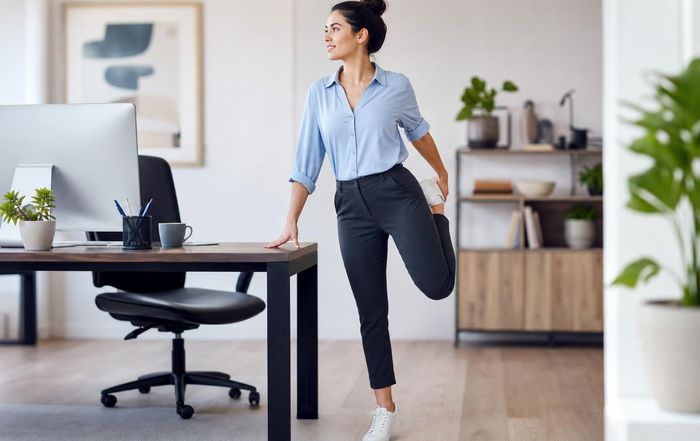
Office-based professionals in cities such as New York, London, Berlin, Toronto and Singapore can integrate stair intervals, brisk corridor walks or short bodyweight sequences near their desks. A typical protocol might involve two minutes of alternating squats and calf raises every 60 minutes, or a 3-minute routine of desk push-ups, wall sits and shoulder mobility drills between meetings. Organizations that provide quiet wellness rooms or open collaboration spaces can formalize these practices, scheduling brief movement segments into the calendar or embedding them into team rituals. Leaders interested in broader workplace design strategies can explore resources from International WELL Building Institute and World Green Building Council, using references such as the WELL Building Standard as a guide to integrating movement-friendly design.
Remote and hybrid workers, who may be operating from homes in markets as diverse as the United States, Australia, India, South Africa or Brazil, face different constraints and opportunities. Without commuting or walking between meeting rooms, their natural incidental activity can be significantly lower, making intentional exercise snacks even more important. Simple approaches, such as performing 60 seconds of jumping jacks or high knees before logging into a video conference, walking during audio-only calls or setting a recurring reminder to perform a 3-minute mobility flow twice each morning and afternoon, can restore some of the movement lost to remote work. Readers interested in structuring home-based movement routines can connect this with broader fitness coverage on FitPulseNews fitness and complementary guidance on technology-enabled wellness.
For employees in retail, manufacturing, healthcare and logistics, where physical demands may already be high but often repetitive and localized, exercise snacks can focus on mobility, posture and injury prevention. Short routines emphasizing hip opening, spinal mobility, shoulder stability and core activation can help counteract overuse patterns and reduce musculoskeletal strain. Occupational health guidelines from bodies like Occupational Safety and Health Administration (OSHA) and European Agency for Safety and Health at Work offer broader frameworks for safe movement and ergonomics, and professionals can review relevant materials on OSHA's ergonomics resources and the EU-OSHA knowledge base.
Across all these settings, the key is to frame exercise snacks as integral to the workday, not as an optional extra. When organizations and individuals view micro-movement as a non-negotiable element of professional performance-much like hydration, sleep or strategic planning-the likelihood of sustained adoption increases substantially.
The Role of Technology, Wearables and Data in 2026
The year 2026 has seen a maturation of digital health and fitness technologies, with wearables, smartphones and connected platforms providing increasingly granular insights into movement patterns, heart rate variability, stress levels and sleep. Companies such as Apple, Samsung, Garmin, Fitbit (now part of Google) and Whoop have integrated prompts and analytics specifically designed to encourage short activity breaks, while enterprise platforms from organizations like Microsoft and Zoom now offer built-in nudges for movement between meetings. Professionals can explore the broader digital health landscape through resources such as Apple's health features overview and WHO's digital health initiatives.
For the readership of FitPulseNews, which closely follows innovation, sports technology and brand strategy, the intersection between exercise snacks and digital tools is particularly relevant. Many organizations now deploy centralized wellbeing dashboards that aggregate anonymized data from wearables and wellness apps, enabling leaders to monitor engagement with movement breaks and correlate them with metrics such as absenteeism, self-reported stress and even project performance. While data privacy and ethical considerations remain paramount-guided by frameworks from entities such as the OECD and European Commission-the ability to quantify the impact of micro-movement supports more strategic investment in workplace wellness. Readers can deepen their understanding of digital ethics in health through resources like the OECD's work on health data governance and the European Commission's digital health policy pages.
Mobile apps in 2026 increasingly blend behavioral science with gamification, offering micro-challenges, streak tracking and social accountability features that encourage users to complete several exercise snacks per day. Integrations with corporate communication platforms allow teams to set shared challenges, such as completing a certain number of 2-minute movement breaks each week, with recognition or small incentives tied to participation. For those exploring the broader trend of wellness gamification and digital engagement, coverage on FitPulseNews innovation and FitPulseNews brands provides additional context on how global brands are leveraging these tools to build deeper connections with health-conscious consumers and employees.
Nutrition, Recovery and Holistic Workplace Wellbeing
While exercise snacks focus on micro-moments of movement, their effectiveness is amplified when integrated into a broader framework of holistic wellbeing that includes nutrition, recovery and mental health. Business professionals who embrace brief activity breaks but neglect hydration, balanced eating or sleep may experience limited benefits compared with those who approach health more comprehensively. Resources from organizations such as the Academy of Nutrition and Dietetics, British Nutrition Foundation and Dietitians of Canada emphasize the role of nutrient-dense foods, regular hydration and stable blood sugar in supporting sustained energy and cognitive performance; those interested can learn more about evidence-based nutrition guidance or consult regional nutrition foundations.
For readers of FitPulseNews, which devotes significant coverage to nutrition and wellness, exercise snacks can be seen as one component of a daily "performance stack." Short movement bouts before or after meals can help regulate postprandial glucose responses, while combining them with mindful breathing or brief mental resets can support emotional regulation and resilience. In high-pressure business environments across the United States, United Kingdom, Germany, Singapore and beyond, this integrated approach can be the difference between simply surviving the workday and performing at a consistently high level.
Recovery is equally critical. While exercise snacks are generally low-risk and low-impact, cumulative fatigue can arise if individuals are already engaged in intense training or physically demanding work. Aligning micro-movement with adequate sleep, periodic digital detoxes and restorative activities such as yoga or light mobility work ensures that the body and mind can adapt positively. The National Sleep Foundation and Sleep Foundation offer accessible insights into how sleep interacts with physical and cognitive performance, and interested readers can explore further through resources like the Sleep Foundation's science of sleep.
Cultural, Regional and Organizational Considerations
The adoption of exercise snacks is influenced not only by science and technology but also by culture, leadership and regional norms. In some markets, such as the Nordic countries, Canada, Australia and parts of Western Europe, workplace cultures that value work-life balance and employee autonomy may find it easier to normalize short movement breaks during the workday. In other regions, where long, uninterrupted hours at the desk are still seen as a marker of dedication, leaders must be more intentional in reframing movement as a sign of professionalism and self-management rather than disengagement.
Organizations operating across global markets-from the United States and United Kingdom to Japan, South Korea, India and South Africa-need to adapt exercise snack strategies to local expectations, physical environments and labor regulations. Multinational companies such as Unilever, Microsoft, Salesforce and Siemens have experimented with region-specific wellbeing programs, often partnering with local health experts to ensure cultural fit. Business readers can explore global wellbeing and human capital trends through resources such as World Economic Forum's future of work insights and OECD's work on workplace wellbeing.
For the FitPulseNews audience, which spans multiple continents and sectors, these nuances matter. A technology startup in Berlin may integrate exercise snacks into its stand-up meetings and Slack channels, while a financial services firm in New York might embed them into calendar templates and executive coaching programs. In Asia, where long working hours remain common in cities such as Tokyo, Seoul and Singapore, progressive organizations are beginning to use exercise snacks as a visible signal of cultural change, aligning with broader shifts toward sustainable performance and mental health awareness. Coverage on FitPulseNews world and FitPulseNews news often highlights such regional differences and emerging best practices.
Sustainability, Environment and the Future of Active Workplaces
The conversation around exercise snacks also intersects with environmental and sustainability agendas, themes that are increasingly central to corporate strategy and to the editorial direction of FitPulseNews. Encouraging employees to use stairs instead of elevators, walk or cycle for short commutes or take movement breaks outdoors when possible can contribute, in small but meaningful ways, to reduced energy consumption and greater engagement with local environments. Organizations committed to environmental, social and governance (ESG) frameworks, guided by standards from bodies like the Global Reporting Initiative and UN Global Compact, are beginning to integrate employee health metrics and active design principles into their sustainability reporting. Readers can learn more about sustainable business practices and explore ESG frameworks via the Global Reporting Initiative.
From an urban planning perspective, cities that invest in walkable neighborhoods, safe cycling infrastructure and accessible green spaces create conditions that make exercise snacks more feasible and attractive, particularly for workers in dense business districts. Organizations such as World Resources Institute and C40 Cities have showcased how active mobility, public transit and green corridors support both environmental goals and public health; interested professionals can explore these connections further through WRI's urban mobility work and C40's health and climate initiatives.
For FitPulseNews, which covers environment and sustainability alongside fitness, health and business, exercise snacks offer a tangible, daily expression of sustainable living and working. As organizations and cities move toward more climate-conscious models, micro-movement strategies that favor stairs, walking routes and outdoor spaces align naturally with broader environmental commitments.
Strategic Implementation for Businesses and Professionals
In 2026, the question for many leaders is less whether exercise snacks are beneficial and more how to implement them effectively and sustainably. Successful strategies tend to share several characteristics: they are simple, visible, supported by leadership and integrated into existing workflows rather than bolted on as optional extras. For example, companies may embed 2-3 minute "movement interludes" at the start of long meetings, use internal communication channels to share short video demonstrations from reputable sources such as Mayo Clinic or Cleveland Clinic, or incorporate movement prompts into onboarding and manager training. Those seeking medically grounded movement ideas can explore Mayo Clinic's exercise library and Cleveland Clinic's health and wellness resources.
Individual professionals, from early-career employees to senior executives, can adopt a personal exercise snack blueprint that aligns with their schedule, physical capacity and goals. A common approach is to define three anchor points-morning, mid-day and late afternoon-and commit to at least one 2-5 minute movement session at each point, whether that involves stair intervals, mobility flows or light strength work. Over time, these anchors can expand to include additional micro-breaks tied to specific triggers, such as completing a major task, switching projects or joining a video call. Readers can align such personal strategies with broader lifestyle guidance available across FitPulseNews health, FitPulseNews wellness and the main FitPulseNews homepage, where coverage frequently connects micro-habits with long-term performance.
To ensure credibility and safety, organizations and individuals should consider consulting certified fitness professionals, occupational health specialists or sports medicine experts when designing exercise snack protocols, particularly for populations with pre-existing health conditions or physically demanding roles. Professional bodies such as the American Council on Exercise, National Strength and Conditioning Association and Chartered Institute for Personnel and Development provide guidance on safe programming and workplace wellbeing, and interested readers can explore resources via the ACE professional resources and NSCA's research and position stands.
Conclusion: Micro-Movement as a Macro Advantage
As the global workforce navigates the complexities of hybrid work, digital overload and accelerating business cycles in 2026, exercise snacks offer a rare combination of scientific validity, practical feasibility and strategic value. By reframing movement as a series of small, intentional actions woven throughout the workday, organizations and professionals can counteract the health risks of sedentary behavior, enhance cognitive performance and contribute to more sustainable ways of living and working.
For the audience which spans fitness, health, sports, brands, technology, culture, business and sustainability across regions from North America and Europe to Asia-Pacific, exercise snacks are more than a wellness trend; they are a practical expression of the publication's core themes of performance, innovation and responsible leadership. Whether implemented through simple personal routines, technology-enabled prompts or organization-wide programs, these micro-bursts of activity can, over time, reshape not only individual workdays but also the broader culture of work itself.