

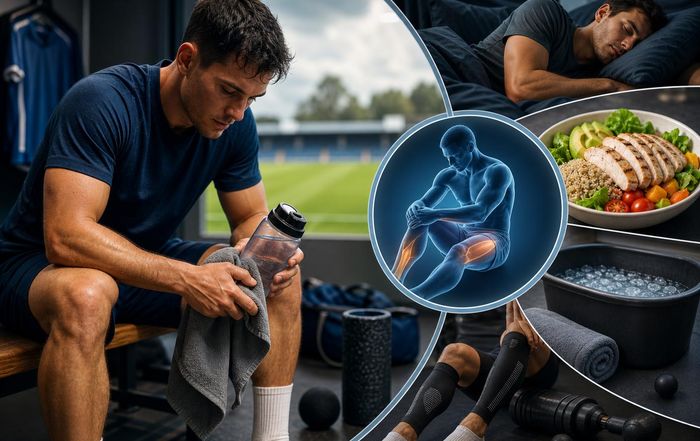
Sports Recovery Between Matches: What Actually Helps?
When competitions stack up-tournaments, playoffs, congested league schedules-the gap between matches can shrink from days to hours. At that point, what athletes do between whistles matters nearly as much as what they do during play. Recovery becomes a performance skill of its own, and it is often the difference between holding form and fading late in a series.
This healthy page looks at what genuinely helps recovery between matches, drawing on current sports science and practical experience from elite sport. It also separates robust evidence from popular but overhyped tools so that athletes, coaches, and active enthusiasts can prioritize what works when time is tight.
Why Recovery Between Matches Matters More Than Ever
Modern sport is played at higher speeds and workloads than in previous decades. GPS tracking in football, rugby, and field hockey, for example, shows that athletes cover more distance at high intensity and perform more repeated sprints than earlier generations. That intensity drives performance but also creates substantial neuromuscular fatigue, muscle damage, and central nervous system stress.
Recovery is not only about feeling less sore. In team sports, poor recovery is linked to decrements in sprint speed, jump height, change-of-direction performance, and decision-making. In endurance sports, insufficient recovery between stages or races can impair pacing, increase perceived exertion, and elevate the risk of illness. Across sports, congested schedules correlate with higher injury rates, especially soft-tissue injuries.
Organizations such as the International Olympic Committee and FIFA have highlighted fixture congestion and inadequate recovery as player welfare issues, not just performance concerns. At the same time, commercial pressures and dense calendars are unlikely to ease soon. That puts more emphasis on smart, evidence-based strategies that fit into the limited window between matches.
For readers interested in the broader health implications of training load and recovery, our dedicated health and sports sections regularly cover overtraining, injury trends, and athlete welfare.
The Foundations: Sleep, Nutrition, and Hydration
Before considering ice baths, compression boots, or advanced tech, three basics dominate the recovery picture: sleep, nutrition, and hydration. Most other methods add only small benefits on top of these fundamentals.
Sleep: The single most powerful recovery tool
Sleep is when the body carries out much of its tissue repair, hormonal regulation, and memory consolidation. Research summarized by organizations like the National Sleep Foundation and Sleep Foundation indicates that athletes typically need more sleep than non-athletes-often 8-10 hours per night, plus occasional naps during heavy training or competition blocks.
Insufficient sleep is associated with reduced sprint performance, slower reaction time, impaired decision-making, and increased injury risk. Experimental studies in basketball and tennis have shown that extending sleep (for example, adding 1-2 hours per night) can improve accuracy, speed, and subjective well-being.
Key practical points include maintaining consistent bed and wake times during tournaments, minimizing late-night screen exposure, and managing caffeine timing so it does not interfere with sleep onset. Travel across time zones complicates this, and organizations such as the Centers for Disease Control and Prevention and World Health Organization offer general guidance on sleep hygiene that can be adapted for athletes.
Given its impact on overall wellness, sleep is also a recurring theme in our wellness coverage, particularly in relation to stress and mental health.
Nutrition: Refueling, rebuilding, and reloading
Between matches, nutrition serves three main functions: replacing energy, repairing muscle, and restoring glycogen (the stored form of carbohydrate in muscle and liver). The International Olympic Committee and American College of Sports Medicine provide widely used position stands on sports nutrition that underpin most elite practice.
For short turnarounds (less than 24 hours), carbohydrate becomes especially critical because glycogen resynthesis is time-limited. Higher carbohydrate intakes-often in the range of 1-1.2 grams per kilogram of body mass per hour for the first few hours after intense exercise-are recommended in many guidelines. Over 24-48 hours, total daily carbohydrate intake is more important than exact timing, but starting early still helps.
Protein supports muscle repair and adaptation. Most sports nutrition bodies recommend around 1.6-2.2 grams of protein per kilogram of body mass per day for athletes during heavy training or competition periods, spread across several meals. Including 20-40 grams of high-quality protein with each meal or snack helps maximize muscle protein synthesis.
Fat and micronutrients also matter, but in the narrow window between matches, the immediate focus is generally on carbohydrate and protein. Practical strategies include recovery shakes, easily digestible meals (rice, pasta, potatoes, lean proteins), and planned post-match catering for teams. For deeper dives into fueling strategies, the nutrition section often explores carbohydrate periodization and protein intake for different sports.
Hydration: More than just drinking water
Dehydration can impair endurance, cognitive performance, and thermoregulation. Governing bodies like World Athletics and FIFA emphasize individualized hydration strategies based on sweat rate, climate, and personal tolerance.
Rehydration after a match is not only about fluid volume but also electrolytes, particularly sodium. When matches are played in hot or humid environments, or when athletes are heavy sweaters, sodium losses can be substantial. Replacing those losses via food (e.g., salty snacks, soups) and drinks with electrolytes can speed rehydration and reduce the risk of cramps in subsequent matches.
We cover environmental and climate-related performance issues, including heat and humidity, within our environment and world channels, as climate conditions increasingly affect competition schedules.
Active Recovery, Mobility, and Low-Intensity Movement
After intense competition, many athletes instinctively want to rest completely. While rest is essential, complete immobility for long periods can actually slow recovery in some respects. Low-intensity movement-often called "active recovery"-can help maintain blood flow, promote metabolite clearance, and reduce stiffness.
Studies in team and endurance sports suggest that very light activity (for example, easy cycling, walking, or light pool work) can modestly improve next-day performance markers compared with total rest, especially when done soon after competition. However, the intensity must remain low enough not to add additional fatigue. Heart rate zones below typical aerobic training levels are usually recommended.
Mobility work, dynamic stretching, and gentle range-of-motion exercises can also be useful between matches to maintain joint function and reduce perceived tightness. Evidence for static stretching as a recovery tool is mixed; it may help some athletes feel looser but, at higher intensities or durations, could temporarily reduce strength and power. Many performance staff now integrate short, movement-based routines that combine light mobility, breathing work, and tissue preparation before the next session rather than relying on long static stretching sessions immediately after competition.
Readers interested in practical mobility and active recovery ideas can find related content in our fitness coverage, where we frequently break down warm-up and cool-down protocols used in high-performance environments.
Cold Water, Heat, and Contrast Therapies
Few recovery methods are as embedded in sports culture as the ice bath. Yet the science is more nuanced than the cold tub's popularity suggests.
Cold water immersion (CWI)
Cold water immersion-typically 10-15°C (50-59°F) for 10-15 minutes-is widely used in team sports. Meta-analyses reported by organizations such as Sports Medicine Australia and summarized in journals indexed by PubMed (via the U.S. National Library of Medicine at NIH) suggest that CWI can reduce perceptions of muscle soreness and, in some cases, attenuate short-term losses in power or repeated-sprint performance. The benefits are often modest but can be meaningful in congested schedules.
However, there is also evidence that frequent post-exercise cold exposure may blunt some long-term training adaptations, particularly hypertrophy and strength gains, by dampening inflammatory signaling. That makes context crucial. For in-season recovery between matches, especially in tournaments where immediate performance is prioritized over long-term adaptation, CWI can be a useful tool. During off-season strength blocks, heavy reliance on cold immersion immediately after training may be counterproductive.
Heat and contrast therapy
Heat-based methods-such as hot baths, saunas, or localized heat packs-are more associated with relaxation, perceived recovery, and sometimes flexibility. Evidence for direct performance benefits is less robust than for cold water in the immediate post-exercise window, though heat is being studied for its role in chronic adaptations and cardiovascular health. Organizations like Harvard Health Publishing and Mayo Clinic provide general guidance on sauna and heat exposure safety that can inform athlete protocols.
Contrast water therapy, alternating hot and cold immersion, is another popular approach. Some studies show small benefits for soreness and subjective recovery compared with passive rest, but the physiological mechanisms are not fully established. As with many modalities, contrast therapy may be most valuable for its psychological effects and perceived readiness.
In practice, elite teams often individualize temperature-based recovery: some players respond well to cold, others prefer heat, and some rotate methods. The key is aligning the tool with the athlete's goals, schedule, and tolerance.
Compression, Massage, and Soft-Tissue Work
Compression garments and massage therapies occupy a large share of the commercial and cultural space around recovery. Their actual effects are more modest but still worthwhile in certain contexts.
Compression garments and devices
Graduated compression garments are designed to improve venous return and reduce swelling. Research summarized by groups such as UK Sport and Australian Institute of Sport indicates that compression can slightly reduce muscle soreness and may help maintain power output in some protocols, particularly when worn for extended periods after exercise.
Pneumatic compression devices (often seen as "recovery boots") apply intermittent pressure to the limbs. Evidence is still emerging, but early studies suggest they can improve perceptions of recovery and reduce limb girth (a proxy for swelling). Whether this translates to meaningful performance benefits between matches varies by sport and time frame.
Given the relatively low risk and moderate comfort for most athletes, compression is often used as a supportive, not primary, recovery method. It is rarely a game-changer on its own but can contribute as part of a broader plan.
Massage and self-myofascial release
Sports massage remains a staple in many high-performance programs. While its ability to remove lactate or "flush toxins" is often overstated, systematic reviews point to small but consistent benefits for perceived soreness and mood. Those psychological and relaxation effects are not trivial, particularly in high-stress tournament environments.
Self-myofascial release tools-foam rollers, massage balls, handheld devices-offer similar, though often smaller, benefits. They can temporarily increase range of motion and reduce soreness for some individuals. Overuse or excessive pressure, however, can cause additional tissue irritation.
Massage and soft-tissue work may be especially valuable when integrated with other interventions: for example, a short massage, followed by light mobility and hydration, then adequate sleep. None of these methods replace the fundamentals of recovery, but they can help athletes feel ready to compete again.
Stretching, Mobility, and the Flexibility Question
Stretching has long been associated with recovery, but research has challenged some traditional assumptions. Large reviews, including those highlighted by NCAA Sport Science Institute and academic bodies, suggest that static stretching after exercise has limited impact on delayed onset muscle soreness (DOMS) or performance restoration.
That does not mean flexibility work is useless. Regular stretching and mobility training can improve or maintain range of motion, which may reduce some injury risks and support technical performance over the long term. However, as an acute recovery tool between matches, its primary value is in maintaining joint mobility and providing a low-intensity, calming activity rather than dramatically accelerating physiological repair.
Dynamic mobility drills, gentle joint circles, and controlled articular rotations are often integrated into next-day sessions to counteract stiffness without imposing high loads. The emphasis has shifted from long, painful static holds to targeted, movement-based routines that preserve function while respecting fatigue.
Psychological Recovery, Stress, and Mental Fatigue
Recovery is not purely physical. Mental fatigue can impair decision-making, reaction time, and tactical awareness, even when muscles are physically capable. In sports that demand constant attention-football, basketball, rugby, racket sports-mental freshness can be as important as leg freshness.
Sports psychology research, including work referenced by organizations like the American Psychological Association and Association for Applied Sport Psychology, highlights several strategies for psychological recovery:
Structured downtime away from sport, including social time and hobbies.
Relaxation techniques such as breathing exercises, mindfulness, or progressive muscle relaxation.
Clear pre-sleep routines to help the brain "switch off" from competition stress.
Debrief structures that prevent athletes from ruminating on mistakes late into the night.
Technology adds another layer. Constant social media exposure, online criticism, and performance scrutiny can extend stress well beyond the final whistle. Some teams now implement "digital curfews" or guided media strategies during tournaments to protect mental space.
Our culture and news coverage has increasingly examined the mental health dimension of elite sport, including the role of governing bodies and clubs in providing psychological support.
Monitoring Load and Individual Responses
One of the biggest shifts in recovery science over the past decade has been the move toward individualized load monitoring. Rather than applying one-size-fits-all recovery protocols, high-performance programs now routinely collect data to understand how each athlete responds to training and competition.
Common tools include:
Session rating of perceived exertion (sRPE) to estimate internal load.
Wellness questionnaires tracking sleep, soreness, mood, and stress.
Heart rate variability (HRV) measures as a proxy for autonomic nervous system status.
GPS and accelerometer data for external load (distance, accelerations, impacts).
Organizations such as Catapult Sports and STATSports have popularized GPS-based monitoring in team sports, while governing bodies like World Rugby and NBA have invested in research on load and injury risk. Although the exact metrics and thresholds differ by sport, the principle is consistent: recovery strategies are most effective when informed by how tired an athlete actually is, not how tired they are assumed to be.
Individual variability is substantial. Some athletes tolerate high loads with minimal soreness, others accumulate fatigue quickly. Genetics, training age, position, injury history, and lifestyle all play roles. Monitoring helps identify who needs more aggressive recovery interventions (e.g., extra sleep, modified training, additional soft-tissue work) and who can handle a more typical schedule.
For those interested in the intersection of data, wearables, and training, our technology and innovation sections frequently explore emerging tools for athlete monitoring and recovery.
What About Supplements and "Recovery Products"?
The sports marketplace is crowded with supplements and products promising faster recovery: antioxidant blends, tart cherry juice, omega-3 capsules, CBD oils, adaptogens, and more. Some have supportive evidence; many have little or inconsistent data.
Authoritative bodies such as the Australian Institute of Sport, UK Anti-Doping, and various national Olympic committees categorize supplements by evidence and risk. A few points stand out:
Well-established basics like carbohydrate, protein, and fluids are far more impactful than most specialized supplements.
Some compounds, such as omega-3 fatty acids, vitamin D (in deficient athletes), and tart cherry products, show modest benefits for inflammation, muscle soreness, or sleep in certain contexts.
High-dose antioxidant supplements can interfere with training adaptations by blunting beneficial oxidative signaling, particularly when used chronically.
Anti-doping risks are real. In some countries, a sizable percentage of supplements have been found to contain undeclared substances. Athletes in regulated environments are advised to use only third-party tested products and consult team or federation nutritionists.
For recreational athletes, cost-benefit considerations are important. Many recovery products are expensive and offer only marginal gains compared with free or low-cost strategies like sleep optimization, structured nutrition, and basic mobility work.
Building a Practical Between-Match Recovery Plan
Evidence-based recovery does not need to be complicated, but it does need to be deliberate. A simple framework for a 24-48 hour window between matches might include:
Immediately post-match: Begin rehydration with fluids and electrolytes; consume a carbohydrate- and protein-rich snack or meal; consider light active recovery or a short cold immersion if appropriate and tolerated.
Later the same day: Prioritize a balanced meal, gentle mobility work, and psychological decompression; limit caffeine and blue light exposure in the evening; aim for sufficient sleep duration and quality.
Next day: Use low-intensity movement (e.g., easy cycling, pool work, or a light technical session), targeted mobility, and optional compression or massage; continue structured nutrition and hydration; monitor soreness and readiness.
Lead-in to next match: Transition to a short, sharp activation session focusing on sport-specific movements, ensuring athletes feel physically and mentally primed rather than sluggish.
At higher levels, this framework is tailored with data from load monitoring, medical input, and individual preference. At all levels, it hinges on executing the basics consistently rather than chasing every new gadget or trend.
For those looking to integrate recovery planning into more training or competition calendars, our business and events sections occasionally examine how clubs, leagues, and organizers are restructuring schedules and support systems around player welfare.
Separating Signal from Noise
Between matches, athletes face a crowded landscape of recovery options, from evidence-backed fundamentals to unproven fads. The current balance of research suggests:
Sleep, nutrition, and hydration deliver the largest and most reliable gains.
Low-intensity active recovery and mobility support circulation and function without adding load.
Cold water immersion, compression, and massage can offer small-to-moderate benefits, especially for soreness and perceived readiness, when used selectively.
Psychological recovery and mental load management are essential, particularly in high-pressure tournaments.
Supplements and specialized devices may provide incremental benefits but should be evaluated carefully for evidence, cost, and anti-doping considerations.
Individual responses vary, so monitoring and personalization are increasingly important.
In a packed season, recovery is no longer an optional extra-it is part of performance. Athletes and coaches who treat it with the same rigor as training and tactics are better positioned to sustain form, reduce injury risk, and handle the demands of modern sport.