
How Activewear Design Is Adapting To Everyday Use
The Rise Of Everyday Performance: Activewear's New Reality
Ok so finally activewear is no longer confined to gyms, tracks, or yoga studios; it has become a central element of everyday wardrobes from New York and London to Singapore and Sydney, and this shift is reshaping how brands design, manufacture, and position performance apparel. What began as a casual trend of wearing leggings or running shoes outside training environments has evolved into a global lifestyle movement, driven by changing work patterns, heightened health awareness, and a new expectation that clothing must deliver both technical performance and all-day comfort. For the ultra sporty community, here, who follow developments in fitness, health, and performance-driven brands, the transformation of activewear into a sophisticated everyday category is not just a fashion story; it is a business, technology, and culture story that touches multiple sectors and regions worldwide.
This shift has been accelerated by hybrid work models, the global emphasis on preventive health, and the continued growth of the wellness economy, which, according to the Global Wellness Institute, surpassed five trillion dollars and continues to expand across North America, Europe, and Asia. As people move seamlessly between home, office, gym, and social spaces, they demand clothing that can perform in all these contexts, and this demand is forcing leading sportswear and fashion houses to rethink fabric science, silhouette design, sustainability strategies, and digital integration in ways that were not anticipated a decade ago.
From Athleisure To "All-Condition Wear"
The early 2010s popularized the term "athleisure," describing a mix of athletic and leisure clothing that blurred the lines between sportswear and casualwear, with brands like Lululemon, Nike, and Adidas quickly capitalizing on consumers' desire for comfort without sacrificing aesthetics. However, by 2026, the category has evolved into what many industry analysts now call "all-condition wear," a more sophisticated concept in which garments are engineered to handle multiple micro-environments in a single day, from commuter trains and climate-controlled offices to outdoor runs and evening social events. The shift reflects broader lifestyle changes documented by organizations such as McKinsey & Company, which have highlighted the rise of "omnichannel living," where digital and physical routines are deeply intertwined and consumers expect frictionless transitions in every aspect of life, including clothing.
In response, design teams at global performance leaders and emerging boutique labels are focusing less on purely athletic silhouettes and more on modular, minimal, and tailored forms that can sit comfortably in a boardroom or a café while still delivering moisture management, stretch, and breathability suitable for a high-intensity interval training session. This repositioning has been particularly visible in major urban centers like London, Berlin, New York, and Tokyo, where office dress codes have relaxed but expectations for professionalism remain high, creating a sweet spot for refined activewear that can be paired with blazers, outerwear, or even formal footwear.
Fabric Innovation: The Engine Behind Versatility
At the core of activewear's adaptation to everyday use is a wave of textile innovation that has expanded the capabilities of performance fabrics far beyond the gym. Traditional polyester-spandex blends have been refined with advanced knitting techniques, micro-ventilation structures, and fiber cross-sections that optimize moisture wicking and thermoregulation while reducing shine and "synthetic" appearance, enabling garments to look more like classic woven trousers or knitwear while retaining the functional benefits of training gear. Research hubs such as MIT's Department of Materials Science and Engineering and performance laboratories operated by major brands have played a central role in developing fibers that respond dynamically to body temperature, humidity, and movement, creating garments that adapt in real time to the wearer's activity level across a full day.
Simultaneously, there has been rapid progress in bio-based and recycled materials, as sustainability expectations rise among consumers in Europe, North America, and Asia-Pacific. Companies are increasingly turning to recycled polyester derived from ocean-bound plastics, bio-nylons, and plant-based elastanes, while experimenting with blends that integrate natural fibers like organic cotton, TENCEL, or merino wool for a softer, more premium hand feel suitable for office and travel environments. Organizations such as the Textile Exchange and the Ellen MacArthur Foundation have been instrumental in promoting circular design frameworks and material traceability, and their influence is clearly visible in the product narratives of leading activewear brands that now emphasize lifecycle impact alongside performance metrics.
For the fit-conscious audience of FitPulseNews, these fabric developments are particularly relevant because they directly influence comfort, durability, and skin health, integrating insights from wellness and environment reporting into the clothes people wear every day. Anti-odor treatments using silver ions or bio-based antimicrobial finishes, for instance, are being reformulated to reduce environmental toxicity while maintaining effectiveness, allowing consumers to wear garments longer between washes and thereby lowering water and energy consumption in line with broader sustainability goals.
Design Language: From Gym-Centric To Lifestyle-Driven
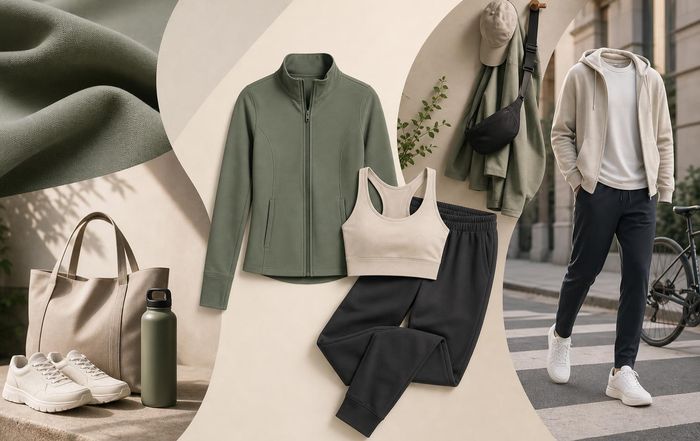
While fabric technology provides the functional backbone of modern activewear, the visual and structural design language has undergone a parallel evolution to meet the aesthetic expectations of everyday use. Designers have moved away from overtly sporty elements such as large logos, contrast piping, and neon color blocking, instead embracing neutral palettes, subtle branding, and refined tailoring that echo contemporary ready-to-wear collections in Paris, Milan, and New York. This shift has allowed performance garments to blend seamlessly into wardrobes across cultures, from minimalist Scandinavian cities like Stockholm and Copenhagen to vibrant urban hubs like Seoul and São Paulo.
Key silhouettes such as tapered joggers, technical chinos, performance polos, and structured knit tops now dominate the "work-leisure" segment, with pattern cutting techniques borrowed from traditional suiting to ensure clean lines and flattering drape. At the same time, designers are integrating hidden functional features-gusseted seams for mobility, concealed zip pockets for secure storage, and articulated knees or elbows-to preserve the athletic DNA of the garments without compromising their suitability for client meetings or formal events. Resources like Business of Fashion have documented how this hybridization of sportswear and tailoring has become a major growth driver in the global apparel market, particularly in the United States, United Kingdom, Germany, and Japan, where knowledge-economy workers prioritize comfort but cannot fully abandon professional norms.
For everyday athletes and professionals who follow business and culture coverage on FitPulseNews, the appeal of this new design language lies in its ability to support a holistic lifestyle that values movement, health, and performance without requiring wardrobe changes throughout the day. The same pair of technical trousers can be worn to a morning strategy meeting, a lunchtime walk, and an evening strength session, reflecting a broader cultural shift in which fitness and wellness are no longer siloed activities but integrated components of daily life.
The Health And Performance Imperative In Everyday Contexts
The integration of activewear into daily wardrobes is not purely an aesthetic or convenience trend; it is also deeply connected to evolving understandings of health, movement, and human performance. Over the past decade, organizations such as the World Health Organization and the Centers for Disease Control and Prevention have consistently highlighted the risks of sedentary lifestyles and the importance of incorporating regular movement into daily routines, especially for office workers in North America, Europe, and Asia. As standing desks, walking meetings, and micro-workouts become more common in corporate environments, clothing that supports mobility, breathability, and comfort throughout the day becomes a practical necessity rather than a luxury.
Activewear-inspired everyday garments are being designed with ergonomic considerations that align with insights from sports science and occupational health. Four-way stretch fabrics reduce resistance during walking or stair climbing, strategically placed mesh zones improve ventilation in high-heat areas, and seamless or flatlock construction minimizes chafing during extended wear, all of which contribute to better adherence to daily movement goals. Readers following health and sports stories on FitPulseNews can recognize how these design choices reflect a performance mindset applied beyond the gym, supporting cardiovascular health, musculoskeletal resilience, and mental well-being throughout the workday.
Furthermore, the integration of compression elements into socks, leggings, and base layers is gaining traction among frequent travelers and desk-bound professionals in global business hubs, as research from institutions like Mayo Clinic and Harvard Health Publishing continues to emphasize the benefits of improved circulation and muscle support. By embedding such performance features into garments that look indistinguishable from regular office or travel wear, brands are effectively turning everyday clothing into a subtle health intervention, aligning fashion with preventive medicine in ways that resonate strongly with health-conscious consumers from Toronto to Tokyo.
Digital Integration: Smart Textiles And Connected Experiences
One of the most significant frontiers in the adaptation of activewear to daily use is the emerging integration of digital technology into fabrics and garment systems. While early attempts at "smart clothing" were often bulky or limited to niche athletic applications, recent advances in conductive yarns, flexible sensors, and low-power electronics are enabling more seamless and aesthetically neutral implementations that can be worn comfortably in everyday settings. Technology leaders and research institutions, including Stanford University and collaborations with companies like Google and Samsung, have been exploring ways to embed biometric sensors, haptic feedback modules, and gesture-control interfaces into textiles without compromising comfort or washability.
In 2026, this work is beginning to filter into commercial products that track heart rate, respiration, posture, and movement patterns throughout the day, providing data that can be integrated with health platforms such as Apple Health or Google Fit. For the FitPulseNews audience that follows technology and innovation, these developments represent a convergence of wearable technology and everyday performance apparel, where the same shirt worn to a client presentation can quietly monitor stress levels and prompt breathing exercises, or a pair of smart leggings can analyze gait mechanics during a lunchtime run and provide feedback via a smartphone app.
Importantly, the design of these digitally enhanced garments is increasingly discreet, with sensors integrated into seams or yarn structures and battery modules miniaturized to fit into hidden pockets or detachable modules. This discretion is essential for everyday adoption, as professionals in sectors from finance to healthcare in cities like London, Zurich, Singapore, and New York require technology that supports performance without drawing unnecessary attention in formal settings. The challenge for brands is to maintain data security and privacy, an area where guidance from organizations such as the Electronic Frontier Foundation and evolving regulatory frameworks in the European Union and other regions play a crucial role in shaping responsible innovation.
Sustainability And Circularity As Core Design Principles
As activewear becomes a staple of everyday wardrobes, its environmental footprint has come under increasing scrutiny from consumers, regulators, and advocacy groups worldwide. Synthetic performance fabrics, while effective, have historically been associated with microplastic pollution, high energy use, and end-of-life challenges, prompting a shift toward more sustainable materials, manufacturing processes, and circular business models. Reports from entities like the United Nations Environment Programme and Fashion for Good have highlighted the urgency of reducing the environmental impact of the fashion and sportswear industries, with particular focus on polyester-heavy categories such as activewear.
In response, brands are experimenting with design strategies that extend product lifespans and facilitate recycling or upcycling at the end of use. This includes designing garments with mono-material constructions that are easier to recycle, employing modular components such as detachable waistbands or zippers, and implementing take-back programs that allow consumers to return worn items for refurbishment or material recovery. For top followers engaged with environment and sustainability coverage on FitPulseNews, these initiatives represent a critical intersection of performance, responsibility, and innovation, where the same technical features that enable high-intensity training and all-day wear must be balanced with long-term planetary health.
Moreover, transparency is becoming a defining element of trustworthiness in the activewear sector. Leading companies are publishing detailed impact reports, leveraging blockchain-based traceability systems, and collaborating with third-party auditors to verify claims related to recycled content, chemical management, and labor practices. Platforms like Sustainable Apparel Coalition and OEKO-TEX provide frameworks and certifications that help both brands and consumers navigate complex sustainability claims, reinforcing the importance of verifiable data over marketing rhetoric. This focus on measurable impact and third-party validation aligns closely with the Experience, Expertise, Authoritativeness, and Trustworthiness principles that guide editorial decisions at FitPulseNews, ensuring that coverage of activewear and related industries is grounded in evidence and accountability.
Regional Perspectives: How Markets Around The World Are Shaping Design
The global nature of activewear's evolution means that design strategies must account for diverse cultural, climatic, and regulatory contexts across North America, Europe, Asia, Africa, and South America. In the United States and Canada, for instance, the popularity of outdoor activities such as trail running, hiking, and cycling has encouraged brands to develop hybrid garments that combine urban styling with technical features like water repellency, UV protection, and abrasion resistance, catering to consumers who transition from city commutes to weekend adventures. Learn more about how outdoor and performance trends intersect with broader world and news coverage.
In Europe, particularly in countries like Germany, the Netherlands, and the Nordic region, strong sustainability expectations and minimalist design preferences have led to a demand for understated, high-quality activewear that prioritizes durability, repairability, and low-impact materials. Organizations such as the European Environment Agency and national consumer protection bodies have influenced both regulations and consumer awareness, encouraging brands to invest in lifecycle assessments and eco-design principles. Meanwhile, in Asia-Pacific markets such as Japan, South Korea, Singapore, and Australia, technological sophistication and dense urban living have fostered a strong appetite for smart textiles, compact layering systems, and climate-adaptive garments that can handle heat, humidity, and rapid temperature shifts between indoor and outdoor environments.
Emerging markets in Africa and South America are also shaping the evolution of activewear through their growing middle classes and expanding sports and wellness cultures. In countries like South Africa and Brazil, there is rising interest in performance apparel that reflects local aesthetics and climate conditions, blending bold colors and patterns with breathable, lightweight fabrics suitable for warm weather and outdoor sports. Global sports events, from football tournaments to marathons, continue to influence consumer preferences and create opportunities for brands to test new designs that bridge performance and lifestyle. International bodies such as the International Olympic Committee and major federations provide platforms where these trends become visible on a global stage, reinforcing the cultural significance of sports-inspired apparel far beyond the playing field.
The Workplace Reimagined: Dress Codes, Hybrid Work, And Performance Apparel
The evolution of workplace culture since the early 2020s has been one of the most powerful drivers of everyday activewear adoption, as hybrid and remote work models have permanently altered expectations around office attire. Many organizations in sectors ranging from technology and media to consulting and healthcare have relaxed formal dress codes, allowing employees to prioritize comfort and practicality while still maintaining a professional appearance. This has created fertile ground for performance-driven garments that resemble traditional office wear but deliver the stretch, breathability, and easy care associated with activewear.
Human resources and corporate wellness leaders, informed by research from groups like the Society for Human Resource Management and World Economic Forum, increasingly recognize that comfortable, movement-friendly clothing can support employee well-being, focus, and productivity, especially in environments where people move between meetings, collaborative spaces, and remote work setups. For active fans tracking jobs and workplace trends on FitPulseNews, this shift underscores how apparel choices intersect with organizational culture, mental health, and talent retention strategies, particularly among younger workers in the United States, United Kingdom, Germany, and other innovation-driven economies.
As companies redesign offices to include wellness rooms, on-site fitness facilities, and outdoor collaboration areas, the expectation that employees might exercise before, during, or after work has become normalized, further reinforcing the need for clothing that can handle both professional and athletic demands. Brands have responded with capsule collections labeled "commuter," "office-ready performance," or "work-leisure," often featuring wrinkle-resistant fabrics, stain-repellent finishes, and quick-dry properties that simplify care for busy professionals balancing demanding schedules with ambitious fitness goals.
The Role Of Media, Community, And Events In Shaping Consumer Expectations
Media platforms like FitPulseNews play a crucial role in informing and shaping consumer expectations around activewear's everyday evolution, by connecting daily original developments in performance apparel to broader narratives in sports, nutrition, events, and wellness. Through interviews with designers, sports scientists, and business leaders, as well as coverage of major marathons, fitness expos, and technology conferences, the platform helps readers understand how innovations in fabric science, digital health, and sustainability converge in the garments they choose each day.
Community-driven events, from local running clubs in London or Toronto to large-scale fitness festivals in Los Angeles, Berlin, or Singapore, also act as testing grounds where consumers experience new products in real-world conditions and share feedback through social media and online forums. Organizations like Strava and Garmin foster digital communities where performance data, gear reviews, and training stories circulate rapidly, influencing purchasing decisions and encouraging brands to iterate quickly based on real user experiences. For a global audience engaged with sports and fitness, these interactions underscore the importance of authenticity and performance credibility in everyday activewear, as consumers increasingly differentiate between garments that simply look sporty and those that genuinely enhance comfort and capability.
Industry trade shows and innovation summits, such as ISPO Munich and Outdoor Retailer, serve as focal points where manufacturers, retailers, and media outlets converge to assess the latest advancements in materials, design, and digital integration. Coverage of these events helps business leaders, investors, and entrepreneurs evaluate where the market is heading, which categories are gaining traction, and how consumer expectations are evolving across regions. For FitPulseNews, aligning on-the-ground event insights with ongoing reporting on innovation and business trends ensures that readers receive a holistic view of how activewear's everyday transformation fits within the broader fitness and wellness ecosystem.
Running Ahead: Experience, Trust, And The Future Of Everyday Activewear
As activewear design continues to adapt to everyday use in 2026 and beyond, the most successful brands and platforms will be those that combine technical expertise, user-centric design, and verifiable sustainability with transparent communication and community engagement. Consumers in regions from North America and Europe to Asia-Pacific and Africa are increasingly discerning, expecting not only comfort and style but also evidence-based performance claims, responsible sourcing, and long-term durability from the garments they wear throughout their daily routines. Organizations that can demonstrate deep understanding of sports science, material engineering, and cultural trends, while maintaining clear and honest dialogue with their audiences, will be best positioned to earn long-term trust.
For FitPulseNews, the evolution of activewear into a sophisticated everyday category is part of a larger every day narrative that connects fitness, health, sports, technology, and sustainability into a coherent ecosystem of high-performance living. By examining how design, science, business strategy, and culture intersect in the clothing people choose each morning, the platform helps readers navigate a marketplace that is more complex and more promising than ever before.
In this landscape, activewear is no longer a separate category reserved for workouts; it is a foundational layer of modern life, supporting movement, comfort, and expression from the office to the gym, from the streets of New York and London to the parks of Melbourne and the waterfronts of Singapore. As innovation continues to accelerate in materials, digital integration, and circular business models, the line between sportswear and everyday wear will blur even further, creating new opportunities for brands, designers, and consumers to co-create a future where performance, well-being, and responsibility are woven into every seam.