
How Fitness Communities Improve Motivation and Retention?
The New Architecture of Fitness Motivation
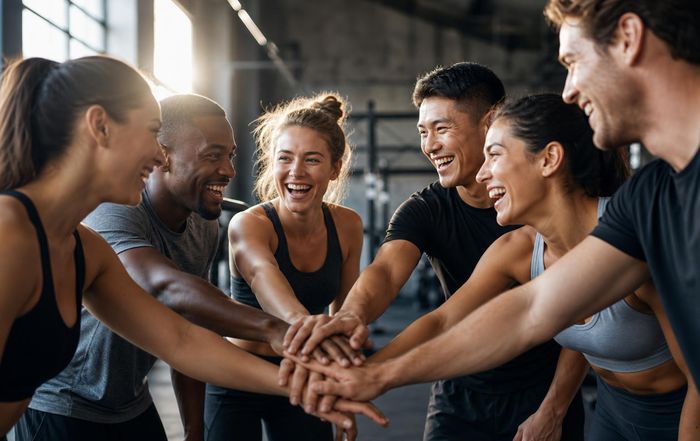
The fitness industry has undergone a structural shift from product-centric offerings to community-centric ecosystems, and nowhere is this more evident than in the way digital and physical fitness communities now drive long-term motivation and retention. For fit people here, who track the intersection of fitness, health, business, and culture, this transformation is not an abstract trend but a daily reality shaping how individuals train, how brands compete, and how organizations design services that keep people engaged well beyond the initial burst of enthusiasm. What was once a fragmented landscape of gyms, apps, and wearables has evolved into interconnected networks where shared goals, social accountability, and data-informed coaching combine to make adherence to exercise less about willpower and more about belonging. This article examines how those communities work, why they are so powerful from a behavioral and business perspective, and how they are reshaping the global fitness economy across markets from the United States and Europe to Asia-Pacific and beyond.
Why Community Outperforms Willpower
A growing body of behavioral science has demonstrated that willpower alone is an unreliable driver of sustained behavior change, whereas social context and environmental design have more durable effects. Research summarized by the American Psychological Association shows that habits anchored in social routines are significantly more resilient to stress and life disruption than habits based purely on individual resolve, and this insight has been quietly embedded into the design of leading fitness communities and platforms. Readers who follow the latest developments in training and adherence on the FitPulseNews health section will recognize that the most successful programs now integrate group challenges, shared milestones, and peer recognition as core features rather than add-ons, because the act of showing up for others tends to be more motivating than simply showing up for oneself.
This social dimension is particularly important in regions where work hours are long and urban life is fragmented, such as major cities in the United States, the United Kingdom, Germany, Singapore, and South Korea, where loneliness and stress can erode individual motivation to exercise. Studies referenced by institutions like Harvard T.H. Chan School of Public Health highlight that socially connected physical activity not only improves adherence but also amplifies mental health benefits, creating a reinforcing loop between emotional wellbeing and exercise behavior. Learn more about how social connection influences health outcomes on the World Health Organization website, where community-based interventions are increasingly recognized as central to public health strategies.
From Gym Memberships to Community Memberships
Traditional gym models in North America, Europe, and parts of Asia were built on a transactional foundation: sell a membership, provide access to equipment, and rely on a minority of highly motivated individuals to make consistent use of the facility. By contrast, the most resilient fitness businesses in 2026 treat membership as an entry point into a community where identity and social status are tied to participation, progress, and contribution. Brands such as CrossFit, F45 Training, Orangetheory Fitness, and regional boutique studios in markets like Australia, Canada, and the Nordic countries have demonstrated that structured group programming, coach-led sessions, and shared rituals can transform a simple workout into an experience that members do not want to miss, even when life becomes demanding.
This community-first approach is equally visible in digital platforms, where companies like Peloton, Strava, and Nike Training Club have integrated leaderboards, virtual high-fives, and group challenges to create a sense of shared effort across continents. Data from organizations like IHRSA and the Global Wellness Institute suggests that hybrid models, which blend in-person and digital community features, now outperform single-channel offerings in both retention and lifetime customer value. Readers interested in the business implications of this shift can explore deeper industry analysis in the FitPulseNews business coverage, where the movement from "access" to "belonging" is emerging as a key differentiator in a competitive marketplace.
The Psychology of Belonging and Accountability
At the core of community-driven motivation lie two psychological mechanisms: social identity and accountability. When individuals join a fitness community, whether a running club in London, a CrossFit box in Berlin, a cycling studio in New York, or a digital strength program followed in Tokyo or São Paulo, they are not just purchasing a service but adopting a new identity-runner, lifter, cyclist, athlete. According to frameworks developed by social identity theorists and summarized by institutions like Stanford University, people are more likely to persist in behaviors that are consistent with the groups they identify with, because deviation from those behaviors feels like a threat to social belonging.
Accountability strengthens this effect by making commitments visible. Group chats, shared calendars, training logs, and performance dashboards all serve as subtle social contracts, reminding members that others are aware of their efforts and expectations. Platforms such as Strava have become powerful case studies in how public training logs, kudos, and segment leaderboards can turn solitary activities like running and cycling into inherently social experiences, with users across the United States, Europe, and Asia checking in on each other's progress daily. The American College of Sports Medicine has consistently highlighted social support as a top facilitator of exercise adherence, and modern fitness communities operationalize that principle through structured group programs, mentorship pairings, and peer recognition systems that make quitting feel like letting the group down rather than simply changing one's mind.
Technology as the Social Glue of Modern Fitness
The convergence of wearable technology, mobile apps, and cloud-based data infrastructure has provided the scaffolding on which global fitness communities now operate. Devices from companies such as Apple, Garmin, Samsung, and WHOOP gather continuous streams of biometric data-heart rate, sleep quality, recovery metrics, and training load-that are then visualized and shared within networks, making progress more tangible and conversations more data-driven. Articles on the FitPulseNews technology page have chronicled how these tools have moved beyond novelty to become central to how coaches, clubs, and brands personalize experiences and maintain engagement across continents.
At the same time, advances in digital communication-video conferencing, live-streamed classes, and real-time chat-have dissolved geographical boundaries, enabling an athlete in Toronto to participate in a class led by a coach in Madrid or Singapore, while exchanging messages with peers in Tokyo or Cape Town. Platforms like Zoom and Microsoft Teams, initially adopted for remote work, have been repurposed by fitness entrepreneurs to host community check-ins, workshops, and accountability sessions that deepen relationships beyond the workout itself. The MIT Sloan School of Management has documented how such digital communities, when designed with clear norms and shared purpose, can rival in-person groups in terms of cohesion and engagement, particularly when combined with occasional physical meetups or local chapters.
Community-Driven Retention: Lessons from Leading Brands
Retention is the defining business challenge for fitness operators, and community is increasingly the primary solution. Data shared by major chains and boutique studios indicates that members who participate in group activities or social features have significantly longer tenure than those who train alone, a pattern observed across markets from the United States and Canada to Germany, the United Kingdom, and Australia. Orangetheory Fitness has built its model around heart rate-based group training where members see their performance displayed in real time alongside peers, creating a shared sense of effort and achievement that encourages repeat visits. Similarly, CrossFit affiliates in Europe, Asia, and South America rely on whiteboard scores, partner workouts, and community events to create an environment where absence is noticed and presence is celebrated.
On the digital side, Peloton has demonstrated that features such as live shout-outs, tags for local or interest-based subgroups, and structured series of classes can keep subscribers engaged for years, even as new competitors enter the market. The McKinsey Global Institute has reported that companies which successfully harness community dynamics often see higher customer lifetime value, reduced churn, and stronger brand advocacy than those relying solely on promotions or content libraries. Readers who follow the evolving landscape of fitness brands on the FitPulseNews brands section will recognize that community is no longer a marketing slogan but a measurable asset that directly influences revenue stability and growth.
Health, Performance, and the Social Dimension of Training
The impact of fitness communities is not limited to motivation and retention; it extends into health outcomes and performance gains that matter to individuals and policymakers alike. Group-based exercise programs have been associated with improved cardiovascular health, better mental wellbeing, and higher adherence to training protocols across diverse populations, from office workers in New York and London to older adults in Tokyo and Stockholm. The National Institutes of Health and Centers for Disease Control and Prevention have both highlighted the role of social support in increasing physical activity levels, particularly among populations at risk of chronic diseases such as diabetes and hypertension. Learn more about evidence-based exercise guidelines on the CDC physical activity resource pages, where community-based interventions feature prominently.
For athletes and serious enthusiasts, community can also serve as an engine of performance optimization. Shared training logs, collaborative goal-setting, and peer benchmarking allow runners, cyclists, and strength athletes to learn from each other and avoid common pitfalls such as overtraining or inadequate recovery. The International Olympic Committee and national sports institutes in countries such as Germany, Australia, and Norway have long recognized the value of team environments and training groups in elevating performance, and similar principles are now being applied to amateur and recreational athletes through clubs, leagues, and online communities. Individual readers of the FitPulseNews sports section will be familiar with how professional teams leverage culture, leadership, and shared purpose to sustain excellence over time, and those same levers are increasingly accessible to everyday participants through well-designed fitness communities.
Nutrition, Recovery, and Holistic Community Support
Modern fitness communities do not confine themselves to workouts; they increasingly address nutrition, sleep, stress management, and overall lifestyle, recognizing that these factors are inseparable from long-term adherence and results. Many leading gyms and digital platforms now offer integrated nutrition coaching, recipe sharing, and educational content informed by guidelines from organizations such as the Academy of Nutrition and Dietetics and NHS UK, enabling members to align their eating habits with their fitness goals in a supportive environment. Learn more about practical nutrition strategies and their role in performance on the FitPulseNews nutrition page, where the interplay between food, training, and recovery is a recurring theme.
Communities have also become vehicles for disseminating evidence-based information on sleep and stress, drawing from research shared by institutions like the National Sleep Foundation and Mayo Clinic, and translating it into actionable habits that members can adopt together, such as digital sunset challenges, mindfulness sessions, or community-wide sleep improvement programs. This holistic orientation aligns with the broader wellness movement documented by the Global Wellness Institute, where fitness is one component of a larger ecosystem that includes mental health, workplace wellbeing, and environmental factors. Readers can explore related topics on the FitPulseNews wellness section, which frequently highlights how community initiatives extend beyond the gym to influence daily routines and long-term health trajectories.
Cultural and Regional Variations in Fitness Communities
While the core principles of social motivation and accountability are universal, the way fitness communities manifest varies across cultures and regions, reflecting local norms, infrastructure, and economic conditions. In the United States and Canada, large-scale chains and boutique studios coexist with digital platforms, creating a hybrid ecosystem where individuals often belong to multiple communities simultaneously. In the United Kingdom, Germany, France, and the Netherlands, traditional sports clubs and local associations have blended with newer boutique concepts, leading to a rich tapestry of options that appeal to different age groups and socioeconomic segments.
In Asia, markets such as Singapore, Japan, South Korea, and Thailand have seen rapid growth in both high-end boutique studios and mobile-first fitness communities, often built around messaging platforms and super-apps that integrate payments, scheduling, and social features. The World Economic Forum has documented how urbanization and rising middle-class incomes in Asia-Pacific are driving demand for health and wellness services, with community-centric models particularly attractive to younger demographics seeking both social connection and self-improvement. In Africa and South America, including countries like South Africa and Brazil, grassroots running clubs, outdoor training groups, and football-based fitness initiatives are leveraging public spaces and low-cost digital tools to build inclusive communities that transcend traditional gym memberships. Readers interested in how these trends intersect with broader global changes can follow stories on the FitPulseNews world page, where regional case studies increasingly highlight the role of community in shaping active lifestyles.
Corporate Wellness, Jobs, and the Community Advantage
For employers navigating a competitive talent market in 2026, fitness communities have become an important lever in corporate wellness strategies and employer branding. Organizations across North America, Europe, and Asia are partnering with community-driven fitness providers or creating internal clubs and digital groups that encourage employees to train together, participate in challenges, and support each other in pursuing health goals. Research from entities like Gallup and Deloitte suggests that such programs, when authentically integrated into company culture, can improve engagement, reduce absenteeism, and enhance retention, particularly among younger workers who value holistic wellbeing.
The evolving fitness labor market is also being shaped by this community orientation. Coaches, trainers, and wellness professionals are increasingly expected to be community builders as much as technical experts, capable of fostering psychological safety, inclusion, and shared purpose in both physical and digital spaces. Platforms that connect professionals with opportunities, alongside coverage from outlets like FitPulseNews jobs and careers, are reflecting this shift by emphasizing soft skills, communication, and digital fluency as key differentiators. As remote and hybrid work arrangements continue across the United States, Europe, and other regions, the ability to design distributed fitness communities that engage employees across time zones and cultures is emerging as a strategic competency for both HR leaders and wellness providers.
Sustainability, Urban Design, and Community-Based Activity
Beyond individual health and business performance, fitness communities are intersecting with broader conversations about urban design, environment, and sustainability. Cities that prioritize walkability, cycling infrastructure, and accessible public spaces inherently support the emergence of organic fitness communities, from running groups in parks to cycling clubs using dedicated lanes, and these environments can reduce reliance on car-based commuting while promoting active transport. Organizations such as C40 Cities and UN Environment Programme have highlighted the co-benefits of active mobility for climate goals, air quality, and public health, making community-based fitness not only a personal or commercial concern but a policy tool. Learn more about the intersection of fitness, environment, and public policy on the FitPulseNews environment section, where active cities and sustainable infrastructure are recurring topics.
Fitness brands themselves are also integrating sustainability into their community narratives, organizing plogging runs, beach clean-ups, and charity events that combine physical activity with environmental or social impact. Companies like Patagonia and Adidas, along with numerous local brands in Europe, Asia, and the Americas, have experimented with initiatives that invite customers to participate in cause-driven activities, strengthening both community bonds and brand loyalty. Readers can explore how these initiatives fit into the broader sustainability agenda on the FitPulseNews sustainability page, where fitness is increasingly framed as part of a responsible, future-oriented lifestyle rather than a purely aesthetic pursuit.
The Future of Fitness Communities ?
Looking ahead to the late 2020s, fitness communities are likely to become even more integrated, intelligent, and personalized, as advances in artificial intelligence, biometric sensing, and immersive media reshape the way people connect around movement and health. Hyper-personalized coaching delivered through community platforms, virtual reality group workouts, and cross-ecosystem data sharing are poised to deepen engagement while raising new questions about privacy, equity, and digital wellbeing. Institutions such as OECD and World Bank are beginning to examine how digital health and fitness ecosystems influence labor markets, healthcare costs, and social cohesion, underscoring that these trends have macroeconomic implications as well as individual benefits. Learn more about emerging innovations in this space on the FitPulseNews innovation section, where technology, business, and human behavior converge.
For us the rise of fitness communities is not just a topic to report on but a lens through which to understand the broader evolution of health, sports, brands, culture, and business worldwide. From in-depth analyses of new training platforms to profiles of community leaders in cities across North America, Europe, Asia, Africa, and South America, the publication is positioned to help readers navigate a landscape where belonging is as important as programming, and where the most successful fitness journeys are rarely solitary. As happy sporty readers move between the fitness, health, culture, and news sections, a consistent theme emerges: in 2026, motivation and retention are no longer mysteries to be solved by sheer discipline or clever marketing; they are the natural outcomes of well-designed communities that align individual aspirations with shared purpose, credible expertise, and enduring trust.