
How France Is Blending Fitness With Everyday Wellbeing
A New French Model of Everyday Fitness
France is emerging as one of the most compelling testbeds for a new model of fitness that is less about performance metrics and more about integrating movement, recovery and mental balance into the fabric of daily life, and this shift is resonating strongly with the global, health-conscious discovery enthusiastic followers of FitPulseNews who increasingly look to European lifestyles for practical, sustainable wellbeing inspiration. While countries such as the United States and the United Kingdom remain leaders in commercial fitness innovation, France is quietly redefining what it means to live an active life by embedding physical activity into urban design, workplace culture, digital health ecosystems and even national policy, in a way that speaks directly to long-term wellbeing rather than short-term transformation. This approach, often referred to domestically as "bien-être actif," is less about gym-centric routines and more about creating an environment in which walking, cycling, mindful movement and social sport feel as natural as a morning coffee, a model that businesses, policymakers and health leaders around the world are now analyzing with growing interest.
For a local and global sports media market that follows the recent intersection of fitness and performance, France offers a living case study in how a mature economy can move beyond fragmented wellness trends and toward a coherent, culturally rooted framework that aligns personal health, public policy and private-sector innovation. French cities, companies and healthcare institutions are not merely promoting exercise; they are integrating it into transport systems, medical protocols, corporate benefits and digital platforms, creating a dense ecosystem in which physical activity is framed as a core component of quality of life and economic resilience.
Cultural Foundations: From "Art de Vivre" to "Art de Bouger"
To understand how France is blending fitness with everyday wellbeing, it is necessary to begin with the cultural foundations that shape attitudes to the body, food and time. For decades, international observers have analyzed the so-called "French paradox," the idea that a population with a strong culinary culture built around bread, cheese and wine can nonetheless maintain relatively favorable health indicators, a topic explored extensively by institutions such as INSEE and Santé Publique France. While the paradox has been overstated at times, it highlights a deeper reality: France has long placed value on moderation, social meals and walking-centric urban life, all of which create a naturally active baseline that many car-dependent societies lack.
In contrast to more individualistic fitness cultures, where the gym is often a site of personal optimization, France tends to embed movement into social and leisure contexts, from Sunday family walks along the Seine to community sports in local clubs known as "associations sportives." Organizations like Fédération Française d'Éducation Physique et de Gymnastique Volontaire have for years promoted accessible, non-competitive physical activity for all ages, focusing on balance, flexibility and enjoyment rather than elite performance. The country's long-standing emphasis on regulated working hours and protected vacation time, codified through labor laws and supported by the Ministère du Travail, also creates structural room for movement, recovery and sport that is more constrained in countries with longer working weeks.
This cultural backdrop is crucial for international businesses and policymakers seeking to interpret the French model. Rather than importing isolated practices, such as yoga breaks or bike-sharing schemes, the French approach demonstrates the power of aligning fitness with broader values of time sovereignty, social connection and urban livability. For readers of FitPulseNews who follow health and wellbeing trends across Europe, France illustrates how cultural narratives around pleasure, balance and community can be leveraged to support healthier lifestyles without relying solely on willpower or digital nudging.
Urban Design and Active Mobility as Everyday Exercise
Perhaps the most visible dimension of France's integration of fitness and wellbeing is the transformation of its cities into active mobility hubs, where walking and cycling are not only transportation choices but also daily exercise routines. Paris, under the leadership of Anne Hidalgo, has become emblematic of this shift, with a decade-long push to reduce car traffic, expand bike lanes and reclaim streets for pedestrians, a strategy documented in detail by organizations such as C40 Cities and OECD urban mobility reports. The expansion of the "Plan Vélo," the pedestrianization of key arteries such as the Right Bank of the Seine, and the growth of the Vélib' bike-sharing system have collectively turned commuting into a form of low-intensity, habitual physical activity for hundreds of thousands of residents.
Other French cities, including Lyon, Bordeaux, Nantes and Strasbourg, are following similar paths, integrating cycling superhighways, expanded tram networks and walkable neighborhoods into long-term urban plans. These developments are not framed as fitness policies per se, but their impact on population-level physical activity is significant, reducing sedentary time and encouraging residents of all ages to integrate movement into their routines. International institutions such as the World Health Organization have repeatedly highlighted active mobility as a powerful tool for preventing noncommunicable diseases, and France's urban policies now serve as practical examples of how to translate these recommendations into infrastructure and zoning decisions. Learn more about how active transport supports cardiovascular health through resources from the World Health Organization.
For readers focused on environment and sustainability, France's active mobility agenda also illustrates the convergence between climate action and public health. Reducing car dependency cuts emissions and noise pollution while simultaneously lowering barriers to everyday exercise, an alignment that is increasingly important for cities in North America, Asia and Africa seeking to meet climate targets without compromising quality of life. The French case demonstrates that cycling lanes, pedestrian plazas and mixed-use neighborhoods are not merely aesthetic or environmental investments; they are foundational components of a national fitness strategy that operates in the background of daily life.
Workplace Wellbeing and the Corporate Fitness Shift
Beyond the urban environment, French companies are rethinking how fitness and wellbeing are integrated into corporate culture, benefits and physical offices. Large employers such as L'Oréal, BNP Paribas and Capgemini have expanded wellbeing programs that include on-site or near-site fitness facilities, subsidized gym memberships, mental health support, and flexible working hours that make it easier for employees to schedule exercise during the day. This shift has accelerated in the wake of the COVID-19 pandemic and the subsequent hybrid work revolution, as employers recognize that physical and mental health are directly linked to productivity, retention and employer branding.
Unlike some markets where corporate wellness programs are heavily gamified or centered on competitive challenges, French companies often adopt a more holistic framing, aligning physical activity with stress management, ergonomics and work-life balance. The growth of "quality of life at work" initiatives, known as "Qualité de Vie au Travail" (QVT), has been supported by guidance from ANACT (Agence Nationale pour l'Amélioration des Conditions de Travail) and incorporated into collective bargaining agreements in several sectors. International readers can explore how European companies structure these programs through resources from the European Agency for Safety and Health at Work.
For business leaders and HR professionals who follow work and jobs trends on FitPulseNews, France offers a template for integrating fitness into corporate strategy without reducing it to a perk or marketing tool. By linking movement and wellbeing to occupational health, legal frameworks and social dialogue, French organizations are establishing durable structures that support employees' long-term health rather than relying solely on short-lived initiatives. The French experience suggests that companies in the United States, Canada, Asia and the Middle East can benefit from reframing wellness as a core dimension of risk management and talent strategy, particularly as younger workers increasingly prioritize employers who demonstrate authentic commitment to holistic wellbeing.
Healthcare Integration: Exercise as a Prescribed Therapy
One of the most distinctive aspects of the French approach to blending fitness with wellbeing is the formal integration of physical activity into healthcare pathways, a development that is attracting attention from health systems worldwide. Since the mid-2010s, French physicians have had the legal ability to prescribe physical activity for patients with chronic conditions, a practice known as "prescription d'activité physique adaptée," which has gradually expanded through regional experiments and national guidance. This approach positions exercise not as a generic recommendation but as a tailored, medically supervised intervention, often delivered in partnership with certified exercise professionals and local sports associations.
The French system, supported by organizations such as Haute Autorité de Santé and regional health agencies, is building an evidence base around the effectiveness of prescribed physical activity for conditions such as type 2 diabetes, cardiovascular disease and depression. International observers can follow this evolution through research published by INSERM and guidance from the French Ministry of Health and Prevention. By embedding fitness into clinical protocols and reimbursement discussions, France is signaling that physical activity is no longer peripheral to healthcare but a central component of prevention and chronic disease management.
For a global audience that tracks wellness and preventative health, this model raises important strategic questions. Health systems in North America, Asia and the Middle East have experimented with exercise referral schemes, but these often remain fragmented or underfunded. France's more systemic approach, combining legal frameworks, professional training and partnerships between healthcare providers and local sports structures, offers a roadmap for scaling such initiatives. The French experience suggests that when exercise is treated as a legitimate therapy-complete with protocols, follow-up and evaluation-patient adherence improves, and the boundary between "fitness" and "healthcare" becomes more porous, opening new opportunities for cross-sector collaboration.
Digital Fitness, Data and the French Tech Ecosystem
While France is often associated with traditional lifestyles and analog pleasures, its fitness and wellbeing landscape is increasingly shaped by digital innovation, driven by a dynamic French Tech ecosystem that has gained international recognition. Startups such as Withings, known for its connected scales and health-tracking devices, and Heetch and Doctolib, which although not fitness-specific, demonstrate the country's capacity to build user-centric digital platforms in regulated sectors, are contributing to an environment where health data, user engagement and personalized recommendations converge. Learn more about how connected health devices are reshaping prevention through resources from Withings.
French digital fitness platforms, from yoga and meditation apps to AI-augmented coaching services, are increasingly integrating with broader healthcare and insurance ecosystems, aligning consumer wellness with medical oversight and reimbursement models. The CNIL, France's data protection authority, plays a critical role in setting standards for privacy and ethical use of health data, ensuring that the expansion of digital health does not come at the cost of trust. International readers can explore these regulatory frameworks through the CNIL's official website. This combination of entrepreneurial energy and robust regulation creates a distinctive environment in which digital fitness solutions are encouraged to innovate while respecting strict privacy and security norms.
For the FitPulseNews audience interested in technology and innovation, France's digital fitness landscape offers important insights into the future of connected wellbeing. As AI-driven coaching, biometric monitoring and personalized nutrition become more prevalent worldwide, questions around data governance, clinical validation and user autonomy become central. France's insistence on clear regulatory frameworks, combined with public debate about the boundaries between medical care and self-tracking, may provide a more sustainable path than purely market-driven approaches that prioritize rapid scaling over long-term trust.
Sports Culture, Major Events and Everyday Participation
France's strong sports culture, amplified by hosting major international events, also plays a central role in normalizing physical activity across the population and linking elite performance with grassroots participation. The Paris 2024 Olympic and Paralympic Games were not only a sporting spectacle but also a catalyst for extensive infrastructure investments, community programs and national campaigns encouraging citizens to move more, a legacy that continues to shape policies and behaviors in 2026. Organizations such as Comité National Olympique et Sportif Français have worked with schools, municipalities and corporate partners to sustain the momentum generated by the Games, promoting inclusive access to sport for children, adults and people with disabilities.
This event-driven approach, familiar to observers of mega-sporting events in the United Kingdom, Brazil and Japan, has been adapted in France to emphasize long-term participation rather than short-term enthusiasm. The expansion of community facilities, school sports programs and public campaigns has been supported by the Ministère des Sports et des Jeux Olympiques et Paralympiques, which positions sport as a pillar of public health, social cohesion and international soft power. International readers can explore how sport is integrated into policy through resources from the French Ministry of Sports.
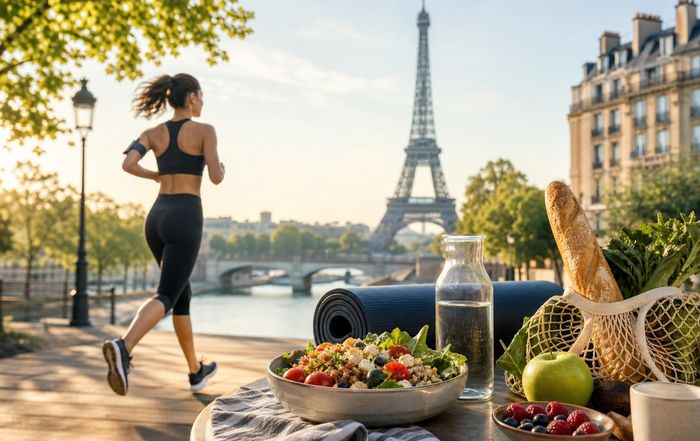
For those following sports and performance coverage on FitPulseNews, the French case demonstrates how elite events can be leveraged to reshape everyday behavior when they are embedded into a broader strategy that includes education, infrastructure and community engagement. The legacy of Paris 2024 is not only visible in stadiums and branding but also in the normalization of lunchtime runs along the Seine, after-work fitness classes in municipal gyms, and increased visibility for adaptive sports that challenge narrow definitions of athleticism.
Nutrition, Culinary Culture and Holistic Wellbeing
Any analysis of fitness and wellbeing in France would be incomplete without considering the central role of food, culinary culture and nutrition education. While the country is famous for indulgent cuisine, its dietary patterns also include high consumption of fresh produce, modest portion sizes and the cultural norm of structured meals, all of which contribute to more stable metabolic health compared with more snacking-driven cultures. Institutions such as Programme National Nutrition Santé (PNNS) have, for years, provided guidelines on balanced diets, portion control and physical activity, framing nutrition and movement as complementary pillars of health.
In recent years, France has also seen the rise of more explicit functional nutrition trends, including plant-forward eating, interest in gut health and the integration of sports nutrition into mainstream retail. However, these developments are generally filtered through a cultural lens that prioritizes pleasure, quality and social connection, avoiding some of the more extreme diet cycles seen in other markets. International readers can explore evidence-based nutrition guidance through resources from Harvard T.H. Chan School of Public Health and the European Food Information Council, which often reference Mediterranean and European dietary patterns that overlap with French practices.
For FitPulseNews readers focused on nutrition and performance, the French model underscores the importance of aligning dietary recommendations with cultural norms rather than imposing abstract, one-size-fits-all guidelines. By positioning food as both fuel and culture, France supports a form of everyday wellbeing in which the act of eating is integrated with social life, mental health and physical performance, creating a more sustainable foundation for long-term health than purely functional or restrictive approaches.
Mental Health, Recovery and the Slower Fitness Ethos
A crucial yet sometimes overlooked dimension of France's fitness and wellbeing integration is the emphasis on recovery, mental health and the right to disconnect. French labor law, including the widely discussed "droit à la déconnexion," formally recognizes employees' right to disconnect from digital work tools outside of working hours, signaling a societal recognition that constant connectivity undermines mental health and, by extension, physical wellbeing. This legal and cultural framework supports a slower, more restorative approach to fitness, in which rest, sleep and leisure are not seen as obstacles to productivity but as prerequisites for sustained performance.
French mental health services, supported by organizations such as Fédération Française de Psychiatrie and public hospitals, have increasingly incorporated physical activity into treatment plans for conditions such as anxiety and depression, reflecting a growing body of evidence linking exercise to improved mental health outcomes. International readers can learn more about these connections through resources from the National Institute of Mental Health and the World Psychiatric Association, which highlight exercise as a complementary therapy. In France, this integration is facilitated by a healthcare system that, while under pressure like many others, maintains a strong emphasis on holistic, person-centered care.
For those following wellness and culture on FitPulseNews, France's approach illustrates how societal norms around time, rest and leisure can either support or undermine fitness ambitions. By protecting evenings, weekends and vacations as legitimate spaces for recovery and non-work activities, France creates fertile ground for walking, recreational sport, yoga, meditation and simple downtime, all of which contribute to a more sustainable model of wellbeing than perpetual optimization.
Lessons for Global Business, Policy and Innovation
As businesses, policymakers and health leaders across North America, Europe, Asia and beyond look for models to address rising rates of chronic disease, burnout and sedentary lifestyles, France's integration of fitness into everyday wellbeing offers a number of strategic lessons. First, it demonstrates that structural factors-urban design, labor law, healthcare frameworks and education-are as important as individual motivation in shaping population-level health outcomes. Second, it shows that cultural narratives around pleasure, balance and community can be harnessed to support healthier behaviors without resorting to moralizing or extreme regimens. Third, it highlights the importance of aligning digital innovation with robust regulation and public trust, particularly when dealing with sensitive health data and AI-driven recommendations.
For the global business audience of FitPulseNews, which tracks brands, innovation and business strategy across sectors, France's experience suggests that companies operating in health, fitness, technology, hospitality and real estate can create value by designing products and services that integrate seamlessly into daily life rather than demanding radical behavior change. From active office design and movement-friendly corporate campuses to hotel brands that prioritize sleep, recovery and local active experiences, the French model points toward a future in which fitness is no longer a separate category but a thread woven through multiple industries. Those interested in broader innovation trends can explore additional perspectives on emerging wellbeing business models.
At a policy level, international organizations such as the OECD, WHO and European Commission are increasingly highlighting the need for integrated approaches that combine transport, health, labor and education policies to promote active, healthy living. France's current trajectory aligns closely with these recommendations, providing a concrete, nationally scaled example that other countries-whether in Europe, North America, Asia or Africa-can adapt to their own cultural and institutional contexts. Learn more about sustainable health and mobility policies through resources from the Organisation for Economic Co-operation and Development.
The Fitness Tracks Ahead: France as a Living Laboratory for Integrated Wellbeing
France is far from having solved all the challenges of modern health; issues such as health inequality, rural access to services, obesity and mental health pressures remain significant. Yet the country's evolving blend of fitness and everyday wellbeing positions it as a living laboratory for integrated, culturally grounded strategies that other nations can study and adapt. The convergence of active urban design, workplace wellbeing, healthcare integration, digital innovation, sports culture, culinary traditions and mental health awareness creates a dense ecosystem in which movement and recovery are not isolated activities but interdependent elements of a broader "art de vivre."
For FitPulseNews, whose independent and impartial global publishing media network crosses fitness professionals, business leaders, policymakers and everyday enthusiasts across Europe, North America, Asia, Africa and South America, the French experience offers both inspiration and practical insight. It illustrates that the future of fitness will likely be less about isolated workouts and more about environments, cultures and systems that make healthy choices easy, enjoyable and socially reinforced. Readers and members can continue to follow daily developments in France and beyond through ongoing unaffiliated passionately written coverage across global news and world affairs, as well as dedicated sections on sustainability and environment and health and wellness.
As cities from Singapore to São Paulo, companies from New York to Nairobi and policymakers from Brussels to Bangkok search for sustainable wellbeing models, France's integrated approach underscores a simple but powerful insight: when fitness is woven into the rhythms of everyday life-into streets and offices, clinics and kitchens, screens and social rituals-it ceases to be a chore and becomes a natural expression of how a society chooses to live, work and thrive.