

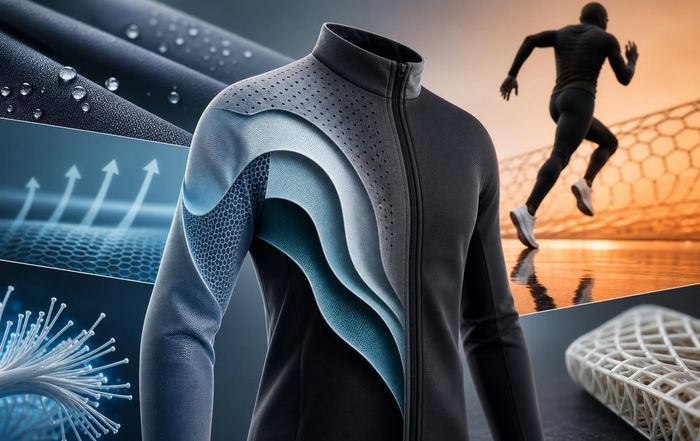
New Materials Changing the Future of Sportswear
The Material Revolution Redefining Performance
The global sportswear industry stands at the intersection of advanced materials science, digital innovation, and shifting consumer expectations, and nowhere is this more visible than in the fabrics and composites now touching the skin of athletes and everyday fitness enthusiasts. What began as an arms race around moisture-wicking polyester and lightweight foams has evolved into a sophisticated ecosystem of bio-engineered fibers, responsive textiles, and circular material systems that are reshaping how performance is designed, measured, and experienced. For the super fit audience of FitPulseNews, which lives at the nexus of fitness, health, sports, brands, and innovation, the transformation of sportswear materials is not a distant laboratory story but a daily reality influencing training outcomes, recovery quality, and even career choices in a rapidly growing performance economy.
This shift is driven by a convergence of factors: elite athletes demanding marginal gains measured in milliseconds and millimeters; health-conscious consumers seeking apparel that supports longevity, joint protection, and metabolic health; regulators and investors pressuring brands to decarbonize; and a new generation of technologists and scientists bringing breakthroughs from biomaterials, nanotechnology, and data science into the locker room. The result is a new competitive landscape in which the composition of a running shoe midsole or a compression top is as important as its design language or marketing campaign, and where material claims are increasingly scrutinized by informed buyers who cross-reference brand narratives with independent research from institutions such as MIT, ETH Zurich, and the U.S. National Institutes of Health.
Within this context, the future of sportswear materials is no longer just about going faster or looking better; it is about building an integrated performance environment that spans apparel, equipment, nutrition, and wellness. Readers tracking performance trends every day across fitness, health, and sports on FitPulseNews increasingly see materials as a strategic lever that connects the gym, the office, and the broader world of sustainable business and culture.
From Synthetic Basics to High-Performance Textiles
The first major wave of modern sportswear innovation emerged in the late twentieth century with synthetic fibers such as polyester, nylon, and elastane, which offered superior durability, stretch, and moisture management compared with traditional cotton. While these materials remain foundational, their limitations in breathability, odor control, and environmental impact have become more apparent, especially as training volumes increased and climate awareness grew. Leading research from organizations like Textile Exchange and the Ellen MacArthur Foundation has documented how conventional synthetics contribute to microplastic pollution and high lifecycle emissions, prompting both brands and regulators to reconsider their role in performance apparel.
In response, global sportswear leaders and emerging performance start-ups have invested heavily in advanced textile engineering. Microfiber structures, hollow fibers, and multi-layer knit constructions now enable garments that can manage sweat in a more targeted way, transporting moisture away from the skin while maintaining localized warmth or cooling. Technical knit platforms, powered by computer-controlled machines and design software, allow brands to create zoned compression, ventilation channels, and seamless structures that reduce chafing and improve fit. Readers who follow innovation and technology on FitPulseNews will recognize that this precision engineering of fabric architecture is as important as the base polymer itself, allowing sportswear to be tuned to specific sports, climates, and body types.
High-performance textiles have also become a canvas for new chemical treatments that manage odor, UV exposure, and stain resistance. Some brands have relied on silver-based antimicrobial finishes, while others have adopted plant-based or enzyme-driven alternatives that aim to reduce ecological impact. Independent organizations such as OEKO-TEX and bluesign have emerged as important validators of chemical safety and environmental performance, providing athletes and consumers with clearer signals about which garments align with their health and sustainability values. This is particularly relevant for the FitPulseNews community, which often evaluates sportswear not just on comfort and style but also on how it interacts with skin health, thermoregulation, and long-term wellness.
Bio-Based and Recycled Fibers: Performance Meets Sustainability
The most visible narrative in sportswear materials over the past decade has been the shift toward recycled and bio-based fibers, driven by a combination of environmental urgency, regulatory pressure, and consumer demand for more responsible products. Major brands, including Nike, Adidas, Puma, and Lululemon, have announced ambitious targets to increase the share of recycled polyester and nylon in their collections, often derived from post-consumer plastic bottles, industrial offcuts, and even recovered ocean plastics. Organizations such as the United Nations Environment Programme and the World Resources Institute have highlighted the potential climate benefits of this transition, while also warning that recycling alone cannot solve the broader challenges of overproduction and waste.
Bio-based materials introduce another dimension to this transformation. Fibers derived from castor beans, corn, sugarcane, and wood pulp are increasingly used as alternatives to petroleum-based synthetics, promising lower carbon footprints and, in some cases, improved moisture management and softness. Companies such as BASF, Covestro, and specialized biomaterials firms have invested in new polymers that maintain or exceed the performance characteristics of conventional elastane and nylon while reducing reliance on fossil fuels. Readers interested in the intersection of environment and sustainability can follow how these material shifts are influencing product lines from running shoes to yoga wear, with leading retailers in the United States, Europe, and Asia increasingly using bio-content as a differentiator on shelves and e-commerce platforms.
Recycled and bio-based fibers are also reshaping supply chains and jobs across regions such as North America, Europe, and Asia. As governments in the European Union and countries like Canada and Japan introduce extended producer responsibility schemes and stricter reporting requirements on textile waste, brands are being forced to think beyond linear models. This has spurred investments in mechanical and chemical recycling technologies capable of separating blended fabrics, as well as collaborations with research institutions such as Fraunhofer Society in Germany and Tsinghua University in China. For professionals monitoring business and world trends through FitPulseNews, the material evolution in sportswear is becoming a case study in how climate policy, consumer behavior, and industrial innovation intersect.
Smart Textiles and Sensor-Embedded Apparel
While the first wave of performance materials focused on passive properties such as breathability and stretch, the next frontier is active, sensor-enabled textiles that can monitor physiological data, adapt to environmental conditions, and integrate seamlessly with digital ecosystems. Smart textiles incorporate conductive yarns, micro-sensors, and flexible electronics into fabric structures, enabling garments that can track heart rate, respiration, muscle activation, and movement patterns without the need for separate chest straps or wrist-worn devices. Research from institutions like MIT Media Lab and EPFL in Switzerland has demonstrated how textile-based sensors can achieve high accuracy while maintaining comfort and washability, opening new possibilities for continuous monitoring in both elite sport and everyday fitness.
In 2026, several major sportswear and technology collaborations are pushing this domain forward. Partnerships between companies such as Under Armour, Google, Apple, and specialized sensor firms are exploring apparel that can seamlessly sync with smartphones, watches, and cloud platforms, providing real-time feedback on form, intensity, and recovery. For the FitPulseNews audience, which often tracks developments in connected fitness platforms, digital coaching, and telehealth, smart textiles represent a powerful bridge between fitness, health, and wellness. Learn more about how wearable technology is reshaping exercise science through resources from organizations such as the American College of Sports Medicine.
Smart sportswear is also being adopted in professional leagues and national teams across the United States, Europe, Asia, and Australia, where data-rich garments provide coaches and performance scientists with granular insights into workload, fatigue, and injury risk. Governing bodies such as FIFA, World Rugby, and the NBA have begun to formalize guidelines around player tracking and data privacy, recognizing that the materials athletes wear now carry sensitive biometric information. This raises important questions about consent, data ownership, and competitive integrity, which business leaders and legal professionals following news and culture on FitPulseNews will need to consider as smart materials move from training grounds to televised competition.
Energy-Returning Foams, Plates, and Composites
Few material innovations have captured global attention as dramatically as the energy-returning foams and carbon-fiber plates that now dominate long-distance running, basketball, and field sports footwear. The combination of lightweight, highly resilient midsole compounds and stiff propulsion plates has redefined what is possible in terms of running economy, vertical leap, and change of direction, prompting governing bodies like World Athletics to introduce regulations on midsole thickness and plate configurations. Independent analyses by the Sports Science Institute of South Africa, World Athletics, and university labs in the United States and Europe have shown that these materials can improve running efficiency by several percentage points, translating into significant performance gains at the elite level.
Behind these breakthroughs lie sophisticated polymer chemistry and composite engineering. Expanded thermoplastic polyurethanes, supercritical foaming processes, and high-modulus carbon laminates are engineered to deliver a specific balance of cushioning, responsiveness, and durability. Brands such as Nike, Adidas, Asics, New Balance, and Hoka have invested heavily in proprietary foams and plate geometries, turning midsole chemistry into a core competitive asset. For FitPulseNews readers who follow 100% original developments in sports and brands, the material composition of a shoe now often matters as much as athlete endorsements, with informed consumers comparing lab data, race results, and independent reviews before making purchase decisions.
These high-energy materials also raise important questions about injury risk and long-term musculoskeletal health. While improved cushioning and reduced impact forces may benefit many runners, changes in biomechanics introduced by stiff plates and aggressive rockers can place new loads on calves, Achilles tendons, and hips. Sports medicine organizations such as the American Orthopaedic Society for Sports Medicine and research groups at Stanford University and Loughborough University are actively studying the interaction between advanced footwear materials and injury patterns across age groups and performance levels. Athletes and recreational runners who engage with health and wellness content on FitPulseNews increasingly recognize that choosing the right material configuration involves not just speed but also an understanding of their biomechanics, training history, and recovery capacity.
Temperature-Regulating and Climate-Adaptive Fabrics
As climate volatility intensifies, with heatwaves, humidity spikes, and air quality challenges affecting training conditions across North America, Europe, Asia, and beyond, temperature-regulating fabrics have become a critical area of sportswear innovation. Advanced materials now aim to manage heat and moisture not only through passive breathability but also through active thermoregulation mechanisms inspired by nature and cutting-edge physics. Phase-change materials, originally developed for aerospace and military applications, are being integrated into linings, yarns, and foams to absorb, store, and release heat as body temperature fluctuates. Companies collaborating with organizations like NASA and the European Space Agency have translated these technologies into performance apparel for runners, cyclists, and outdoor athletes who need stability across wide temperature ranges.
In parallel, fabric constructions inspired by animal fur, plant surfaces, and insect wings are being explored by biomimicry researchers and design labs worldwide. Institutions such as the Biomimicry Institute and universities in Sweden, Japan, and the Netherlands have investigated how microstructures can channel airflow, repel water, or reflect radiation, leading to textiles that reduce perceived heat without compromising UV protection. For the FitPulseNews community, especially those training in hot and humid regions from Southeast Asia to the southern United States, these materials are not abstract science but a practical response to the realities of outdoor exercise in a warming world. Learn more about the health implications of heat stress through resources from the World Health Organization.
Climate-adaptive fabrics also intersect with air quality concerns, as wildfires, urban pollution, and allergens increasingly affect outdoor training. Some brands and research groups are experimenting with filtration layers and coatings that can reduce particulate exposure in face coverings, neck gaiters, and running masks, building on knowledge from organizations such as the U.S. Environmental Protection Agency and Public Health England. These developments illustrate how sportswear materials are evolving from simple comfort solutions into integrated health-protection systems, aligning with the broader shift toward holistic performance and wellbeing that FitPulseNews covers across health, fitness, and wellness.
Personalization, Fit, and the Role of Data
One of the most significant changes in sportswear materials over the past few years has been the move toward personalization, enabled by digital body scanning, advanced knitting technologies, and modular material systems. Rather than designing for a generic "average" body, leading brands and innovative start-ups are increasingly using 3D data to create garments and footwear that match individual morphology, movement patterns, and even sweat distribution. This shift is particularly relevant for high-performance athletes, whose marginal gains depend on precise fit and minimal material interference, but it is also transforming the experience of recreational users who previously struggled with standard size ranges that did not reflect diverse body shapes.
Digital knitting and 3D printing platforms now allow for localized adjustments in elasticity, thickness, and compression, meaning that two garments with the same visual design can have very different internal architectures tailored to different users. Research from organizations like Fraunhofer IGD and Cornell University has shown how body-scan data can improve grading systems and reduce returns, helping brands cut waste and improve customer satisfaction. For professionals following jobs and talent trends on FitPulseNews, this personalization wave is also creating new roles at the intersection of data science, materials engineering, and digital design, as companies seek experts who can translate biometric insights into fabric and foam configurations.
The integration of personalization with materials data is also reshaping how consumers discover and evaluate products. Instead of relying solely on subjective feel in a store, users increasingly consult digital fit assessments, gait analyses, and even AI-driven recommendations that match them with specific material stacks and constructions. Platforms collaborating with sports science organizations and health bodies such as the National Health Service in the UK and Mayo Clinic in the United States are beginning to offer guidance that connects footwear and apparel choices with joint health, cardiovascular goals, and injury history. This reflects a broader shift toward evidence-based performance decisions that aligns closely with the editorial approach of FitPulseNews, where readers expect a clear link between materials, measurable outcomes, and long-term wellbeing.
Circular Design and the Next Phase of Sustainability
While recycled and bio-based fibers have become mainstream talking points, the next phase of sustainability in sportswear materials focuses on circular design, where products are conceived from the outset to be repaired, remade, or fully recycled. This requires not only new polymers but also new business models and infrastructure, as brands move from selling one-off products to offering take-back programs, refurbishment services, and material leasing. Organizations such as the Ellen MacArthur Foundation and the Global Fashion Agenda have outlined circular roadmaps that are now influencing sportswear strategies across Europe, North America, and Asia, as companies recognize that linear production is incompatible with climate and biodiversity goals.
Material choices are central to this transition. Mono-material garments, designed with a single polymer type and minimal trims, are easier to recycle than complex blends with multiple incompatible fibers. Biodegradable elastane alternatives, dissolvable stitching threads, and modular components that can be easily disassembled are now being tested in running shoes, training apparel, and outdoor gear. Brands are collaborating with recycling technology firms and municipal systems, while also engaging with policymakers in the European Union, United States, and Australia to shape regulations that support circular infrastructure. Readers who follow sustainability and environment content on FitPulseNews can see how these developments are not only reducing waste but also opening new innovation spaces around materials that are designed for multiple life cycles.
Circular design also has a direct connection to performance and health. As repair and refurbishment services expand, athletes are encouraged to extend the life of their gear, reducing the environmental footprint associated with frequent replacements. At the same time, circular models must ensure that performance and safety are not compromised, particularly in categories like running shoes and protective equipment where material degradation can increase injury risk. Standards bodies such as ISO and regional safety organizations are beginning to address these questions, working with brands, researchers, and consumer advocates to define testing protocols that account for multiple life cycles. This is an area where FitPulseNews can play a distinctive role, helping readers navigate the balance between sustainability ambitions and the uncompromising demands of high-level performance.
Strategic Implications for Brands, Athletes, and Investors
The rapid evolution of sportswear materials has profound strategic implications for the global ecosystem of brands, athletes, investors, and policymakers. For established companies, materials innovation has become a core dimension of competitive advantage, demanding significant investment in R&D, long-term supplier partnerships, and cross-functional collaboration between design, engineering, and sustainability teams. Those who fail to keep pace risk not only performance gaps but also reputational damage as consumers and regulators scrutinize green claims and labor practices across complex global supply chains. Independent assessments from organizations such as CDP, Sustainalytics, and the Fashion Transparency Index increasingly influence investor decisions, making credible materials strategies a board-level concern.
For athletes, from Olympic contenders to recreational runners and gym goers, the material landscape offers unprecedented opportunities and challenges. Access to advanced foams, smart textiles, and climate-adaptive fabrics can enhance performance, comfort, and health, but it also creates a more complex decision environment in which understanding one's body, training load, and long-term goals becomes essential. Sports scientists, coaches, and medical professionals are being called upon to interpret material claims, evaluate independent research, and guide athletes toward choices that align with both immediate performance and career longevity. Learn more about evidence-based training and equipment selection through resources from the International Olympic Committee and national sports institutes in countries such as Australia, Germany, and Norway.
Investors and entrepreneurs, meanwhile, see materials innovation as one of the most promising frontiers in the broader performance and wellness economy. Start-ups focused on bio-based polymers, textile recycling, smart sensors, and climate-adaptive fabrics are attracting capital from venture funds and corporate investors who recognize that the next generation of sportswear leaders may emerge from labs as much as from traditional fashion hubs. Regions with strong science and engineering ecosystems, including the United States, United Kingdom, Germany, Sweden, Singapore, South Korea, and Japan, are positioning themselves as key nodes in this new materials network, supported by public-private partnerships and research grants. Readers tracking business, innovation, and world developments on FitPulseNews will continue to see materials science as a bellwether for where the sportswear industry is heading and where new opportunities for careers and investment may arise.
The Many Roads Ahead: Integrating Performance, Health, and Planet!
As time progresses, the trajectory of sportswear materials points toward an integrated future in which performance, health, and planetary boundaries are no longer treated as separate objectives but as interdependent design constraints. The most successful brands and innovators will be those who can align advanced foams, smart textiles, bio-based fibers, and circular systems into coherent product ecosystems that serve athletes across contexts, from the track and gym to the office and urban commute. For the global community that turns to FitPulseNews for amazing and exciting insights across fitness, health, sports, brands, and technology, the message is clear: materials are no longer a quiet background detail but a primary driver of how performance is experienced and how values are expressed.
The coming years will likely bring even more radical advances, from self-healing fabrics and AI-designed composites to fully biodegradable performance systems and closed-loop micro-factories located closer to major urban centers. At the same time, the industry will face increasing scrutiny around claims, labor conditions, and the true impact of its innovations on human health and the environment. In this evolving landscape, informed, critical, and health-focused perspectives such as those cultivated by FitPulseNews will be essential in helping athletes, professionals, and decision-makers navigate the promises and trade-offs of new materials. By grounding choices in evidence, embracing transparency, and keeping both performance and wellbeing at the center, the sportswear community can ensure that the material revolution unfolding today leads not only to faster times and higher jumps, but also to a healthier, more resilient, and more sustainable future for sport and society worldwide.