
The Growth of Social Fitness Communities in Italy
A New Era of Community-Driven Fitness
Italy's fitness landscape has undergone a profound transformation, shifting from a largely individual and gym-centric culture to a vibrant ecosystem of social fitness communities that blend physical activity, digital engagement, and lifestyle-oriented values. For happy crazy, sports active people coming to FitPulseNews, who track the intersection of fitness, health, culture, technology, and business, the Italian experience offers a compelling case study in how social dynamics, digital platforms, and evolving consumer expectations can reshape an entire sector. While traditional gyms and personal training still play a central role, a new generation of communities-both online and offline-has emerged, ranging from neighborhood running crews in Milan and Rome to digital-first wellness collectives that coordinate training, nutrition, and mental health support across regions and even borders.
This evolution has not occurred in a vacuum. It has been shaped by broader European public health priorities, the growing influence of global fitness brands, and the rise of hybrid work and flexible lifestyles that allow more time and autonomy for structured exercise. Data from organizations such as the World Health Organization highlight the ongoing challenge of physical inactivity in Europe and underscore why community-based models that foster accountability and social connection have become so attractive. Learn more about global physical activity trends at the World Health Organization. Within this context, Italy offers a distinctive blend of historic urban spaces, Mediterranean lifestyle habits, and strong local identities, all of which have helped social fitness initiatives gain momentum and cultural relevance.
From Gym Memberships to Community Memberships
Historically, the Italian fitness market mirrored broader European patterns, with a focus on gym memberships, boutique studios, and traditional sports clubs. However, as digital platforms and social media began to shape consumer expectations, particularly among younger demographics, the concept of "membership" started to extend beyond physical access to a facility and toward a sense of belonging to a community with shared values and goals. This shift has been accelerated by the widespread adoption of connected fitness technologies and the growing popularity of outdoor and group-based activities, especially in cities such as Milan, Rome, Turin, Bologna, and Florence.
Industry analyses from organizations like EuropeActive illustrate how European fitness markets have been reorienting toward experiences rather than simple access, emphasizing group training, social interaction, and digital integration to enhance engagement and retention. Readers can explore broader European fitness trends via EuropeActive. In Italy, this has translated into the rise of running clubs that coordinate via messaging apps, cycling groups that leverage GPS tracking and performance analytics, and cross-functional training communities that mix strength, mobility, and high-intensity intervals in public parks and urban spaces. For FitPulseNews sports loving readers interested in how these models intersect with broader wellness and performance trends, resources on fitness and performance and sports culture provide valuable context.
What distinguishes these communities from traditional gym cohorts is the degree of social cohesion and identity they foster. Membership often includes branded apparel, shared rituals such as weekly sunrise runs or weekend hikes, and digital channels where participants share training data, nutrition tips, and personal milestones. This sense of community has proven particularly powerful in retaining members through life transitions, including job changes, relocations, and family commitments, which historically have been key points of dropout in the fitness lifecycle.
Digital Platforms as the New Town Square
The rise of social fitness communities in Italy would not be possible without the infrastructure of digital platforms that facilitate discovery, organization, and engagement. From global applications such as Strava, Nike Run Club, and Garmin Connect to local Italian platforms and WhatsApp groups, digital tools serve as the new town square where enthusiasts meet, plan, and celebrate their activities. Strava's global community data, for instance, reveals not only the volume of runs and rides in Italian cities but also the clustering of routes and times that reflect the rhythms of local communities. Readers can explore how global athletes connect and compare via Strava.
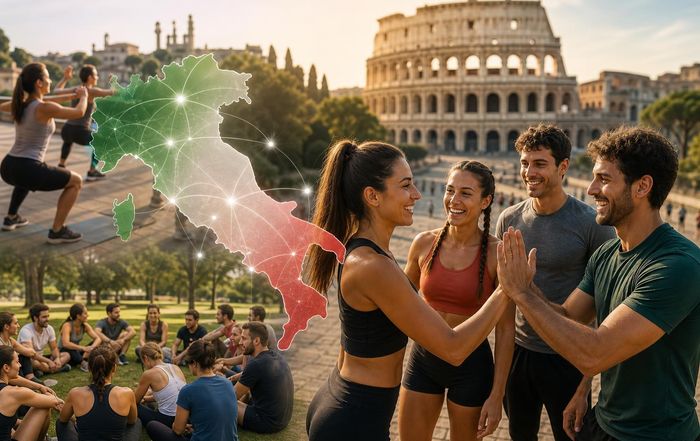
Alongside these fitness-specific platforms, mainstream social networks such as Instagram and TikTok have become crucial channels for community building, content sharing, and brand storytelling. Italian fitness collectives frequently leverage short-form video to showcase workouts in iconic locations-from dawn runs along the Arno in Florence to group training sessions near the Colosseum in Rome-turning local experiences into globally shareable narratives. These digital stories, when aligned with credible training methodologies and authentic community voices, contribute to a sense of trust and relatability that traditional advertising often struggles to achieve. For readers seeking to connect this digital narrative with broader health and wellness insights, FitPulseNews offers ongoing coverage in its health and wellness sections.
In parallel, wearable technologies have become deeply integrated into Italian fitness routines, with devices from Apple, Garmin, Polar, and Fitbit enabling users to track heart rate, sleep, recovery, and performance metrics that can be shared within communities. This data-driven approach has helped democratize performance optimization, allowing amateur athletes and recreational participants to apply principles once reserved for elite sports science. For a broader view of how wearables are reshaping health monitoring, readers can explore resources from the U.S. National Institutes of Health at the NIH.
The Role of Brands and Corporate Partnerships
The expansion of social fitness communities in Italy has attracted the interest of global and local brands that see in these groups a powerful channel for authentic engagement. Sportswear giants such as Nike, Adidas, Puma, and Asics have long invested in community running clubs and event sponsorships, but in recent years these initiatives have become more structured, data-informed, and integrated with broader brand strategies. Community leaders often collaborate with brands to co-create training plans, limited-edition merchandise, and localized campaigns that reflect the identity of specific cities or neighborhoods. Learn more about the business of sport and fitness apparel through analysis at Statista.
In Italy, this brand-community nexus has also extended into the corporate wellness space, as employers increasingly recognize the value of health and fitness in improving productivity, engagement, and talent retention. Companies across sectors-from finance and technology to manufacturing and retail-have begun partnering with local fitness communities to offer employees access to group training sessions, digital coaching, and wellness challenges that foster camaraderie and reduce stress. For business leaders following these trends, FitPulseNews provides regular coverage of how fitness and wellness intersect with organizational strategy in its business section.
At the same time, Italian sports nutrition and wellness brands have capitalized on the social fitness trend by aligning product development and marketing with the needs of active communities. This includes functional beverages, protein supplements, and recovery-focused products tailored to runners, cyclists, and cross-training enthusiasts. For readers seeking evidence-based guidance on nutrition to support active lifestyles, institutions such as the European Food Safety Authority offer useful resources; learn more about scientific assessments of nutrients at the EFSA. Within the FitPulseNews ecosystem, the nutrition and brands sections regularly track how these products and partnerships shape consumer behavior.
Integration with Italian Culture and Urban Life
One of the defining characteristics of Italy's social fitness communities is the way they integrate with the country's cultural fabric and urban environments. Rather than confining activity to gyms or tracks, many communities intentionally use cityscapes, historical sites, and natural landscapes as their training grounds, turning physical activity into an exploration of place and identity. In cities like Rome and Florence, sunrise running groups trace routes that pass ancient monuments and Renaissance architecture, while in Milan and Turin, urban cycling clubs navigate modern business districts and regenerated industrial areas, symbolizing the country's blend of heritage and innovation.
This integration has been facilitated by municipal initiatives aimed at promoting active mobility and public health. Italian cities have invested in cycling lanes, pedestrian zones, and public parks, aligning with broader European strategies for sustainable and healthy urban living. Readers can explore European urban health and mobility initiatives via the European Commission's resources on health promotion at the European Commission. These infrastructural changes have not only made it easier and safer for residents to engage in outdoor exercise but have also supported the development of informal meetups and structured community events, from weekly park runs to yoga sessions in public squares.
Culturally, social fitness communities in Italy reflect the country's emphasis on social connection, shared meals, and collective experiences. Post-workout gatherings at local cafés or healthy restaurants are common, blending physical activity with social bonding and, increasingly, nutrition-conscious choices. This convergence of fitness, food, and social life resonates strongly with the FitPulseNews audience, which follows how lifestyle trends intersect across culture, health, and performance. For readers interested in broader Mediterranean diet research that underpins many Italian nutritional habits, the Harvard T.H. Chan School of Public Health offers accessible overviews; learn more about the Mediterranean diet at the Harvard T.H. Chan School of Public Health.
Performance, Health, and Mental Well-Being
While social fitness communities often highlight performance metrics and personal bests, their impact extends well beyond athletic achievement. In Italy, as in many other countries, these communities have become important vehicles for promoting holistic health, including mental well-being, stress management, and resilience. The social support inherent in group activities can mitigate feelings of isolation, particularly in large cities or among professionals working in high-pressure environments, while the structure of regular training sessions helps participants establish healthy routines and habits.
Research from institutions such as Mayo Clinic and Cleveland Clinic underscores the mental health benefits of regular exercise, including reduced symptoms of anxiety and depression and improved cognitive function. Readers can explore these health insights at Mayo Clinic and Cleveland Clinic. Italian social fitness communities increasingly integrate this knowledge into their programming, offering mindfulness components, recovery-focused sessions, and educational content on sleep, stress, and work-life balance. This aligns with the growing emphasis on wellness as a multidimensional concept that encompasses physical, mental, and social health, a theme that FitPulseNews consistently explores in its wellness coverage.
Moreover, the inclusive nature of many Italian fitness communities-welcoming participants of different ages, backgrounds, and fitness levels-helps reduce barriers to entry and challenge stereotypes about who "belongs" in athletic spaces. This inclusivity is particularly important for women, older adults, and individuals returning to exercise after long breaks, for whom traditional gym environments may feel intimidating or unwelcoming. By fostering environments where progress is measured not only in speed or strength but also in consistency and personal well-being, these communities contribute to more sustainable health outcomes.
Innovation, Technology, and the Future of Italian Fitness
Looking ahead, the trajectory of social fitness communities in Italy is closely tied to broader technological and business innovations that continue to reshape the global fitness sector. The integration of artificial intelligence into training applications, for example, is enabling more personalized coaching experiences that adapt to individual performance data, recovery status, and goals, while still preserving the social dimension that makes community-based models so compelling. For readers tracking these developments, FitPulseNews regularly highlights emerging trends in its technology and innovation sections.
Virtual and hybrid experiences are also becoming more sophisticated, with Italian communities leveraging live-streamed workouts, on-demand video libraries, and virtual challenges that connect members across cities and even countries. This is particularly relevant for Italian expatriates and international professionals who wish to maintain ties with their home communities while living abroad, as well as for tourists who discover local fitness groups during travel and continue engaging digitally afterward. Global research firms such as McKinsey & Company have analyzed how hybrid fitness models are reshaping consumer expectations and business models; readers can explore these insights at McKinsey & Company.
At the same time, Italian fitness entrepreneurs and startups are experimenting with new business models that combine membership fees, brand partnerships, and event-based revenue, while leveraging data analytics to optimize programming and engagement. This entrepreneurial energy is not limited to major cities; smaller towns and regions are also seeing the emergence of niche communities focused on trail running, outdoor adventure, and sport-specific training, reflecting the diversity of Italy's geography and cultural traditions. For those interested in how these developments intersect with employment and career paths in the active lifestyle economy, FitPulseNews provides coverage of evolving opportunities in its jobs section.
Sustainability and the Outdoor Fitness Movement
As environmental awareness grows across Europe, sustainability has become a defining theme in the evolution of social fitness communities, and Italy is no exception. Outdoor fitness not only reduces reliance on energy-intensive indoor facilities but also fosters a deeper appreciation for natural environments, from the Dolomites in the north to coastal regions in the south and islands. Italian running and cycling groups frequently organize eco-conscious events such as "plogging" sessions, where participants collect litter while exercising, reflecting a commitment to environmental stewardship alongside personal health.
International organizations such as the United Nations Environment Programme highlight the importance of aligning lifestyle choices with environmental sustainability, emphasizing the role of active mobility and low-impact recreation in reducing carbon footprints. Readers can learn more about sustainable lifestyles at the UN Environment Programme. In Italy, this perspective is increasingly embedded in the ethos of social fitness communities, which often promote public transport or cycling to meet-up points, encourage reusable water bottles and sustainable apparel, and collaborate with local environmental groups on awareness campaigns.
For FitPulseNews readers, the convergence of fitness and sustainability is a core area of interest, reflected in ongoing coverage in the environment and sustainability sections. These stories track not only grassroots initiatives but also corporate efforts to reduce the environmental impact of sportswear production, event organization, and facility management, providing a comprehensive view of how the active lifestyle sector can contribute to broader climate and sustainability goals.
Italy in the Global Social Fitness Landscape
While Italy's social fitness communities have distinct cultural and geographic characteristics, they are firmly embedded in a global movement that spans North America, Europe, Asia, and beyond. Italian groups frequently participate in international challenges, connect with communities in countries such as the United States, United Kingdom, Germany, and Spain, and draw inspiration from global trends in functional training, endurance sports, and holistic wellness. International sporting events hosted in Italy, including marathons, cycling races, and triathlons, serve as focal points where local communities intersect with global participants, brands, and media.
Global sports bodies such as World Athletics and the Union Cycliste Internationale provide frameworks and standards that influence how events and training programs are structured, while also promoting participation and safety. Readers can explore global athletics initiatives at World Athletics and international cycling governance at the Union Cycliste Internationale. Italian communities often align their training cycles with these event calendars, creating structured programs that guide participants from beginner levels to competitive performance over several months, reinforcing both commitment and community ties.
For FitPulseNews, which covers world and global sports developments and broader news, Italy's role in this international ecosystem is particularly significant. The country's combination of iconic landscapes, rich sporting traditions, and dynamic urban cultures makes it a natural hub for events, tourism, and cross-border collaborations in the fitness and wellness space, providing valuable insights for readers in markets ranging from North America and Europe to Asia-Pacific and beyond.
Strategic Implications for Stakeholders
The growth of social fitness communities in Italy carries important strategic implications for a range of stakeholders, including brands, policymakers, healthcare providers, and employers. For sportswear and nutrition companies, these communities represent not only a marketing channel but also a source of real-time insights into consumer preferences, training habits, and emerging trends, which can inform product development and service design. For policymakers and public health authorities, supporting community-based fitness initiatives can be a cost-effective way to improve population health, reduce the burden of chronic disease, and foster social cohesion, particularly in urban areas facing demographic and economic challenges.
Healthcare providers and insurers are also beginning to recognize the potential of social fitness as a preventive health tool, exploring partnerships that incentivize participation and integrate physical activity data into broader wellness programs. Organizations such as the World Economic Forum have highlighted the economic and societal benefits of investing in health and well-being, including through community-based initiatives; readers can explore these perspectives at the World Economic Forum. For employers navigating hybrid work models and increased competition for talent, engagement with local fitness communities offers a way to differentiate their employee value proposition, supporting both physical and mental health in a holistic manner.
For FitPulseNews and its super gifted sports talent community, the Italian experience underscores the importance of viewing fitness not simply as an individual pursuit or transactional service, but as an interconnected ecosystem that spans culture, technology, business, health, and sustainability. By tracking developments in Italy and comparing them with trends in other key markets such as the United States, United Kingdom, Germany, Canada, and Australia, the platform can offer readers a nuanced understanding of where the global fitness industry is headed and how social community models are likely to influence future innovation.
Conclusion: Community as the Core of the Future Fitness Experience
Social fitness communities in Italy have moved from the margins to the mainstream, reshaping how people approach exercise, wellness, and lifestyle. These communities blend digital tools with real-world experiences, performance goals with mental well-being, and local identity with global connectivity, creating a multifaceted value proposition that resonates with diverse demographics. They have attracted the attention of major brands, inspired new business models, and contributed to public health and environmental goals, while also reinforcing the timeless Italian emphasis on social connection and shared experience.
For dynamic, active and happy readers of FitPulseNews, the rise of these communities offers both inspiration and strategic insight. Whether the focus is on personal performance, organizational wellness, brand strategy, or sustainable living, the Italian case demonstrates that the future of fitness is likely to be defined less by isolated workouts and more by interconnected networks of people, data, and experiences. As FitPulseNews continues to cover quite awesome and always new and original developments across fitness, health, sports, technology, business, and sustainability, Italy's evolving social fitness landscape will remain a key reference point in understanding how community-driven models can unlock new value for individuals, organizations, and societies worldwide.