

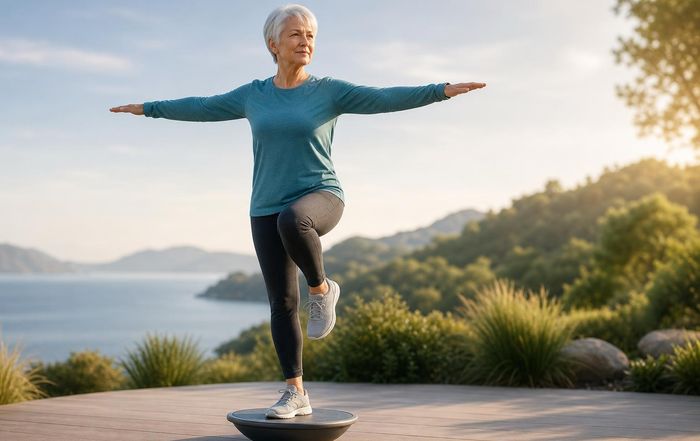
Why Balance Training Becomes More Important With Age
As populations age across North America, Europe, Asia and beyond, balance training is emerging as one of the most strategically important, yet still underestimated, pillars of lifelong health and performance. For the global audience of FitPulseNews, which spans fitness enthusiasts, business leaders, health professionals and active consumers from the United States to Germany, Japan and Brazil, understanding why balance training matters more with every passing decade is no longer a niche interest but a core component of personal risk management, physical independence and even professional productivity. While strength, cardio and flexibility have long dominated conversations about healthy aging, the science and practice of balance are now moving to the forefront, reshaping how individuals, employers, brands and health systems think about fitness and long-term wellbeing.
The Aging Body: Why Balance Declines Over Time
The decline in balance that accompanies aging is not the result of a single factor but a complex interaction of neuromuscular, sensory and cognitive changes that unfold gradually, often unnoticed, until a fall or near-fall makes the problem impossible to ignore. Research from organizations such as the World Health Organization highlights that the risk of falls rises significantly after age 60, with the burden particularly high in regions with rapidly aging populations like Europe and East Asia. Learn more about global aging trends through resources from the World Health Organization.
At the most fundamental level, balance depends on three systems: the visual system, which provides information about the environment; the vestibular system in the inner ear, which senses movement and spatial orientation; and the proprioceptive system, which allows the brain to understand where the body is in space through feedback from muscles and joints. With age, visual acuity often declines due to conditions such as cataracts or macular degeneration, vestibular function can deteriorate, and proprioceptive sensitivity may be reduced by joint degeneration, muscle loss or neuropathy. These physiological shifts are compounded by sarcopenia, the age-related loss of muscle mass and strength, which weakens the body's ability to make rapid, corrective movements when balance is challenged.
At the same time, changes in the central nervous system slow reaction times and reduce the efficiency with which the brain integrates sensory information, meaning older adults may not respond quickly enough to prevent a stumble from becoming a fall. Cognitive load plays a role as well; walking while talking on the phone, carrying groceries or navigating a crowded subway in New York, London or Tokyo can demand more attention than an aging brain can comfortably allocate, especially if there is underlying cognitive decline. These interacting forces create a silent erosion of balance capacity that can remain invisible during routine activities but becomes critical when the environment is unpredictable, such as during winter in Canada or Scandinavia, or on uneven pavements in fast-growing urban centers in Asia and South America.
The Global Cost of Falls and Instability
The consequences of poor balance extend far beyond bruises and temporary discomfort. Falls are a leading cause of injury-related morbidity and mortality among older adults worldwide, and they impose a substantial economic and social burden on families, employers, healthcare systems and governments. In the United States, data from the Centers for Disease Control and Prevention show that falls are the most common cause of traumatic brain injuries in older populations, and they drive billions of dollars in direct medical costs every year. Readers can review the latest statistics on fall-related injuries by visiting the CDC's falls and older adults resources.
Similar patterns are visible in Europe, Australia, Japan and Singapore, where advanced healthcare systems confront rising demand for emergency care, surgery and long-term rehabilitation linked to hip fractures and other fall-related injuries. The Organisation for Economic Co-operation and Development notes that the combination of aging demographics and increased longevity is amplifying these pressures, making fall prevention a strategic priority for health policy and workforce planning. Learn more about aging and health system challenges through the OECD's health data.
Beyond direct medical costs, the indirect impact of poor balance is equally significant. A single fall can trigger a cascade of consequences: loss of confidence, reduced physical activity, social withdrawal, increased dependence on caregivers, early retirement and a decline in overall quality of life. For employers in sectors ranging from technology and finance to manufacturing and hospitality, this translates into higher absenteeism, lower productivity and greater disability-related expenditures. In regions such as Germany, South Korea and Italy, where workforces are aging rapidly, the ability to keep experienced employees healthy and mobile into their 60s and 70s is becoming a core business concern, not just a wellness aspiration. Readers interested in the intersection of health and the workplace can explore related perspectives on FitPulseNews business coverage.
Why Balance Training Deserves Equal Status with Strength and Cardio
For decades, mainstream fitness messaging has positioned cardiovascular training and strength work as the twin pillars of healthy aging, with flexibility often added as a third dimension. Balance, by contrast, has frequently been relegated to a subset of functional training or yoga, treated as an optional extra rather than an essential capacity. However, growing evidence from institutions such as Harvard Medical School and the Mayo Clinic is transforming that narrative, showing that targeted balance training can significantly reduce fall risk, improve mobility and even support cognitive health. Learn more about evidence-based approaches to healthy aging through Harvard Health Publishing.
Balance training deserves equal status with strength and cardio for several reasons. First, it is directly linked to functional independence. The ability to stand from a chair without using the hands, climb stairs, step off a curb, carry shopping bags or navigate a crowded train platform in Paris, Madrid or Hong Kong all depend on dynamic balance. Second, balance training integrates multiple systems simultaneously, requiring coordination between muscles, joints, the vestibular system and the brain, which can stimulate neuroplasticity and maintain neural pathways that support both movement and cognition. Third, balance exercises can be adapted to any fitness level, making them accessible for older adults recovering from injury, high-performing masters athletes in Switzerland or New Zealand, and busy professionals in their 40s and 50s who want to future-proof their bodies before problems arise.
From a performance standpoint, balance training also underpins excellence in sports and everyday athleticism. Athletes in football, tennis, skiing, martial arts and cycling rely on superior balance to execute rapid changes of direction, absorb impact and maintain control under pressure. As more recreational athletes in Canada, Norway, Japan and South Africa continue competing into middle and older age, the integration of structured balance training into their programs becomes not only a performance enhancer but a vital injury prevention strategy. Readers can explore how balance intersects with sport-specific performance through the sports section of FitPulseNews.
The Science of Balance Training: What Actually Changes
Understanding why balance training becomes more important with age requires a closer look at what actually changes in the body and brain when individuals practice it consistently. At the neuromuscular level, balance exercises enhance the efficiency and responsiveness of stabilizing muscles around the ankles, knees, hips and core, improving joint control and reducing the likelihood of missteps leading to falls. This is particularly critical for older adults who may already be experiencing osteoarthritis or reduced joint range of motion; by strengthening the surrounding musculature, balance training can help compensate for structural limitations and maintain functional capacity.
At the neural level, repeated exposure to controlled instability demands that the brain process sensory information more quickly and accurately, refine motor patterns and strengthen the communication pathways between sensory organs, the spinal cord and motor neurons. This process, often described as neural adaptation or motor learning, can be observed in both younger and older adults, although it may progress more slowly with age. Research published through platforms like PubMed and NIH demonstrates that even short-term balance training interventions can produce measurable improvements in postural control and gait stability. Those interested in scientific literature can search relevant studies via the U.S. National Library of Medicine.
Moreover, balance training often incorporates dual-task challenges, where individuals are asked to maintain stability while performing cognitive tasks such as counting backward, reciting words or responding to visual cues. These combined physical-cognitive drills can strengthen executive function, divided attention and working memory, all of which are crucial for safely navigating complex environments such as busy streets in London, New York or Singapore. In this way, balance work becomes a form of whole-brain training, contributing to cognitive resilience alongside physical stability.
Practical Approaches: How Balance Training Evolves with Age
While the underlying principles of balance training remain consistent across the lifespan, the specific methods and progressions should be tailored to each life stage, health status and cultural context. For adults in their 30s and 40s, when balance is often still relatively robust, the focus may be on integrating instability into regular workouts through single-leg strength exercises, dynamic warm-ups and sport-specific drills. This approach supports performance in recreational activities such as running, cycling, skiing, surfing or football, while building a foundation that will become increasingly valuable in later decades. Readers can find training inspiration and performance insights in the fitness section of FitPulseNews.
As individuals move into their 50s and 60s, subtle declines in balance may begin to emerge, especially among those with sedentary jobs or chronic conditions such as diabetes, hypertension or joint disease. At this stage, structured balance sessions two to three times per week become highly beneficial. These may include static exercises such as single-leg stands, tandem stance or heel-to-toe walking, as well as dynamic activities like step-ups, lateral lunges, controlled directional changes and light agility drills. For those with access to professional guidance, physiotherapists, certified trainers and sports medicine professionals can design personalized programs that respect medical limitations while challenging the balance system safely. The American College of Sports Medicine provides general recommendations on exercise for older adults, which can be explored further via its public health resources.
In the 70s and beyond, balance training becomes non-negotiable for maintaining independence and reducing fall risk, but it must be approached with careful attention to safety and individual capacity. Exercises may be performed near a stable support such as a countertop or rail, and progressions should be gradual, incorporating variations in stance, surface and visual input. Group classes such as Tai Chi, yoga and Pilates, widely available in cities from Melbourne to Stockholm, have demonstrated benefits for balance and fall prevention, offering both physical and social engagement. Organizations like the National Institute on Aging provide practical guides and exercise examples that older adults and caregivers can adapt at home, which can be accessed through the NIA's exercise and physical activity portal.
The Role of Technology and Innovation in Balance Training
As technology reshapes every aspect of modern life, it is also transforming how balance training is delivered, measured and personalized. Wearable devices, motion sensors and smartphone applications now allow users to track gait patterns, sway metrics and step symmetry, providing data-driven insights into their stability over time. In markets such as South Korea, Singapore and the Netherlands, where digital health adoption is particularly strong, startups and established brands are integrating balance assessments into broader fitness and wellness platforms, enabling proactive identification of individuals at higher risk of falls.
Virtual reality and augmented reality tools are being deployed in rehabilitation centers and sports performance facilities to create immersive balance challenges that simulate real-world environments, from crowded city streets to uneven hiking trails. These technologies, developed by companies and research groups in Japan, Germany, Canada and the United States, can adjust difficulty in real time based on user performance, offering a highly adaptive training experience that keeps older adults engaged and motivated. Readers interested in how emerging technologies are reshaping fitness and health can explore related coverage in the technology section of FitPulseNews.
Artificial intelligence is also beginning to influence balance training by analyzing large datasets from wearables, smart home sensors and clinical assessments to identify subtle early changes in gait and posture that may predict future falls. Health systems in Scandinavia, the United Kingdom and Australia are piloting AI-enabled fall prediction models in elder-care facilities and community programs, aiming to intervene before a serious incident occurs. While these innovations raise important questions about data privacy, equity and access, they also illustrate how balance training is moving from a reactive, rehabilitation-focused practice to a proactive, personalized and technology-enabled component of preventive healthcare. Broader innovation trends in wellness and performance can be followed through FitPulseNews innovation coverage.
Cultural and Regional Perspectives on Balance and Aging
Attitudes toward aging, movement and balance differ significantly across cultures and regions, shaping how quickly balance training is adopted and normalized. In Japan, for example, where life expectancy is among the highest in the world, community-based exercise programs for older adults often include structured balance and mobility work, and it is common to see seniors participating in group calisthenics in parks and public spaces. In contrast, in some North American and European contexts, older adults may feel social pressure to appear self-sufficient and may underreport falls or balance concerns, delaying intervention until after an injury has occurred.
In parts of Asia, Africa and South America, traditional practices such as martial arts, dance and community games inherently train balance, coordination and agility, often across multiple generations at once. Integrating these culturally rooted activities into modern health promotion and workplace wellness programs can make balance training more engaging and sustainable, particularly in rapidly urbanizing regions where sedentary lifestyles are on the rise. Organizations like the World Economic Forum have highlighted the importance of culturally sensitive approaches to healthy aging and workforce participation, and readers can explore these perspectives through the World Economic Forum's health and longevity insights.
For a globally distributed audience such as that of FitPulseNews, which includes readers from the United States, United Kingdom, France, Italy, Spain, China, South Africa and New Zealand, recognizing these cultural nuances is essential. Brands, employers and policymakers seeking to promote balance training must adapt messaging, program design and delivery channels to local norms and expectations, whether that means incorporating balance work into corporate wellness classes in London, partnering with community centers in Toronto, or leveraging digital platforms to reach remote populations in Nordic or rural Asian regions. Those interested in the broader global context of health, sport and culture can find related narratives in the world section of FitPulseNews and the culture section.
Business, Brands and the New Balance Economy
The growing recognition of balance training's importance is creating new opportunities and responsibilities for businesses and brands operating in fitness, health, sportswear, technology and even insurance. Athletic and lifestyle brands are beginning to design footwear, apparel and home fitness equipment specifically aimed at improving stability and reducing slip risk, targeting both older consumers and younger professionals who are thinking ahead about their long-term mobility. As the global wellness economy continues to expand, companies that authentically integrate balance-focused products and educational content into their offerings are likely to gain credibility with informed consumers who prioritize evidence-based health solutions.
Corporate wellness programs are also evolving to include balance assessments and training modules as standard components, particularly in sectors with older workforces or physically demanding roles. Employers in logistics, healthcare, manufacturing and transportation, from the United States to Germany and Singapore, are recognizing that better balance not only reduces workplace injuries but also extends the productive working life of experienced staff. Organizations such as the World Health Organization and the International Labour Organization provide guidance on healthy workplaces and aging employees, and interested readers can explore these resources through the ILO's safety and health at work portal.
Insurers and health plans, facing escalating costs associated with fall-related claims, are increasingly open to reimbursing or incentivizing balance training programs, especially when supported by robust data from clinical trials and digital monitoring tools. This shift is encouraging collaborations between healthcare providers, fitness professionals, technology firms and community organizations, building an ecosystem in which balance training is no longer an isolated activity but a coordinated, measurable and outcome-driven intervention. For ongoing coverage of how brands and businesses navigate this evolving landscape, readers can visit the brands section of FitPulseNews and stay informed via the platform's broader news coverage.
Integrating Balance into a Holistic Lifestyle
While the scientific and economic rationale for balance training is compelling, its long-term success ultimately depends on how seamlessly it integrates into everyday life. For many readers of FitPulseNews, who juggle work demands, family responsibilities and personal ambitions across continents and time zones, the idea of adding yet another training component can feel overwhelming. The key, however, is not to treat balance as a separate, burdensome task, but as a thread woven through existing routines, from commuting and desk work to leisure and sport.
Simple strategies-such as incorporating single-leg balance while brushing teeth, performing heel-to-toe walks in a hallway, choosing stairs over elevators when safe, or adding stability challenges to gym workouts-can accumulate meaningful benefits over time. Nutrition, sleep and stress management also play indirect roles by supporting muscle function, cognitive clarity and overall resilience, reinforcing the importance of a holistic approach to health. Readers seeking broader guidance on lifestyle optimization can explore resources in the health section of FitPulseNews and its dedicated wellness coverage.
In a world where life expectancy continues to rise across Europe, Asia, North America, Oceania, Africa and South America, the question is no longer simply how long people will live, but how well they will move, think and participate in their communities across those extra years. Balance training, once a peripheral concept, is now central to that conversation. By embracing it early, consistently and intelligently, individuals and organizations alike can help ensure that aging is not defined by fragility and fear of falling, but by confidence, capability and continued engagement in the activities and cultures they value most. For the global community connected through FitPulseNews, this shift represents not just a fitness trend, but a strategic investment in a more stable, active and resilient future.