

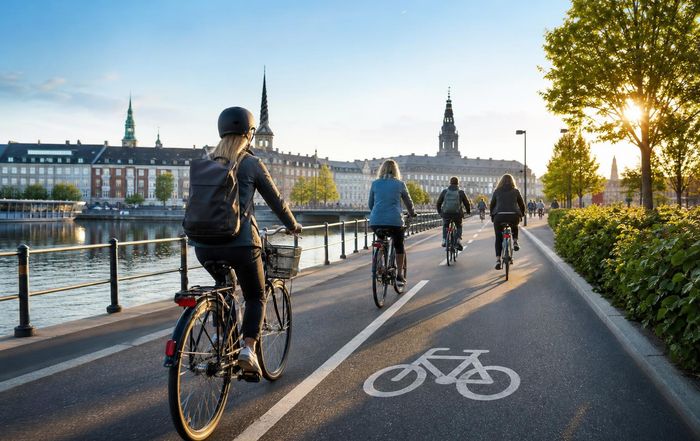
What the World Can Learn from Denmark's Everyday Cycling Culture
In Denmark, especially in Copenhagen, cycling is not a niche hobby or a weekend fitness ritual. It is how people commute, shop, take children to school, and meet friends. On many streets, bikes outnumber cars at rush hour, and riders range from teenagers in hoodies to executives in suits and older adults with walking sticks strapped to step-through frames. For cities and governments trying to promote active transport for health, climate, and livability, Denmark's cycling culture offers a rare full-scale case study of what happens when everyday movement is built into the fabric of daily life rather than added on as "exercise."
This article looks at what makes Danish cycling culture work, what the evidence says about its health and environmental impacts, and how other places can adapt the lessons without copying Denmark blindly. For readers interested in fitness, urban health, and sustainability, the Danish example shows how infrastructure, policy, and culture can combine to turn active transport into a default choice rather than a personal virtue.
How Denmark Became a Nation of Everyday Cyclists
Denmark's cycling reputation is not an accident of flat terrain and good weather; it's the result of decades of policy and civic pressure. In the 1950s and 1960s, rising car ownership pushed bikes off many European streets. Denmark was no exception. It took a combination of oil crises, road deaths, and grassroots protests in the 1970s to reverse the trend. Citizen movements in Copenhagen, including large demonstrations and "die-ins" at dangerous intersections, demanded safer streets for people on bikes and on foot.
In response, national and city authorities began investing in dedicated cycle tracks, traffic calming, and safer junction design. Over time, this evolved into a systematic approach supported by national strategies from the Danish Ministry of Transport and local plans in cities like Copenhagen and Aarhus. Today, Copenhagen regularly features at or near the top of international rankings such as the Copenhagenize Index of bicycle-friendly cities, with around half of all trips to work or study in the city made by bike in many recent years.
Crucially, cycling in Denmark is framed as practical transport, not a specialist sport. Bikes are built for carrying groceries and children, not just for speed. Work clothes, not Lycra, are the norm. That everyday framing matters: it lowers the psychological barrier to participation and helps embed cycling into social norms, which in turn supports the health and environmental benefits policymakers hope to achieve.
Infrastructure as a Health Intervention in Disguise
From a distance, Danish bike lanes might look like a design choice; up close, they function as a population-wide physical activity program. The World Health Organization recommends at least 150-300 minutes of moderate-intensity aerobic activity per week for adults. For many Danes, a 20-30 minute bike commute twice a day covers most of that guidance without ever entering a gym.
The key is that cycling is made frictionless. In cities like Copenhagen, most main roads feature wide, physically separated cycle tracks raised slightly above the car lane and below the sidewalk. Junctions use bike-specific traffic lights and clear markings, and "green waves" on some corridors are timed for cyclists traveling at around 20 km/h, allowing them to hit successive green lights if they maintain a comfortable pace. Secure bike parking is integrated into train stations, workplaces, and shopping streets, and bikes are allowed on many trains and metro lines, enabling mixed-mode trips.
From a public health perspective, this infrastructure removes many of the barriers that often undermine active transport initiatives elsewhere: fears about safety, lack of continuous routes, difficulty parking, and the feeling that cycling is slower or more stressful than driving. Research summarized by organizations like the European Cyclists' Federation and Sustrans indicates that high-quality, separated infrastructure is strongly associated with higher cycling rates and broader demographic participation, including among children, older adults, and women-groups that tend to be underrepresented in places where cycling is left to share space with fast-moving traffic.
When cities build such networks at scale, they are not simply enabling existing cyclists; they are changing the daily activity patterns of the population. Every short bike trip replaces a sedentary car or bus journey with a bout of moderate-intensity movement, with cumulative effects on cardiovascular fitness, metabolic health, and overall energy expenditure.
What the Data Say: Health and Longevity Gains
Denmark's cycling culture provides a rich dataset for researchers studying active transport and health. One of the most cited analyses, based on large Danish cohort studies, found that regular commuting by bicycle was associated with a significant reduction in all-cause mortality compared with non-cycling commuters, even after adjusting for other lifestyle factors. While details vary by study and population, the general pattern is consistent with global evidence: routine cycling is linked to lower risk of cardiovascular disease, type 2 diabetes, some cancers, and premature death.
The World Health Organization has developed tools such as the Health Economic Assessment Tool (HEAT) to quantify the health benefits of walking and cycling. When applied to cities with high cycling rates, the model often finds that the value of reduced mortality and morbidity can exceed the cost of infrastructure investment by a wide margin. In Copenhagen, city authorities have for years argued that every kilometer cycled generates a net societal benefit when health, congestion, noise, air pollution, and climate impacts are accounted for, whereas every kilometer driven tends to impose net costs.
From a fitness perspective, daily cycling offers a form of incidental training that is especially valuable for people who struggle to fit structured workouts into their schedules. A 6-8 km urban ride at a comfortable pace can easily burn 150-250 kcal, depending on body size and conditions. Multiplied across two trips per day and five working days, that can rival or surpass the weekly energy expenditure of many recreational exercisers. For readers focused on performance, Danish commuters are effectively "stacking" low- to moderate-intensity zone 1-2 work throughout the week, which supports cardiovascular base-building, metabolic flexibility, and recovery from higher-intensity sessions.
Organisations like the Centers for Disease Control and Prevention and Public Health England (now part of the UK Health Security Agency and the Office for Health Improvement and Disparities) have repeatedly highlighted active travel as one of the most scalable ways to increase population physical activity. Denmark demonstrates what happens when those recommendations are implemented not just via campaigns but through the physical shape of cities.
Safety, Risk, and the "Safety in Numbers" Effect
Any discussion of active transport has to grapple with safety. On a per-kilometer basis, cyclists are more vulnerable than car occupants in many countries. Yet Denmark, the Netherlands, and a small group of similar cycling nations report relatively low cyclist fatality rates compared with places where cycling volumes are lower and infrastructure is less protective.
Several factors contribute. First, the physical protection offered by separated cycle tracks significantly reduces collisions with motor vehicles, especially at mid-block segments. Second, intersection design-raised crossings, clear priority rules, dedicated bike phases in traffic lights-helps manage the most dangerous conflict points. Third, high cycling volumes create what researchers and advocacy groups such as Cycling UK describe as a "safety in numbers" effect: when drivers expect to encounter many cyclists, they tend to drive more cautiously, and political support for enforcement and safer street design grows.
It is important not to romanticize this. Denmark still records cyclist injuries and fatalities each year, and debates continue about how to further reduce serious crashes, particularly involving heavy goods vehicles and at complex junctions. However, when comparing risk, it is useful to look not only at the per-trip or per-kilometer danger of cycling but also at the health risks of remaining sedentary and relying on motorized transport. Public health agencies, including the WHO, generally conclude that for most people, the health benefits of regular cycling outweigh the risks from crashes and air pollution, especially in cities that actively support safer conditions.
For policymakers in other countries, the Danish case underscores that safety is not just about helmets and high-visibility gear-though those may have a role-but about systemic design choices that protect vulnerable road users and normalize lower traffic speeds in dense urban areas.
Climate, Air Quality, and Urban Livability
Beyond individual health, Denmark's cycling culture plays a substantial role in climate and environmental policy. Transport is a major source of greenhouse gas emissions in most industrialized countries. Shifting short car trips to bikes or walking is one of the most immediately available decarbonization strategies, especially in urban areas where distances are manageable and alternatives are viable.
The European Environment Agency and national climate bodies have repeatedly highlighted active transport as part of broader decarbonization pathways. In Copenhagen, where cycling's mode share is high, city officials estimate that cycling saves tens of thousands of tonnes of CO₂ annually compared with a scenario where those trips were made by car. While exact numbers vary with assumptions, the direction of impact is clear.
Air quality is another major benefit. Combustion engine vehicles emit nitrogen oxides and particulate matter that contribute to respiratory and cardiovascular disease. By replacing short, cold-engine trips-often the dirtiest per kilometer-with cycling, cities can help reduce localized pollution. For residents who are physically active outdoors, cleaner air matters for exercise safety and long-term lung health. Organisations like Clean Air Task Force and global initiatives supported by the UN Environment Programme have stressed that transport mode shift is a critical part of urban air quality strategies, alongside cleaner fuels and electrification.
Cycling also affects the "feel" of a city. Streets dominated by bikes and pedestrians tend to be quieter, more sociable, and more space-efficient. Car parking can be converted into wider sidewalks, greenery, or bike parking. For families, the ability to move around safely without a car can significantly lower living costs and open access to parks, sports facilities, and community spaces that support broader wellbeing.
Culture, Identity, and the Normalization of Movement
Infrastructure and policy are only part of the story. Denmark's cycling culture is also shaped by identity and social norms. Many Danish children learn to ride early and are introduced to traffic rules in school. Cycling tests and road safety education are common, and parents often ride with children in cargo bikes or on child seats long before they are old enough to ride independently. By the time they reach adolescence, navigating city streets by bike feels natural.
This normalization is reinforced by media, advertising, and everyday observation. When politicians, celebrities, and business leaders are seen arriving by bike, it signals that cycling is compatible with status and professionalism. For many Danes, the bike is not a symbol of poverty or environmental extremism but a rational, efficient tool. That social framing is crucial for uptake in countries where cycling is still associated with either sport or economic necessity.
From a fitness and wellbeing angle, this cultural embedding reduces the psychological hurdle of starting or maintaining an active lifestyle. In environments where most peers drive, choosing to walk or cycle can feel like a statement; in Denmark, it is simply what people do. This reduces the cognitive load of "choosing health" every day and makes consistent physical activity more sustainable over the long term.
Lessons for Other Countries: What Transfers, What Doesn't
No city can import Denmark's history or social context wholesale, and not every place has Copenhagen's density, climate, or governance structures. However, several aspects of the Danish approach appear transferable, with adaptations.
First, network thinking matters. Rather than building isolated "showcase" bike lanes, Danish cities focus on continuous, connected routes that reliably get people from homes to jobs, schools, and transit hubs. For planners elsewhere, that means prioritizing corridors that link major destinations, not just scenic segments. Integrating cycling with public transport-secure parking at stations, the ability to take bikes on trains or buses-can extend the effective reach of both modes.
Second, design quality is non-negotiable. Narrow painted lanes in fast traffic rarely attract the broad population segments that drive health and climate benefits. Evidence from organizations like the National Association of City Transportation Officials (NACTO) in the United States, as well as European practice, points toward physically separated, predictable infrastructure as the most effective at increasing cycling rates. This often requires reallocating space from cars, which can be politically contentious but is central to the Danish success.
Third, policy alignment helps. Denmark backs its infrastructure with supportive measures: lower urban speed limits in many areas, parking policies that do not overly subsidize car use, and planning rules that encourage compact, mixed-use development. For readers interested in the intersection of fitness and policy, this is where health outcomes are shaped long before individuals make daily choices. Linking cycling investments to broader health, climate, and transport strategies can unlock funding and institutional support that stand-alone "bike projects" often lack.
Finally, communication and culture-building are essential. Campaigns that highlight convenience, time savings, and reliability often resonate more broadly than messages focused solely on health or climate. In Denmark, cycling is marketed as the fastest way through the city, not a moral duty. Cities elsewhere can work with employers, schools, and community groups to normalize cycling as an everyday option, including for those who are not already fitness enthusiasts.
Addressing Common Concerns: Weather, Distance, and Inclusivity
When looking at Denmark from afar, three objections often arise: the weather is milder, distances are shorter, and the population is more homogeneous or affluent. Each deserves scrutiny.
On weather, Denmark is not especially warm; Copenhagen's winters are dark, windy, and often wet, with temperatures frequently around freezing. Yet year-round cycling remains common, supported by winter maintenance of bike lanes, good lighting, and clothing choices that prioritize practicality over performance. Cities in colder or hotter climates may need to adapt with shading, water access, and seasonal maintenance, but weather alone is rarely a decisive barrier if infrastructure and culture support cycling.
Distances are more complex. Danish urban areas tend to be relatively compact, with strong regional train networks for longer trips. In more sprawling regions, mixed-mode strategies become more important: secure parking at transit hubs, e-bike support for longer commutes, and land-use reforms that gradually reduce the need for long car trips. The rapid rise of e-bikes and cargo e-bikes, documented in markets across Europe and increasingly in North America and Asia, suggests that electric assist can extend the feasible cycling radius significantly, especially for older adults or those carrying children and goods.
Inclusivity is a real challenge. Even in Denmark, cycling participation is not perfectly equal across income, age, or ability. However, the country demonstrates that when conditions are right, cycling can be a truly mass mode. For people with disabilities, adapted cycles and inclusive design standards are increasingly part of the conversation, and advocacy groups worldwide are pushing for infrastructure that accommodates a wider range of human-powered and light electric vehicles. Organizations such as PeopleForBikes and ITDP (Institute for Transportation and Development Policy) have emphasized that inclusive active transport is a social equity issue as much as a health or environmental one.
Practical Takeaways for Individuals and Cities
For readers thinking about their own health and fitness, the Danish example suggests a simple but powerful strategy: where safe and feasible, turn some necessary trips into low-intensity training sessions. Replacing a short car or bus journey with a bike ride-even once or twice a week-can meaningfully increase weekly activity without requiring extra time set aside for workouts. Combining cycling with other forms of exercise, such as strength training or sport-specific work, can create a balanced routine that supports long-term cardiovascular and musculoskeletal health. For more ideas on integrating movement into daily life, our coverage of fitness and wellness trends explores complementary approaches.
For cities and policymakers, Denmark offers a template for active transport that is deeply intertwined with broader goals around health, sustainability, and economic vitality. Investing in safe, continuous cycling networks can reduce healthcare costs, cut congestion, and make urban centers more attractive places to live and work. Aligning these efforts with public health campaigns, such as those promoted by the WHO and national agencies like the CDC, can help frame cycling infrastructure as a health intervention rather than a niche amenity.
Businesses and employers also have a role. Providing secure bike parking, showers, and flexible dress codes can make cycling to work more appealing. For companies in the sports, outdoor, and wellness sectors, Denmark's experience offers insights into how products and services can support everyday active lifestyles rather than just performance-oriented training. Our sections on brands, business, and innovation regularly track how organizations respond to these shifts in urban mobility and consumer behavior.
Finally, active transport is increasingly central to climate and environmental strategies. Readers interested in the intersection of mobility and sustainability can explore related coverage in our environment, world, and sustainability sections, where cycling often appears alongside public transit, low-emission zones, and urban greening as part of integrated approaches to healthier cities.
Denmark's cycling culture did not emerge overnight, and it is not perfect. But it shows that when streets, policies, and norms align, everyday movement can become the default, not the exception. For individuals, that means more opportunities to fold fitness into daily routines. For cities, it offers a roadmap to healthier, cleaner, and more livable communities-one pedal stroke at a time.