
How Nordic Countries Support Active and Healthy Living
The Nordic Blueprint for Everyday Health
As the global conversation around health, performance, and sustainable lifestyles intensifies, the Nordic countries-Sweden, Norway, Denmark, Finland, and Iceland-continue to stand out as living laboratories for how policy, culture, and design can come together to support active and healthy living across all stages of life. For a great fit and healthy bunch that like to visit FitPulseNews, which closely follows developments in fitness, health, sports, brands, technology, wellness, and sustainability, the Nordic model offers a compelling, evidence-informed blueprint that is at once aspirational and surprisingly practical for individuals, companies, and others worldwide.
International benchmarks consistently highlight Nordic performance. The World Health Organization regularly points to the region's high levels of physical activity, low rates of obesity compared with many industrialized nations, and robust social safety nets that underpin health outcomes. Readers interested in global comparisons can review current data on physical activity and noncommunicable disease trends through the WHO health promotion resources. At the same time, Nordic countries maintain some of the highest life expectancies in the world, supported by universal health systems, strong primary care, and a public ethos that frames movement, outdoor time, and balanced nutrition as normal parts of daily life rather than specialized lifestyle choices.
For FitPulseNews and its global audience, the Nordic experience is particularly relevant because it connects macro-level decisions-urban planning, labor regulations, education policy-with micro-level behaviors such as commuting by bike, taking walking meetings, prioritizing recovery, and choosing nutrient-dense foods. This integration of systems and habits aligns closely with the way FitPulseNews approaches interconnected topics such as health, fitness, nutrition, and wellness, and helps explain why Nordic practices are increasingly studied by researchers, brands, and city leaders from North America to Asia.
Policy Foundations: Welfare States That Invest in Movement and Health
At the core of the Nordic approach lies a policy framework that treats health promotion not as an optional add-on but as a strategic investment in human capital, social cohesion, and long-term economic productivity. Governments in Sweden, Norway, Denmark, Finland, and Iceland have long operated under a social democratic model that emphasizes universal access to education, healthcare, and social services, and this architecture has been refined in recent decades to explicitly encourage active lifestyles and preventive health.
National public health agencies, such as the Swedish Public Health Agency and the Norwegian Directorate of Health, align their guidelines with international evidence from organizations like the U.S. Centers for Disease Control and Prevention, emphasizing minimum weekly thresholds for aerobic and strength activity while also promoting reduced sedentary time and the integration of movement into everyday routines. These guidelines are not merely advisory; they inform school curricula, workplace standards, urban zoning decisions, and even tax incentives for wellness-related initiatives.
Universal healthcare systems, often highlighted by institutions such as the Organisation for Economic Co-operation and Development for their efficiency and equity, provide a platform for early detection of lifestyle-related conditions and for counseling on physical activity and nutrition. General practitioners in the Nordic region are more likely than many of their counterparts elsewhere to prescribe exercise as a formal part of treatment plans, reflecting a cultural and institutional belief that movement is medicine. This policy environment, when viewed through a business lens, reduces absenteeism, supports longer productive working lives, and creates a population that is more receptive to fitness, sports, and wellness offerings, which is directly relevant to readers tracking industry trends via FitPulseNews business coverage.
Urban Design: Cities Built for Walking, Cycling, and Outdoor Living
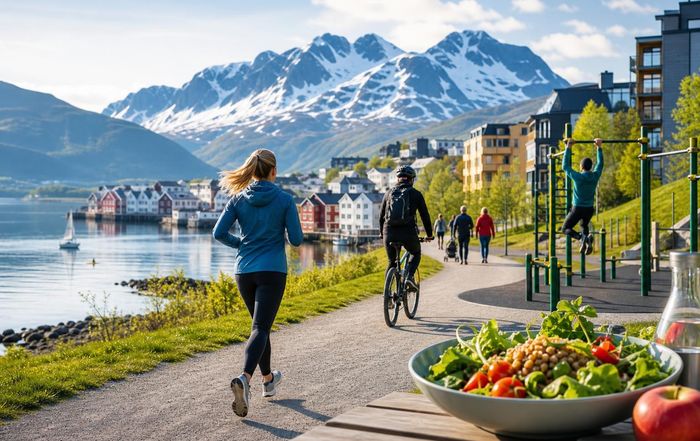
The physical environments of Nordic cities and towns provide perhaps the most visible expression of the region's support for active and healthy living. Urban planners and transport authorities have spent decades prioritizing walkability, cycling infrastructure, and accessible public spaces in ways that now serve as case studies for city leaders worldwide. The Danish capital, for example, is frequently cited by the C40 Cities Climate Leadership Group and other networks as a model for cycling integration, and interested readers can explore contemporary urban mobility research through resources such as C40's transport and health pages.
In practice, this means that residents of Copenhagen, Stockholm, Oslo, Helsinki, and Reykjavík often find that the fastest, most convenient, and most pleasant way to move through the city is on foot, by bike, or via public transit combined with short walks. Dedicated cycling lanes, winter-maintained bike paths, and extensive networks of parks and waterfront promenades normalize daily physical activity as part of commuting, errands, and socializing. For a global audience accustomed to car-dependent environments, the Nordic experience demonstrates how infrastructure can either constrain or liberate healthy behavior.
The environmental dimension of this design philosophy is equally important. Nordic countries are leaders in climate and sustainability policy, frequently ranking at the top of indices tracked by organizations like the Yale Center for Environmental Law & Policy. Cleaner air, lower traffic congestion, and abundant green spaces create conditions that support respiratory health and psychological well-being. This connection between environment, movement, and health is increasingly reflected in coverage on FitPulseNews environment and sustainability, as brands and cities seek to emulate Nordic-style "15-minute cities" and nature-integrated neighborhoods.
Cultural Norms: From Friluftsliv to Everyday Movement
Beyond policy and infrastructure, the cultural fabric of Nordic societies plays a decisive role in sustaining active and healthy lifestyles. Concepts such as the Norwegian and Swedish "friluftsliv," loosely translated as "open-air life," encapsulate a deep-rooted appreciation for outdoor activity, seasonal change, and nature immersion that transcends age, income, and fitness level. This cultural orientation is not a romanticized ideal but a lived reality, supported by social norms and legal frameworks such as the "allemannsretten" or "right to roam," which grants broad public access to nature areas in countries like Norway and Sweden. Those interested in the legal and cultural underpinnings of access to nature can explore comparative perspectives through the European Environment Agency.
In practice, friluftsliv manifests in weekend hikes, cross-country skiing, outdoor swimming, and family time spent in forests and along coastlines, often in simple cabins with minimal technology. These activities are not positioned as extreme sports or elite fitness pursuits but as normal, restorative habits. The social pressure in many Nordic communities is not to display overwork or constant digital connectivity, but rather to demonstrate balance, time outdoors, and engagement with family and friends. This aligns closely with the themes FitPulseNews explores in its culture and sports coverage, where lifestyle and performance intersect.
Cultural attitudes toward work-life balance further reinforce active living. Nordic countries are renowned for relatively shorter average working hours, strong labor protections, and generous parental leave policies, topics frequently covered by institutions such as the International Labour Organization. With more predictable schedules and social acceptance of leaving the office on time, individuals have greater capacity to integrate regular exercise, outdoor time, and family activities into their routines. This stands in contrast to cultures where long hours and constant availability are valorized, often at the expense of physical and mental health.
Education and Youth: Building Lifelong Habits Early
The Nordic commitment to active and healthy living begins early in life, with education systems that treat physical activity, nutrition, and mental well-being as foundational competencies rather than peripheral subjects. Schools across Finland, Sweden, Norway, Denmark, and Iceland typically incorporate daily or near-daily physical education, frequent outdoor breaks, and, in many cases, active transport initiatives that encourage children to walk or cycle to school. Comparative education research, such as that highlighted by the OECD's Education at a Glance reports, often points to Nordic systems as examples of holistic student development, integrating cognitive, social, and physical dimensions.
School meals are another critical component. Nordic countries have invested in providing nutritious, often free or heavily subsidized meals that emphasize whole grains, vegetables, lean proteins, and traditional dishes adapted to modern dietary guidelines. This approach not only supports physical health and concentration but also shapes taste preferences and food literacy from an early age. Readers focused on nutrition science can deepen their understanding of dietary patterns and chronic disease risk through resources from the Harvard T.H. Chan School of Public Health.
Importantly, Nordic education systems are increasingly attentive to mental health and stress management, recognizing the growing pressures faced by young people in a hyperconnected world. School-based counseling, anti-bullying programs, and curricula that teach emotional regulation and resilience are becoming more common, reflecting a comprehensive interpretation of health that aligns with FitPulseNews' holistic perspective on wellness. The combination of physical activity, nutritious food, and psychological support forms a powerful foundation for lifelong healthy habits, and offers a model for other countries seeking to counter rising childhood obesity and mental health challenges.
Workplaces and Corporate Wellness: A Strategic Advantage
For a business-oriented readership, one of the most relevant aspects of the Nordic model is how employers integrate health and activity into organizational strategy. Companies across the region, from global leaders like Nokia and Ericsson to smaller technology startups and public agencies, increasingly recognize that employee well-being is directly linked to engagement, innovation, and retention. This perspective is supported by a growing body of research from institutions such as McKinsey & Company and the World Economic Forum, which highlights the economic returns of investing in health-promoting workplaces.
Nordic employers commonly provide subsidized gym memberships, on-site fitness facilities, flexible working hours to accommodate exercise, and wellness stipends that can be used for sports equipment, yoga classes, or outdoor gear. Many organizations encourage walking meetings, standing desks, and active breaks, embedding movement into the workday rather than relegating it to personal time. This approach resonates strongly with FitPulseNews readers who follow trends in corporate wellness, workplace design, and talent strategies through sections such as jobs and innovation.
Furthermore, Nordic corporate cultures tend to support psychological safety and moderate stress levels, with flatter hierarchies and open communication norms that reduce some of the chronic stressors associated with more rigid, top-down environments. While no region is immune to burnout, the combination of social protections, vacation norms, and explicit attention to well-being gives Nordic workers a relatively favorable context for maintaining active and healthy lifestyles alongside demanding professional roles.
Sports, Elite Performance, and Mass Participation
The Nordic countries' success in supporting active living at the population level coexists with strong traditions of elite sports performance, particularly in winter disciplines such as cross-country skiing, biathlon, and ice hockey, as well as in football, handball, and athletics. National sports federations, such as the Norwegian Olympic and Paralympic Committee and Confederation of Sports and the Swedish Sports Confederation, work closely with local clubs, municipalities, and schools to create pathways from grassroots participation to high-performance competition. Readers can explore international sports governance and policy trends through organizations like the International Olympic Committee.
A distinctive feature of the Nordic sports ecosystem is the emphasis on broad-based participation and volunteer-driven community clubs. Rather than focusing narrowly on early specialization and elite talent identification, many clubs encourage children to sample multiple sports, prioritize enjoyment, and maintain engagement through adolescence and adulthood. This inclusive model helps sustain high levels of physical activity across the population while still producing world-class athletes, a balance that aligns with FitPulseNews' interest in both everyday fitness and high-performance sports.
Major events, from city marathons and cross-country ski races to community cycling tours and open-water swimming competitions, further embed physical activity into the social calendar. Coverage of such events in Nordic and international media parallels the type of reporting and analysis FitPulseNews offers in its events and sports sections, where the line between participant and spectator is often deliberately blurred to inspire broader engagement.
Nutrition, Food Culture, and the New Nordic Diet
Nutritional habits in the Nordic region have attracted growing attention from researchers, chefs, and the wellness industry, particularly with the rise of the so-called "New Nordic Diet." This dietary pattern, inspired by traditional foods and modern nutrition science, emphasizes whole grains such as rye and oats, root vegetables, berries, legumes, fish, and modest amounts of dairy and meat, often sourced locally and produced sustainably. The concept gained international prominence through the work of chefs and restaurants like Noma in Copenhagen, but its underlying principles have been studied in clinical and epidemiological research, including work highlighted by the Nordic Nutrition Recommendations.
For FitPulseNews readers interested in the intersection of performance, health, and culinary innovation, the Nordic approach to food offers valuable insights. It demonstrates how regional identity, environmental concerns, and scientific evidence can be combined into a coherent, appealing dietary model that supports metabolic health, weight management, and cardiovascular outcomes. The focus on minimally processed foods, seasonal produce, and marine omega-3 sources aligns with broader global evidence on healthy eating patterns, much of which can be explored through platforms like the European Food Information Council.
Nordic food culture also reflects broader social values of equality and inclusion. Communal meals at schools and workplaces, transparent labeling, and strong consumer protection frameworks help ensure that healthier options are accessible and understandable to a wide range of people, not just affluent or highly educated segments. This democratization of nutrition knowledge and access parallels FitPulseNews' mission to make evidence-based guidance on nutrition and health available to a diverse, global audience.
Technology, Data, and Innovation in Health and Fitness
The Nordic region's strength in digital technology and innovation has increasingly been applied to health and fitness, creating an ecosystem in which wearable devices, telehealth, digital coaching, and data-driven public health interventions complement more traditional approaches. Countries like Finland and Sweden have high rates of smartphone and wearable adoption, and local companies and research institutions collaborate to develop solutions that support personalized training, remote monitoring, and early detection of risk factors. Global technology firms such as Apple, Garmin, and Polar have substantial user bases in the region, and their products are often integrated into clinical and corporate wellness programs, reflecting a growing convergence between consumer tech and healthcare.
Readers who follow digital health trends can access overviews and analyses through organizations such as the World Health Organization's digital health initiatives and the European Commission's eHealth resources. Nordic governments have been early adopters of electronic health records, secure digital identities, and interoperable data systems, which facilitate longitudinal tracking of health indicators and more targeted interventions. This infrastructure, combined with high levels of public trust in institutions, creates fertile ground for experimentation with AI-driven decision support, predictive analytics, and population-level health promotion campaigns.
For FitPulseNews, which covers technology and innovation alongside fitness and wellness, the Nordic experience underscores the potential of integrating hardware, software, and policy to create supportive environments for behavior change. At the same time, it highlights important questions about data privacy, algorithmic bias, and digital inclusion that are increasingly relevant as more aspects of health and activity are quantified and commercialized.
Lessons and Opportunities for a Global Audience
The Nordic countries have become reference points in international discussions about how societies can support active and healthy living at scale, but their experience is not a one-size-fits-all prescription. Differences in climate, culture, governance, and economic structure mean that direct transplantation of policies or practices is rarely feasible. However, several underlying principles emerging from the Nordic model are broadly applicable and particularly relevant to the diverse, globally dispersed visitors of FitPulseNews.
First, the integration of health into all policies-transport, education, labor, environment, and urban planning-demonstrates that active living is most sustainable when it is structurally supported rather than left entirely to individual willpower. Second, the alignment of cultural norms with supportive infrastructure shows how values such as outdoor life, balance, and equality can be reinforced through tangible design choices, from bike lanes to school meals. Third, the combination of universal systems and targeted innovation illustrates how equity and experimentation can coexist, ensuring that technological advances and new business models enhance rather than erode social cohesion.
For readers in the United States, the United Kingdom, Germany, Canada, Australia, and beyond, examining Nordic practices can inform local debates about zoning reform, school curricula, workplace flexibility, and investment in parks and transit. Those working in sports, fitness, and wellness brands can look to Nordic examples of community clubs, inclusive events, and evidence-based nutrition messaging as inspiration for product development and marketing strategies, themes regularly explored in FitPulseNews brands coverage. Policymakers and corporate leaders in Asia, Africa, and South America can draw on Nordic experiences with digital health infrastructure, environmental policy, and social protection to design context-specific solutions that promote movement and well-being.
As FitPulseNews continues to track recent developments in fitness, health, sports, and broader world and news trends, the Nordic countries will remain important case studies. Their ongoing experiments in policy, culture, technology, and business strategy offer a rich source of insight for anyone seeking to create environments-at home, at work, in cities, and online-that make the active, healthy choice the easy and natural one.
That’s a wrap, but your fitness knowledge journey does not have to stop here. Follow the trusted links, share what you learned, and return soon for more original insights.