

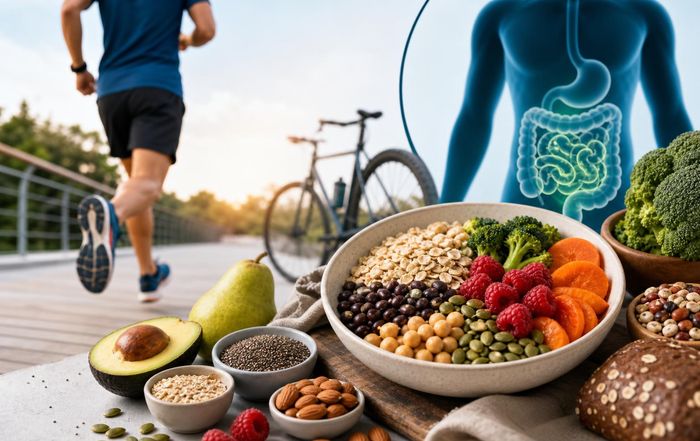
How Much Fiber Do Active Adults Really Need?
For many active adults, macros like protein and carbohydrates get most of the attention, while fiber is treated as an afterthought. Yet fiber quietly influences performance, recovery, gut comfort during training, body composition, and long-term health. The "standard" recommendations you see on food labels are based on the general population, not on people who train hard several times a week. That raises a practical question: should active adults aim higher, and if so, how much higher?
This painstakingly written article looks at what the science and major health organizations say about fiber, how exercise changes your needs in practice, and how to translate that into daily targets and real food on the plate.
What the Official Guidelines Say About Fiber
Most public health recommendations for fiber are framed for the general population, not specifically for athletes or very active people. Still, they offer a useful baseline.
In the United States, the Dietary Guidelines for Americans and the National Academies of Sciences, Engineering, and Medicine recommend an Adequate Intake (AI) of about 14 grams of fiber per 1,000 kcal eaten. That works out to roughly:
About 25 g/day for adult women
About 38 g/day for adult men
Similar targets are echoed by organizations such as the American Heart Association and Academy of Nutrition and Dietetics in the U.S., and by public health agencies in Europe, which often recommend around 25-30 g/day for adults. The World Health Organization links higher fiber intakes from whole plant foods with reduced risk of cardiovascular disease, type 2 diabetes, and some cancers, and supports these general ranges for population health.
These values are population-level targets designed to reduce chronic disease risk, not performance-optimized numbers. They also assume an energy intake around 2,000-2,700 kcal per day. Many active adults, especially endurance athletes and strength athletes, routinely eat more than that, which is where the 14 g per 1,000 kcal rule of thumb becomes more relevant.
For example, an endurance runner or cyclist eating 3,000 kcal daily would land at a theoretical guideline of around 42 g of fiber. A smaller but highly active woman eating 2,400 kcal would land around 34 g. The general pattern is clear: if you burn and eat more, your fiber "budget" rises with it.
Does Being More Active Mean You Need More Fiber?
There is no universally accepted "athlete-specific" fiber guideline from bodies like the International Olympic Committee, American College of Sports Medicine, or International Society of Sports Nutrition. Instead, recommendations for active adults are inferred from two main ideas:
Higher energy intake means more room for whole plant foods, and therefore naturally more fiber.
Exercise improves gut function over time, so many active people can tolerate and benefit from higher fiber intakes than sedentary peers, provided increases are gradual.
However, more is not always better, especially around training. Too much fiber too close to intense exercise can cause gastrointestinal distress-bloating, cramping, gas, urgent bathroom trips-particularly in endurance sports. So the real question is less "Do active adults need more fiber?" and more "What is the right range, and how should it be timed?"
Based on current evidence and practical sports nutrition guidance, a useful working range for most active adults is:
At least the general guideline of 14 g per 1,000 kcal
Often beneficial to be in the range of 15-20 g per 1,000 kcal, if tolerated and well timed
For many people who train 4-6 days per week, this translates to:
Women who are active: roughly 28-40 g/day
Men who are active: roughly 30-45+ g/day
These are not strict rules but realistic ranges. Some lean endurance athletes or plant-based eaters may do well above 50 g/day; others may feel best closer to 25-30 g/day, especially if they have a sensitive gut or conditions such as irritable bowel syndrome (IBS).
How Fiber Supports Performance, Recovery, and Health
Fiber is often discussed in terms of long-term disease prevention, but its day-to-day effects matter just as much to active adults.
First, fiber contributes to stable blood sugar and more even energy levels, especially when it comes from minimally processed whole grains, legumes, vegetables, and fruits. This can reduce mid-day energy crashes between training sessions. By slowing gastric emptying and digestion, viscous soluble fibers help blunt sharp spikes in glucose and insulin, which organizations like the American Diabetes Association highlight as beneficial for metabolic health.
Second, fiber is central to gut health. Many fibers act as prebiotics, feeding beneficial bacteria in the colon. These microbes ferment fiber into short-chain fatty acids (SCFAs) such as butyrate, which help maintain the intestinal barrier and modulate inflammation. Research summarized by institutions like Harvard T.H. Chan School of Public Health and Johns Hopkins Medicine suggests that a diverse, fiber-rich diet supports a more resilient microbiome. For athletes, this may translate to fewer GI issues over time, better nutrient absorption, and potentially even immune benefits during heavy training blocks.
Third, fiber plays a role in body composition. By adding volume without many calories, high-fiber foods enhance satiety, making it easier to manage appetite and avoid overeating when the goal is leanness. This is relevant across sports, from weight-class disciplines to endurance athletes trying to maintain a power-to-weight ratio. Public health agencies like the NHS in the UK and Health Canada consistently link higher fiber intakes with lower body weight and reduced risk of weight gain over time.
Finally, the long-term benefits matter for anyone who wants to stay active for decades. Higher fiber intake is associated with lower risks of cardiovascular disease, stroke, type 2 diabetes, and some cancers. Large epidemiological reviews, including those highlighted by the World Health Organization, consistently find that people who eat more fiber from whole foods have better long-term health outcomes. For an active lifestyle, that means greater odds of staying healthy enough to keep training and competing later in life.
When Too Much Fiber Becomes a Problem
While fiber is beneficial, more is not automatically better. Active adults can run into trouble when they increase fiber too fast, eat a lot of it right before training, or rely heavily on certain types of fermentable fibers.
Common issues include bloating, gas, cramping, and loose stools or, conversely, constipation if fluid intake is inadequate. This is especially common when people suddenly switch from a low-fiber, refined-carb diet to one packed with whole grains and legumes. The gut microbiota and the gut's muscular function need time to adapt.
Endurance athletes are particularly vulnerable to exercise-induced gastrointestinal distress, especially during long runs or rides. High fiber intake in the 3-6 hours before intense sessions or races can increase the risk of discomfort, urgent bathroom stops, or even vomiting. Sports nutrition guidance from organizations like the Australian Institute of Sport and various Olympic training centers emphasizes low-fiber meals in the immediate pre-competition window for this reason.
In addition, extremely high fiber intakes-especially from supplements rather than food-may interfere with the absorption of certain minerals like iron, zinc, and calcium. For athletes at risk of low iron status, such as endurance runners or menstruating women, it is wise to keep fiber intake high overall but avoid taking large doses of supplemental fiber with iron-rich meals or iron supplements.
The key is not to fear fiber but to tune the amount and timing. Most active adults do best with a high-fiber diet overall, combined with strategic reductions before key training sessions or competitions.
Practical Daily Targets for Different Types of Active Adults
Because energy needs and training loads vary so widely, it can be more helpful to think in ranges and patterns rather than single "magic" numbers. The following ranges are approximate and should be adjusted based on how your body responds.
For most healthy, active adults who train several times a week:
Aim for at least 14 g of fiber per 1,000 kcal you eat.
Consider a sweet spot of 15-20 g per 1,000 kcal, if your gut tolerates it and your training schedule allows.
This yields something like:
Recreationally active adults (about 2,000-2,400 kcal/day):
Roughly 25-35 g/day, with many doing well around 30 g.
Highly active women (about 2,200-2,800 kcal/day):
Roughly 30-40 g/day.
Highly active men (about 2,700-3,500+ kcal/day):
Roughly 35-50+ g/day, though some may feel better closer to 35-40 g.
People following plant-based diets often reach or exceed the upper end of these ranges without trying, sometimes consuming 50-70 g/day. Many tolerate this well, but it becomes especially important to manage timing around long or intense sessions and to increase intake gradually.
Those with sensitive digestion or conditions like IBS may need a more individualized approach, sometimes emphasizing lower-FODMAP fibers and avoiding sudden jumps in intake. In such cases, working with a registered dietitian or sports nutritionist can be particularly helpful.
Timing Fiber Around Training and Competition
For active adults, how much fiber you eat across the day is only half the story. When you eat it matters for training comfort and performance.
On most training days, the general pattern that works well is:
High-fiber meals and snacks earlier in the day and after training
Moderate to low-fiber meals in the few hours before intense or long exercise
Many sports nutrition experts and institutes advise:
In the 3-4 hours before intense training or racing, favor lower-fiber, easily digestible carbohydrates such as white rice, pasta, low-fiber bread, ripe bananas, or sports drinks. Keep vegetables, legumes, and very high-fiber whole grains modest in this window.
In the 1-2 hours before exercise, keep fiber very low, especially for endurance sessions. Small snacks, if needed, should be low in fat and fiber to minimize GI stress.
After training, especially in the next main meal, bring fiber back in through whole grains, fruits, vegetables, nuts, and seeds. This supports recovery, replenishes glycogen over the day, and feeds the gut microbiome.
On rest days or light training days, there is usually more flexibility to eat very high-fiber meals without worrying about performance, as long as total intake is increased gradually and fluid intake is adequate.
This kind of periodization of fiber-high overall, lower before hard sessions-is analogous to how many athletes already think about carbohydrates or caffeine. It allows you to enjoy the long-term health and body-composition benefits of a fiber-rich diet without sabotaging gut comfort during key efforts.
Food Sources That Help Active Adults Hit Their Fiber Targets
Most active adults can meet fiber needs through a varied diet without relying on supplements. Whole foods also provide vitamins, minerals, phytonutrients, and protein or healthy fats that fiber supplements alone cannot.
Useful categories include:
Whole grains such as oats, barley, quinoa, whole-wheat bread and pasta, and brown rice
Legumes including lentils, chickpeas, black beans, kidney beans, and soybeans
Vegetables, especially leafy greens, cruciferous vegetables, carrots, beets, and squash
Fruits, particularly berries, pears, apples, oranges, and bananas
Nuts and seeds such as almonds, pistachios, chia seeds, flaxseeds, and pumpkin seeds
Sports nutrition guidance from organizations like USA Cycling, national sports institutes, and university performance centers often emphasizes these foods as part of a performance-supportive diet. The challenge for some athletes is fitting them into a schedule that also includes low-fiber pre-training meals. That often means making breakfast, lunch, and post-workout meals the primary vehicles for fiber, while keeping pre-session snacks simpler.
For readers interested in broader nutrition strategies beyond fiber, the nutrition section at fitpulsenews.com regularly explores how to balance macros, micronutrients, and timing to support both performance and overall health.
Do Fiber Supplements Make Sense for Active Adults?
Fiber supplements-such as psyllium husk, inulin, partially hydrolyzed guar gum, or wheat dextrin-can help fill gaps when diet alone falls short. They may also be used strategically for specific goals, like improving stool regularity during travel or weight-management phases.
However, most major health organizations, including the World Health Organization, Harvard T.H. Chan School of Public Health, and national health services, emphasize getting fiber primarily from whole foods. Supplements lack the broader nutrient package and food matrix effects that come with whole grains, fruits, vegetables, and legumes.
For active adults, supplements can be useful when:
Appetite is low during heavy training blocks, making it hard to reach fiber targets from food.
Travel or competition schedules make access to high-fiber foods inconsistent.
A clinician or dietitian recommends a specific type of fiber for gut issues.
If you use a supplement, it is generally wise to:
Introduce it gradually, increasing by a few grams at a time.
Drink plenty of fluids, especially if using bulking fibers like psyllium.
Avoid large doses in the hours before intense exercise to minimize GI risk.
Be mindful of interactions with medications or mineral supplements.
Anyone with chronic digestive conditions should discuss fiber supplementation with a healthcare professional. For broader wellness topics that intersect with training, readers can explore wellness coverage and health reporting on our site.
Special Considerations: Endurance vs Strength, Age, and Sex
Different types of training place different practical constraints on fiber intake, even if the underlying health principles are similar.
Endurance athletes-marathoners, triathletes, cyclists, and long-distance swimmers-often face the greatest GI challenges. Long sessions with high gut jostling, heat stress, and blood flow diverted away from the intestines make them more sensitive to what is in the gut at the start. For them, hitting high daily fiber targets is often easiest by loading most fiber-rich foods at breakfast, lunch, and post-workout meals on non-race days, while deliberately paring back in the 12-24 hours before key races or very long training sessions.
Strength and power athletes, such as lifters and sprinters, typically have more flexibility. Because their sessions are shorter and less gut-jostling, they can often tolerate moderate fiber closer to training. For these athletes, fiber's role in appetite control and metabolic health can be especially helpful during cutting or weight-class management phases. Our fitness section frequently covers strategies for aligning nutrition with differing training demands.
Age also matters. Older adults are often encouraged by agencies like the NHS and Health Canada to maintain or slightly increase fiber intake to support bowel regularity, cardiovascular health, and glycemic control. However, appetite and energy intake may decline with age, making it harder to reach targets. For older active adults, this often means deliberately prioritizing fiber-dense foods at most meals and paying attention to hydration.
Sex-specific differences are more about energy intake than biology per se: men on average consume more calories, so their absolute fiber targets are higher if they follow the 14 g per 1,000 kcal rule. Women, especially those with smaller appetites, may need to be more intentional about choosing high-fiber foods at each meal to reach 25-30+ g/day. For women at risk of iron deficiency, timing high-fiber foods away from iron-rich meals or supplements may help optimize iron absorption while still maintaining a fiber-rich diet.
How to Adjust Fiber Intake Safely
For many active adults, the first step is simply to estimate current fiber intake. This can be done informally by looking at typical daily meals or more precisely by logging food for a few days in a reputable nutrition-tracking app. Comparing that number with the guideline of 14 g per 1,000 kcal gives a sense of how far off you might be.
If your current intake is much lower than guideline levels-say, 10-15 g/day-it is usually best to increase gradually over several weeks. Practical steps include:
Adding one serving of fruit or vegetables to one meal per day.
Swapping some refined grains for whole-grain versions.
Including a small portion of legumes a few times per week, then increasing frequency.
Adding a spoonful of ground flaxseeds or chia seeds to yogurt, oats, or smoothies.
As intake rises, it is important to increase fluid intake as well. Many health agencies, including the NHS and Academy of Nutrition and Dietetics, emphasize this point: more fiber without more water can worsen constipation and discomfort.
Monitor how your body responds, especially around training. If you notice persistent bloating, cramps, or changes in bowel habits that don't settle after a couple of weeks, consider adjusting timing (moving more fiber away from pre-training windows), slightly reducing total intake, or consulting a healthcare professional. For broader health and lifestyle context, readers can also explore world health news and general news coverage related to nutrition and chronic disease trends.
Where Fiber Fits in an Overall Performance Nutrition Strategy
Fiber does not exist in isolation. It intersects with protein, carbohydrate periodization, micronutrient intake, and even psychological aspects of eating. For active adults, an effective nutrition strategy usually:
Keeps total daily fiber high enough to support metabolic and cardiovascular health, regularity, and appetite control.
Uses timing and food selection to avoid GI issues around key training sessions and competitions.
Balances fiber with adequate protein for recovery and carbohydrates tailored to training volume and intensity.
Draws primarily on whole plant foods, with supplements used sparingly and strategically.
In practice, that might look like:
A high-fiber breakfast featuring oats, fruit, and nuts on most days.
Moderate-fiber lunches and dinners centered on vegetables, whole grains, and legumes.
Lower-fiber pre-workout snacks and pre-race meals when needed.
A consistent focus on hydration and gradual adjustments rather than sudden dietary overhauls.
Readers interested in how these choices intersect with broader food systems, sustainability, and business trends in the nutrition space can find more at our environment, business, and sustainability pages.
The Bottom Line for Active Adults
Most active adults will benefit from at least meeting general public health fiber guidelines and often from going somewhat beyond them, provided intake is increased gradually and timed sensibly around training. A practical working range is:
Around 14-20 g of fiber per 1,000 kcal, typically translating to roughly 25-45 g/day for many active adults, with some individuals comfortably exceeding that.
Where you should land within that range depends on your energy needs, type of training, gut tolerance, and overall dietary pattern. Rather than chasing a single perfect number, focus on building a consistently fiber-rich, plant-forward diet that supports both your long-term health and your daily performance, while learning through experience how your body responds to different amounts and timing of fiber. If you train hard and want to stay healthy and competitive for years, treating fiber as a core performance nutrient-rather than an afterthought-can be one of the simplest, most effective shifts you make in your nutrition strategy.