

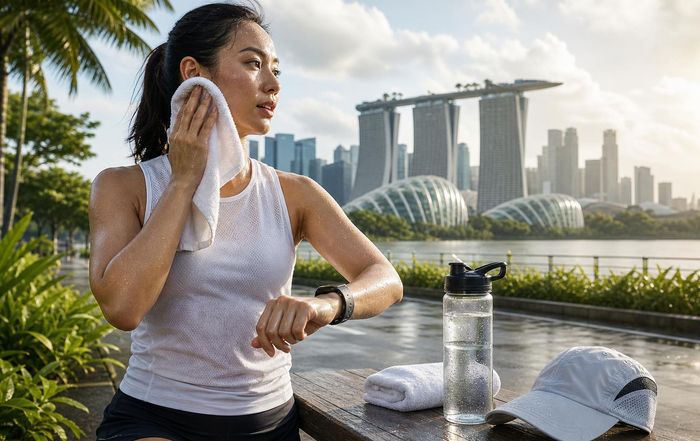
How to Exercise Safely in Singapore's Humid Climate
Outdoor training in Singapore can feel like working out in a steam room: high temperatures, intense humidity, and almost no evaporative cooling. That combination changes how the body responds to exercise and raises the risk of heat-related illness, even for people who consider themselves fit. Yet runners, cyclists, footballers, and recreational exercisers train safely in this climate every day by adjusting how, when, and where they move.
This guide explains what makes Singapore's weather uniquely challenging, how heat and humidity affect performance and health, and the most practical strategies for staying safe-whether you are training for a marathon, commuting by bike, or just trying to keep up a regular fitness habit.
Why Singapore's Climate Makes Exercise Harder
Singapore's equatorial location means temperatures are relatively stable year-round, often around 30-34°C in the afternoon, with humidity frequently above 70-80%. That humidity matters more than many people realize. When the air is already saturated with moisture, sweat does not evaporate efficiently. Because evaporation is the body's main cooling mechanism during exercise, this makes it much harder to dump excess heat.
The World Meteorological Organization notes that high humidity significantly increases heat stress at a given temperature, which is why a 31°C day in Singapore can feel more oppressive than a hotter but drier day elsewhere. The heat index or "feels like" temperature combines air temperature and humidity to estimate how hot conditions feel to the human body; in Singapore it often exceeds 38-40°C on sunny afternoons even when the thermometer reads lower. This raises heart rate, makes breathing feel more laboured, and can cause an unusually high level of perceived effort at paces that normally feel comfortable.
For people with underlying health conditions, such as heart disease, respiratory problems, or diabetes, the combination of heat and humidity adds extra strain. Organizations such as the World Health Organization and U.S. Centers for Disease Control and Prevention highlight that older adults, children, pregnant people, and those on certain medications (for example, some blood pressure or psychiatric drugs) can be more vulnerable to heat. In a place like Singapore, where "heatwave" conditions are closer to the norm than the exception, that means everyday training choices-time of day, intensity, hydration-matter more than in milder climates.
Readers looking to understand broader health implications of environmental conditions may also find related reporting in our health and environment sections useful.
How Heat and Humidity Change Your Body's Response to Exercise
When exercising in hot, humid weather, the cardiovascular and thermoregulatory systems must work harder to maintain a safe internal temperature. Blood is diverted toward the skin to help release heat, leaving slightly less available for working muscles. The heart compensates by beating faster for the same workload. This is why a pace that feels easy on a treadmill in an air-conditioned gym may feel unexpectedly intense outdoors at midday.
Research summarized by institutions such as Sports Singapore, Singapore's Health Promotion Board, and the American College of Sports Medicine indicates several predictable changes in hot and humid environments:
The first is a higher heart rate at any given speed or power output, often 5-15 beats per minute above what someone might see in cooler conditions. Second, sweat rate increases, which accelerates fluid and electrolyte loss. Without adequate hydration and sodium intake, this can lead to earlier fatigue, muscle cramps, dizziness, or nausea. Third, perceived exertion climbs faster; workouts feel harder not simply because of mental discomfort but because the body is genuinely under greater physiological load.
Over time, however, the body can adapt through a process known as heat acclimatization. With repeated exposure to hot conditions over one to two weeks, people typically begin to sweat earlier and more efficiently, retain more sodium, and experience less cardiovascular strain at a given intensity. This is part of why regular exercisers in Singapore often tolerate the climate better than visitors. Still, acclimatization has limits: even well-adapted athletes are not immune to heat illness if they push too hard on the wrong day.
Those interested in the performance side of training in heat can find additional context in our sports and fitness coverage, where we often explore how environmental factors influence endurance and team sports.
Recognizing Heat Illness: From Mild to Medical Emergency
Understanding the early warning signs of heat-related illness is essential for anyone exercising outdoors in Singapore. Health agencies such as HealthHub Singapore, the Ministry of Health Singapore, and international bodies including the CDC and WHO describe a spectrum of conditions:
At the milder end, heat cramps involve painful muscle spasms, usually in the calves, arms, or abdomen, often during or after intense exercise. They are typically linked to heavy sweating and loss of electrolytes. Heat exhaustion is more serious and can include heavy sweating, cold or clammy skin, weakness, headache, nausea, dizziness, and a rapid but weak pulse. People may feel faint or struggle to continue exercising even at low intensity.
Heat stroke is a medical emergency. It is characterized by a core body temperature typically above 40°C, confusion, slurred speech, loss of consciousness, or seizures. Skin may be hot and dry or still sweating heavily. Without rapid cooling and urgent medical care, heat stroke can cause organ failure and be life-threatening. The Singapore Civil Defence Force and Ministry of Health advise calling emergency services immediately if heat stroke is suspected, moving the person to a cooler place, and beginning active cooling with cold water, ice packs, or cool towels while waiting for help.
In all cases, early action matters. Stopping activity at the first signs of unusual dizziness, nausea, or disorientation is far safer than trying to "push through." For many active people, the mental shift from seeing heat as a test of toughness to seeing it as an environmental risk is the single most important step in staying healthy.
Planning Workouts Around Singapore's Weather
Because the climate is consistently warm and humid, smart scheduling is one of the most effective ways to reduce risk. In practice, this means paying attention not just to the temperature but also to humidity, cloud cover, and wind.
Early mornings, roughly between 6 a.m. and 8 a.m., are usually the most comfortable time for outdoor training. Temperatures are slightly lower, and concrete and asphalt have released some of the heat stored from the previous day. Late evenings can be an alternative, although built-up areas sometimes remain warm after sunset. Midday and early afternoon, especially on cloudless days, tend to be the most taxing and are best avoided for long or high-intensity sessions.
Weather services such as the Meteorological Service Singapore and regional outlets like The Straits Times or CNA regularly publish temperature, humidity, and heat index readings. Checking conditions before heading out allows for adjustments: shortening a run, choosing a shaded route, or moving a hard interval session indoors. For those training for events, such as road races or football tournaments, it can be helpful to mimic expected race times during some training sessions, but this should be done gradually and with close attention to hydration and recovery.
On days with poor air quality due to haze, extra caution is warranted, especially for people with asthma or cardiovascular disease. The National Environment Agency provides guidance on activity levels based on air quality readings. On those days, shifting workouts indoors to a gym or home setup can be a safer choice, aligning with the kind of flexible training strategies often discussed in our wellness coverage.
Hydration and Electrolytes: Getting the Basics Right
Hydration is often the first safety tip people think of in hot climates, but the details matter. Drinking too little increases the risk of dehydration, heat exhaustion, and impaired performance. Drinking excessively without replacing electrolytes can, in rare cases, lead to hyponatremia (dangerously low blood sodium), especially during long endurance events.
Guidance from organizations such as the American College of Sports Medicine, Singapore's Health Promotion Board, and Mayo Clinic suggests that most active adults should arrive at workouts already well hydrated, then drink regularly during exercise according to thirst and sweat loss. For short sessions under an hour at low to moderate intensity, plain water is usually sufficient. For longer or more intense workouts-common among runners, cyclists, and team-sport athletes-fluids that contain sodium and some carbohydrates can help maintain both hydration and energy.
A practical approach in Singapore's climate is to monitor urine color across the day: pale straw suggests adequate hydration, while dark yellow may indicate a need for more fluids. Weighing yourself before and after long workouts occasionally can also give a sense of sweat rate; losing more than about 2% of body weight in a single session suggests significant dehydration. Replacing that loss gradually over the next several hours is generally more comfortable and effective than trying to drink a large volume immediately.
Electrolyte sources can include sports drinks, electrolyte tablets, or even simple food-based options like lightly salted snacks, depending on individual dietary needs. People with kidney disease, heart failure, or those on salt-restricting medications should consult a healthcare professional before making significant changes to sodium intake. More detailed nutrition-related guidance for active lifestyles is regularly explored in our nutrition coverage.
Clothing, Gear, and Route Choices That Keep You Cooler
What you wear and where you exercise can meaningfully reduce heat stress in Singapore's humidity. Light-colored, loose-fitting clothing made from technical moisture-wicking fabrics helps sweat spread across a larger surface area and evaporate more efficiently than heavy cotton. Many sportswear brands now offer fabrics specifically designed for tropical or hot-weather use, which can be worth considering for people training outdoors several times a week.
A breathable cap or visor can provide shade while still allowing heat to escape from the head. Sunglasses and broad-spectrum sunscreen, as recommended by organizations such as the Skin Cancer Foundation and American Academy of Dermatology, protect against UV exposure, which is high in equatorial regions even on cloudy days. However, thick or greasy sunscreen can sometimes feel uncomfortable under heavy sweat; choosing lighter, sport-specific formulations can improve comfort and adherence.
Route planning is another underused tool. Shaded park connectors, tree-lined paths, and areas near water often feel noticeably cooler than open concrete or asphalt. In Singapore, many runners and cyclists prefer early-morning loops around places like East Coast Park or the Singapore River, where breezes and shade can moderate the heat. For urban commuters, side streets with more greenery may be more comfortable than direct but exposed main roads. These are the kinds of practical adjustments that can make regular activity more sustainable, which is a recurring theme across our world and innovation sections when we look at how cities support active lifestyles.
Hydration packs, handheld bottles, or strategically planning routes around water fountains can help maintain fluid intake without disrupting pace too much. For team sports, simple measures such as ensuring shaded rest areas, frequent drink breaks, and rotating players more often during matches can significantly reduce heat strain.
Adjusting Intensity, Volume, and Expectations
One of the most important but psychologically challenging adaptations to Singapore's climate is adjusting performance expectations. Trying to match paces or power outputs from cooler climates, or even from an air-conditioned treadmill, can be counterproductive and potentially unsafe.
Coaches and sports scientists often recommend using a combination of perceived exertion and heart rate rather than pace alone when training in heat. For example, a runner who normally completes tempo runs at a certain pace might slow that pace by 10-20 seconds per kilometer in hot, humid conditions while aiming for the same "comfortably hard" effort level. Cyclists might reduce target wattage slightly on long outdoor rides. Over time, as the body acclimatizes, some of that performance gap may close, but it is rarely eliminated entirely.
Gradual progression is key. When first increasing outdoor training volume in Singapore, it is wise to build up duration and intensity over several weeks, similar to altitude acclimatization. This might mean starting with shorter easy sessions outdoors while keeping harder intervals indoors, then slowly shifting more quality work outside as tolerance improves. Rest days and lighter sessions become especially important after particularly hot or demanding workouts, as recovery can be slower in constant heat.
For recreational exercisers whose main goal is general health rather than competition, flexibility helps. Swapping a planned outdoor run for a lower-intensity walk on an especially oppressive day, or moving a workout to an indoor gym, is not a failure but a sensible adaptation to the environment. Our wellness and health reporting often highlights that consistency over months and years matters far more than any single session.
Indoor and Hybrid Options: Air-Con as a Training Tool, Not a Crutch
In a city where air conditioning is ubiquitous, indoor exercise is more than just a backup plan; it can be an integral part of a balanced training strategy. Treadmills, stationary bikes, rowing machines, and indoor pools allow people to maintain or build fitness without the added strain of heat and humidity. This is particularly valuable for high-intensity interval training, speed work, or strength sessions where maximum effort is required.
From a physiological perspective, alternating between indoor and outdoor sessions can offer the best of both worlds: the safety and precision of climate-controlled training plus the heat adaptation benefits of regular outdoor exposure. For example, an endurance athlete might perform one or two key quality workouts per week indoors to hit specific targets, then complete easier runs or rides outside to maintain acclimatization. Recreational exercisers might prioritise indoor sessions during the hottest months or on days with poor air quality, then enjoy outdoor walks or jogs during cooler mornings or after rain.
Fitness technology companies and platforms, such as Garmin, Polar, and Strava, have popularized tools that track environmental conditions, heart rate, and perceived exertion, helping users see how heat affects their training. While not essential, these tools can provide useful feedback and may encourage more conservative pacing on difficult days. For many people in dense urban environments, hybrid routines that combine gym memberships, home workouts, and outdoor activity prove to be the most sustainable long term.
Readers interested in how technology is reshaping training choices in different climates can explore more in our technology and business sections, where we regularly cover wearables, fitness platforms, and the companies behind them.
Special Considerations for Children, Older Adults, and People With Health Conditions
While the general principles of heat safety apply to everyone, some groups require extra caution when exercising in Singapore's humidity. Children do not regulate body temperature as efficiently as adults and may be less able to recognize or communicate early signs of heat distress. Older adults often have reduced sweating capacity and may be on medications that affect fluid balance or cardiovascular response. People with chronic conditions such as heart disease, respiratory illnesses, kidney disease, or diabetes are at higher risk of complications from both dehydration and heat stress.
Health authorities, including HealthHub Singapore, the Ministry of Health Singapore, and international bodies like the WHO, recommend that these groups consult healthcare professionals before starting or significantly increasing exercise in hot climates. In practice, that might mean more conservative intensity targets, shorter sessions with frequent breaks, or a greater reliance on indoor environments. Careful monitoring of symptoms-such as unusual shortness of breath, chest pain, confusion, or rapid weight changes from fluid shifts-is essential.
For parents and coaches overseeing youth sports, structured guidelines about water breaks, shade, and training times are important. Some schools and clubs adopt heat policies based on wet bulb globe temperature (WBGT), a measure that accounts for temperature, humidity, sun, and wind. When WBGT exceeds certain thresholds, training duration may be reduced, intensity lowered, or sessions moved indoors. Similar approaches have been adopted in various countries for football, rugby, and athletics, and are supported by organizations such as World Athletics and FIFA in their broader research on heat and sport.
Building a Sustainable Fitness Habit in a Perpetually Humid City
Living and exercising in Singapore's climate requires an acceptance that heat and humidity are not occasional obstacles but permanent features of daily life. Yet many people successfully maintain running streaks, cycling commutes, group fitness classes, and competitive sports careers in this environment. The difference often lies not in superior toughness but in thoughtful planning and realistic expectations.
For most active people, a sustainable approach combines several elements: choosing cooler times of day when possible; prioritizing hydration and electrolyte balance; wearing appropriate clothing and sun protection; adjusting pace or intensity when the heat index soars; and using indoor options strategically. Over time, these habits become second nature, reducing the mental burden of constantly negotiating with the weather.
At a broader level, Singapore's experience is increasingly relevant to other cities as global temperatures rise. The strategies that work here-urban greenery, shaded walkways, public education on heat risks, and flexible training routines-offer lessons for communities worldwide seeking to stay active in warmer, more humid conditions. For readers interested in how climate, health, and sport intersect globally, ongoing coverage in our environment, world, and sustainability sections explores these themes in depth.
Exercising safely in Singapore's humidity is less about enduring discomfort and more about working with the environment. With informed choices and a willingness to adapt, it is possible not only to stay safe but to build strong, resilient fitness habits in one of the world's most consistently warm climates.