

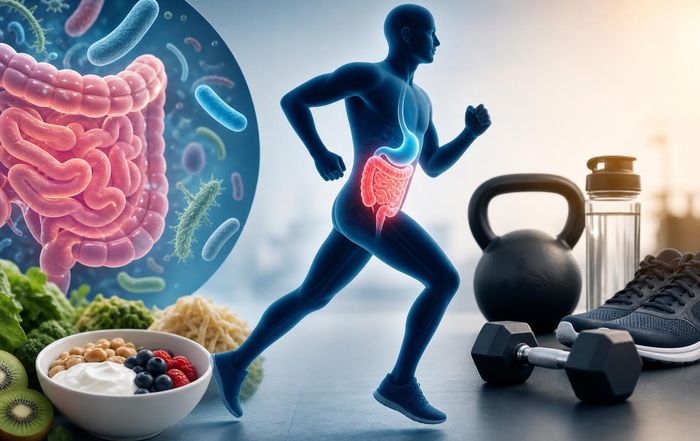
The Important Link Between Gut Health and Exercise Performance
Why Gut Health Has Become a Boardroom Topic in Fitness and Performance!!!
The conversation about athletic performance, corporate wellness, and long-term health has shifted decisively from muscles and VO₂ max to something far less visible yet deeply influential: the gut microbiome. Across elite sports, corporate wellness programs, and the fast-growing performance-focused consumer market, leaders are beginning to recognize that gut health is not a niche wellness fad but a strategic lever for physical performance, cognitive resilience, and sustainable productivity. For health seeking individuals here, whose interests include fitness, health, sports, brands, technology, wellness, and innovation, understanding this link is no longer optional; it is central to navigating a rapidly evolving performance economy. You are what you eat, is the summary, but you need to read the detail!
The human gut, populated by trillions of microorganisms, is now understood to play a decisive role in energy metabolism, inflammation control, mental focus, and recovery. Research from organizations such as Harvard T.H. Chan School of Public Health and Johns Hopkins Medicine has accelerated the mainstream awareness that the gut-brain-muscle axis influences how effectively individuals train, compete, and perform in high-pressure environments. Learn more about the broader science of the microbiome through resources provided by Harvard T.H. Chan School of Public Health and Johns Hopkins Medicine.
For a page hubs like Business, where performance is viewed not only through the lens of sport but also through leadership, brand strategy, and workforce health, the implications are significant. Gut health is emerging as both a performance differentiator and a strategic asset that forward-looking organizations, coaches, and brands cannot afford to ignore.
The Gut-Muscle Axis: From Emerging Science to Performance Framework
The concept of a gut-muscle axis has moved from theoretical to operational in the last decade. The gut microbiome, comprising bacteria, fungi, viruses, and other microorganisms, interacts with host metabolism in ways that directly influence endurance, strength, recovery, and even motivation to exercise. Studies highlighted by institutions such as Stanford Medicine and Mayo Clinic have shown that specific microbial species can improve the efficiency with which the body extracts and uses energy from food, modulate inflammation, and support more stable blood glucose levels, all of which are critical for performance. Readers can explore foundational overviews of gut health and exercise physiology at Stanford Medicine and Mayo Clinic.
In parallel, organizations such as the American College of Sports Medicine (ACSM) and the International Olympic Committee (IOC) have been integrating microbiome insights into broader sports nutrition and recovery guidelines, even if formal protocols are still evolving. This reflects a shift from viewing exercise performance solely as a function of training load and macronutrient intake, toward a more integrated model where gut health is a core pillar alongside sleep, mental health, and biomechanics. For those tracking global sports trends, FitPulseNews Sports offers regular coverage of how elite teams and federations are embedding these insights into their performance frameworks.
Energy, Endurance, and the Microbial Contribution
One of the most direct ways the gut influences exercise performance is through energy metabolism. Certain gut bacteria ferment dietary fibers into short-chain fatty acids (SCFAs) such as butyrate, propionate, and acetate, which can be used as an additional energy source by the body and play a role in regulating inflammation and insulin sensitivity. Organizations like Cleveland Clinic and National Institutes of Health (NIH) have outlined how these metabolites contribute to metabolic health and potentially to exercise endurance, making them a critical focus for performance-oriented individuals and teams. Those interested in the underlying metabolic mechanisms can find accessible explanations at Cleveland Clinic and NIH.
From a practical standpoint, athletes and serious fitness enthusiasts in markets from the United States and Europe to Asia-Pacific are increasingly adopting nutrition strategies that prioritize fermentable fibers, polyphenol-rich foods, and minimally processed carbohydrates to cultivate a more favorable microbiome. This shift aligns with the growing global interest in performance nutrition, which FitPulseNews explores through dedicated coverage in Nutrition and Health, where the interplay between diet, microbiome diversity, and training output is analyzed in depth.
Endurance athletes, in particular, are paying attention to research suggesting that certain bacterial strains may help clear lactate more efficiently or enhance the use of carbohydrates during prolonged efforts, potentially extending time to exhaustion. While the commercial probiotic space is still ahead of the conclusive science in some respects, the trend underscores how gut health has become a core element of performance strategy rather than an afterthought.
Inflammation, Recovery, and the Risk of Overtraining
Inflammation is a double-edged sword in exercise. Acute inflammation is essential for adaptation and muscle growth, but chronic, low-grade inflammation can impair recovery, reduce training quality, and increase injury risk. The gut plays a central role in this balance, acting as both a barrier and a regulator of systemic inflammation. When the gut barrier is compromised, often referred to as "leaky gut," bacterial components can enter the bloodstream, triggering immune responses that may contribute to fatigue, soreness, and slower recovery.
Institutions such as King's College London and Charité - Universitätsmedizin Berlin have contributed to a growing body of research linking gut permeability and dysbiosis to chronic inflammation and impaired exercise performance. Learn more about how inflammation and the immune system interact with lifestyle factors via King's College London and Charité. These insights are particularly relevant to high-intensity training cultures in the United States, United Kingdom, Germany, and other performance-driven markets, where the risk of overtraining and burnout is significant.
For business leaders and HR executives, the same mechanisms have implications for workforce health and productivity. Chronic inflammation associated with poor diet, stress, and sedentary behavior undermines not only physical performance but also cognitive function and resilience. As FitPulseNews reports in its Wellness and World sections, organizations in sectors from technology to finance are beginning to integrate gut-friendly nutrition, stress management, and recovery education into their wellness programs as a means of reducing absenteeism and enhancing performance.
The Gut-Brain-Motivation Connection
Performance is not purely physical; it is also psychological, and here the gut exerts a surprising influence through what researchers call the gut-brain axis. The microbiome communicates with the central nervous system via neural, endocrine, and immune pathways, influencing mood, stress resilience, and even motivation to engage in physical activity. Research summarized by University College London (UCL) and Massachusetts General Hospital has highlighted associations between gut composition and anxiety, depressive symptoms, and cognitive performance, all of which affect training consistency and competitive readiness. Readers can explore more about mental health and the gut-brain axis through UCL and Massachusetts General Hospital.
For athletes, this means that gut health can affect pre-competition anxiety, focus under pressure, and the capacity to handle the psychological demands of high-level sport. For professionals in demanding corporate environments, similar mechanisms influence decision-making quality, emotional regulation, and leadership performance. As FitPulseNews Culture and FitPulseNews Technology have documented, there is growing interest in how digital health tools, wearables, and AI-driven platforms can help individuals monitor stress markers, sleep quality, and behavioral patterns that indirectly reflect gut and brain health.
In regions such as Scandinavia, Singapore, and Japan, where integrated approaches to health are gaining traction, there is a visible convergence between mental health initiatives, physical activity campaigns, and gut-friendly nutrition strategies. This integrated perspective reflects a broader global shift toward performance ecosystems rather than isolated interventions.
Nutrition Strategies: From Evidence-Based Fundamentals to Personalized Protocols
The most practical and powerful lever for improving gut health and, by extension, exercise performance remains nutrition. While the commercial market is saturated with probiotics, prebiotics, and functional foods, the core evidence continues to support relatively simple principles: dietary diversity, high fiber intake, adequate polyphenols, and minimal ultra-processed foods. Organizations such as the World Health Organization (WHO) and Food and Agriculture Organization (FAO) have long emphasized the importance of whole foods and plant diversity for metabolic and digestive health, a message that is now being reframed through the lens of performance. Learn more about sustainable, health-promoting diets through WHO and FAO.
For performance-focused readers of FitPulseNews, this translates into structured nutrition strategies that align with training cycles, competition schedules, and recovery windows, while also nurturing a resilient microbiome. In practice, this means prioritizing a wide variety of vegetables, fruits, whole grains, legumes, nuts, seeds, and fermented foods, while being strategic about timing and composition of carbohydrates and proteins around training. The platform's Fitness and Health verticals increasingly highlight how these nutrition principles are being implemented by athletes, coaches, and high-performing professionals worldwide.
At the same time, the rise of personalized nutrition is reshaping how individuals approach gut health. Companies across North America, Europe, and Asia are offering microbiome testing, continuous glucose monitoring, and AI-guided dietary recommendations, often in partnership with academic institutions such as ETH Zurich and Imperial College London. While not all offerings are backed by equally strong evidence, the direction of travel is clear: performance strategies are moving from generalized guidelines to individualized protocols that consider unique microbiome profiles, training loads, and lifestyle factors.
Technology, Data, and the Quantified Gut
The intersection of gut health, exercise performance, and technology is one of the most dynamic frontiers in the performance ecosystem. Wearables, digital biomarkers, and AI-driven analytics are enabling individuals and organizations to quantify aspects of health that were previously invisible, including indirect markers of gut function such as heart rate variability, sleep architecture, and glucose variability. Leading technology and research organizations, including MIT Media Lab and Karolinska Institutet, are exploring how multimodal data can be integrated to infer gut-related patterns and inform personalized interventions. Those following the evolution of health technology can find additional insights via MIT and Karolinska Institutet.
For the FitPulseNews audience, this technological shift is particularly relevant, given strong interest in innovation, sports technology, and performance brands. In markets such as the United States, United Kingdom, Germany, and South Korea, sports teams, training centers, and wellness-focused enterprises are experimenting with platforms that combine training data, nutrition logs, subjective well-being scores, and microbiome assessments. These integrated systems aim to identify when an athlete or executive is trending toward overtraining, digestive distress, or burnout, enabling earlier intervention through nutrition adjustments, recovery protocols, or training modifications. Readers can track these developments in FitPulseNews Innovation and FitPulseNews Technology, where emerging tools and their implications for performance and business models are analyzed.
The rise of data-driven gut health also has implications for brands. Performance nutrition and sportswear companies are increasingly positioning themselves as holistic performance partners, integrating digital services, educational content, and microbiome-aware product lines. This trend is especially visible in global markets such as the United States, Canada, Australia, and Singapore, where consumers expect brands to deliver not only products but also actionable insights and measurable outcomes.
Global Trends: Regional Perspectives on Gut Health and Performance
While the science of gut health is global, its adoption and application vary by region, shaped by local culture, healthcare systems, and sports ecosystems. In North America and Western Europe, there is a strong interplay between elite sports, fitness culture, and the wellness economy, with professional leagues, endurance events, and boutique fitness brands driving demand for gut-focused performance strategies. In these markets, FitPulseNews has observed that sports organizations and corporate wellness providers are increasingly collaborating with universities and medical centers to translate microbiome research into practice.
In Asia, particularly in countries such as Japan, South Korea, Singapore, and Thailand, traditional dietary patterns rich in fermented foods intersect with modern sports science, creating fertile ground for advanced yet culturally aligned gut health strategies. Public health authorities and academic institutions across Asia are also exploring how gut health frameworks can support aging populations and workforce productivity, an area of ongoing coverage in FitPulseNews World.
In regions such as South Africa, Brazil, and other parts of Africa and South America, the conversation is evolving in parallel with broader efforts to combat non-communicable diseases and improve access to high-quality nutrition. Here, the link between gut health, physical activity, and community-level health outcomes is increasingly recognized, with potential implications for youth sports development, workplace wellness, and national health strategies.
Across all regions, major international organizations such as OECD and World Economic Forum (WEF) are paying closer attention to how lifestyle-related factors, including diet and physical activity, impact productivity, healthcare costs, and economic competitiveness. Learn more about the macroeconomic implications of health and productivity through OECD and World Economic Forum. This macro perspective reinforces what FitPulseNews has long highlighted: gut health and exercise performance are not only personal or team-level concerns, but also strategic levers in global competitiveness and sustainable development.
Sustainability, Environment, and the Performance Ecosystem
The link between gut health and exercise performance cannot be fully understood without considering the broader environment in which individuals live and train. The quality of food systems, soil health, and agricultural practices all influence the diversity and resilience of the human microbiome. As environmental organizations and research bodies emphasize, there is a growing recognition that biodiversity in nature supports biodiversity in the gut, which in turn supports health and performance. Learn more about how environmental health intersects with human health through resources from United Nations Environment Programme (UNEP) and The Lancet via UNEP and The Lancet.
For brands and organizations featured in FitPulseNews Sustainability and FitPulseNews Environment, this connection has strategic implications. Performance-focused companies in sectors from sports nutrition to apparel are increasingly expected to demonstrate not only product efficacy but also responsible sourcing, reduced environmental footprint, and alignment with sustainable food systems. In practice, this means prioritizing ingredients and supply chains that support soil health, reduce chemical inputs, and promote dietary patterns that are both gut-friendly and climate-conscious. Learn more about sustainable business practices through resources from UN Global Compact at UN Global Compact.
This integrated view-linking gut health, exercise performance, environmental sustainability, and brand trust-aligns closely with the editorial direction of FitPulseNews, where performance is always viewed in parallel with responsibility and long-term impact.
Strategic Implications for Athletes, Brands, and Business Leaders
For elite athletes and serious fitness enthusiasts, the practical implication of this evolving science is clear: gut health must be treated as a core performance variable, on par with training load, sleep, and recovery. This means systematically evaluating how nutrition, stress, travel, and training intensity affect digestion, energy levels, and mental state, and being willing to iterate based on data and expert guidance.
For brands operating in the fitness, health, sports, and wellness sectors, gut health represents both an opportunity and a responsibility. Performance nutrition companies, sports teams, and digital health platforms that integrate credible microbiome science into their offerings-while avoiding overclaiming-will be better positioned to earn long-term trust. The FitPulseNews Brands section at FitPulseNews Brands continues to highlight how leading organizations are navigating this balance, differentiating themselves through transparency, scientific partnerships, and a focus on measurable outcomes.
For business and HR leaders, gut health is emerging as a crucial consideration within high-performance cultures. Incorporating gut-supportive food options in workplace cafeterias, providing education on stress and digestion, and aligning wellness programs with evidence-based nutrition and activity strategies can support not only physical health but also cognitive performance and resilience. Readers can explore broader workforce and economic perspectives in FitPulseNews Business and FitPulseNews Jobs, where the future of performance-centric work environments is a recurring theme.
The New Minds Thinking = Performance, Trust, and the Next Decade
From its vantage point at the intersection of fitness, health, sports, brands, technology, and innovation, the team here sees the link between gut health and exercise performance as one of the defining narratives of the coming decade. It is a story that connects individual choices with global systems, elite sport with everyday movement, and cutting-edge research with practical decisions made in households, training facilities, and boardrooms across the world.
As the science continues to evolve, one principle stands out: performance cannot be decoupled from health, and health cannot be separated from the complex ecosystems-biological, environmental, and social-in which people live and work. The gut, in all its complexity, sits at the center of this ecosystem. For readers across North America, Europe, Asia, Africa, and South America, the opportunity in 2026 is to move beyond fragmented approaches and embrace gut health as a foundational pillar of sustainable performance, whether on the track, in the gym, in the office, or on the global stage.
Through ongoing daily stories across Health, Fitness, Sports, Business, Innovation, and Sustainability, we will continue to track how organizations, experts, and individuals worldwide translate this knowledge into practical strategies, competitive advantage, and long-term wellbeing.