

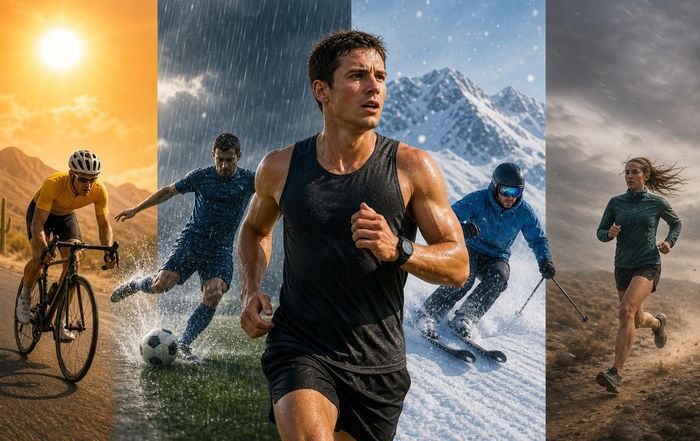
How Climate Conditions Affect Outdoor Sports Performance ?
Outdoor sport has always been a negotiation between human physiology and the elements, but in 2026 that negotiation has become more complex, more data-driven and, in many regions, more precarious. For the global community of athletes, coaches, brands and sports leaders who follow us, climate is no longer a background variable; it is a central performance determinant, a strategic risk factor and a powerful driver of innovation across fitness, health, technology, business and sustainability.
The New Climate Reality for Outdoor Athletes
Across North America, Europe, Asia-Pacific and beyond, the changing climate is reshaping the calendar, geography and demands of outdoor sport. Heatwaves in the United States, prolonged dry spells in Southern Europe, wildfire smoke episodes in Canada and the Western United States, intense humidity in Southeast Asia, and increasingly volatile storms in Australia and Japan are altering what it means to prepare for a race, a match or a training cycle. For athletes and organizations that have built their identity around outdoor performance, this shift is not theoretical; it is experienced in every training block, every competition and every recovery protocol.
Sports scientists have long understood the influence of environmental conditions on performance, but the frequency and intensity of extreme events are now forcing a recalibration of long-standing assumptions. Endurance athletes, team sports professionals and recreational participants in cities from London to Singapore are having to consider not only how to optimize performance, but how to protect long-term health in conditions that would have been considered exceptional a generation ago. Readers who track broader climate and health developments can see these patterns reflected in global assessments; for instance, organizations such as the World Meteorological Organization and the World Health Organization have highlighted the growing health risks of heat and air pollution, which directly intersect with outdoor sports participation.
For FitPulseNews, whose audience spans fitness enthusiasts, professional athletes, sports brands and wellness-focused executives, this evolving environment is redefining what high performance looks like. Performance is no longer just a question of VO₂ max, strength metrics or tactical intelligence; it is a question of how effectively athletes and organizations integrate climate literacy into training, competition and recovery.
Heat, Humidity and the Physiology of Performance
Heat and humidity are the most immediate and widely felt climate stressors in outdoor sport. As ambient temperatures rise, the body must divert more blood to the skin to dissipate heat, leaving less available for working muscles. This leads to earlier onset of fatigue, increased cardiovascular strain and a higher perceived effort at any given workload. Humidity compounds the challenge by reducing the efficiency of sweat evaporation, which is the body's primary cooling mechanism during exercise.
Sports physiology research from institutions such as Harvard T.H. Chan School of Public Health and The University of Sydney has shown that high heat and humidity can reduce endurance performance, impair decision-making and increase the risk of heat-related illnesses, even in well-trained athletes. Those interested in the underlying mechanisms can explore resources on thermoregulation and exercise from organizations like the American College of Sports Medicine and the National Institutes of Health, which detail how cardiovascular and thermoregulatory systems respond under environmental stress.
For outdoor runners, cyclists, footballers and tennis players in regions such as the United States, Spain, Italy, Australia and South Africa, this has practical implications for training loads, session timing and hydration strategies. Coaches are increasingly integrating heat-index data and wet-bulb globe temperature measurements into planning, while sports governing bodies have been updating heat policies for events from marathons to youth tournaments. On FitPulseNews, this intersects directly with ongoing coverage on fitness and health, where readers look for evidence-based guidance on how to maintain performance and safety in challenging conditions.
The trend toward early-morning and late-evening training sessions in hotter climates, the proliferation of cooling vests and ice-slurry protocols, and the prioritization of heat acclimation blocks before major competitions all reflect a pivot toward climate-aware periodization. Athletes who compete in global circuits, moving from cooler climates such as Scandinavia or Canada to hot and humid venues in Southeast Asia or the Middle East, now treat environmental adaptation as seriously as altitude training or strength conditioning.
Cold, Wind and the Demands of Extreme Environments
While heat dominates many discussions, cold remains a critical performance variable in regions such as Northern Europe, Canada, Japan and South Korea, particularly in winter endurance sports, mountaineering, trail running and outdoor team sports. Cold air increases the work of breathing, can exacerbate respiratory symptoms and, when combined with wind, accelerates heat loss through convection, raising the risk of hypothermia and frostbite.
For athletes, this means that performance is shaped not only by absolute temperature but by wind chill, exposure time and clothing strategy. Organizations like Mayo Clinic and the Cleveland Clinic provide accessible explanations of cold-related health risks, which coaches and athletes increasingly integrate into risk assessments for training camps and events. For readers of FitPulseNews, particularly those following sports and wellness, the emerging best practice is to balance the performance benefits of training in cold environments with careful monitoring of skin exposure, respiratory comfort and recovery.
In disciplines such as biathlon, cross-country skiing and winter ultra-endurance races, cold can paradoxically impair power output while masking perceived exertion, leading athletes to overreach. Wind, meanwhile, exerts a dual influence: it can provide a tactical advantage in cycling, sailing and rowing when used intelligently, but it also increases energetic cost when athletes are forced to work against headwinds, and it can compromise technical execution in sports such as golf, archery and track and field. The growing sophistication of wind modelling and course analytics, supported by advances in sports technology, is enabling teams and brands to design more nuanced strategies, but it also reinforces the truth that climate variables can never be fully controlled, only managed.
Air Quality, Pollution and Respiratory Stress
Perhaps the most insidious climate-related factor in outdoor sports performance is air quality. As wildfires, industrial emissions and urban traffic pollution intensify in many regions, athletes are increasingly training and competing in air that can compromise both short-term performance and long-term respiratory health. This is particularly evident in cities such as Los Angeles, Beijing, Delhi and Mexico City, but smoke events in Canada, the United States, Australia and Southern Europe have demonstrated that even traditionally "clean" environments are not immune.
Poor air quality introduces particulate matter and ozone into the respiratory system, which can reduce oxygen uptake, trigger inflammation and exacerbate asthma or other underlying conditions. Organizations such as the European Environment Agency and the U.S. Environmental Protection Agency provide real-time air quality indices and health guidance that are increasingly consulted by coaches, event organizers and athletes before outdoor sessions. For endurance athletes in particular, the combination of high ventilation rates during exercise and polluted air can significantly increase exposure, prompting some to shift key workouts indoors or relocate training bases during high-risk periods.
From a performance perspective, this creates a new layer of complexity in periodization and race selection, especially for professional athletes whose careers depend on fine margins. For recreational participants and corporate wellness programs, it raises questions about how to encourage active lifestyles while minimizing health risks. On FitPulseNews, where coverage often bridges business, health and environment, this issue underscores the interconnectedness of urban planning, environmental regulation and sports participation.
Hydration, Nutrition and Climate-Smart Fueling
As climate conditions become more extreme and variable, hydration and nutrition strategies are evolving from generic guidelines to tightly individualized protocols that account for temperature, humidity, altitude and an athlete's sweat rate and electrolyte loss profile. Dehydration, hypernatremia and gastrointestinal distress are all more likely in hot and humid conditions, while cold environments can blunt thirst cues and lead to under-hydration even when fluid losses are significant.
Sports nutrition research from institutions such as Gatorade Sports Science Institute and Australian Institute of Sport has informed a new generation of tools and guidelines, and organizations such as the Academy of Nutrition and Dietetics provide broader context on hydration and performance. Athletes competing in marathons, triathlons, cycling stage races and ultra-endurance events in climates ranging from Florida and Texas to Dubai and Singapore are increasingly using sweat testing, continuous glucose monitoring and wearable temperature sensors to refine their fueling plans.
For the FitPulseNews audience, which has a strong interest in nutrition, this trend illustrates how climate-aware performance is as much about internal environment as external. Carbohydrate intake, electrolyte balance and cooling strategies must be synchronized with event conditions, and brands that provide sports drinks, gels, apparel and wearables are positioning themselves as partners in climate resilience as much as in performance optimization. At the same time, there is growing awareness that fueling choices intersect with sustainability, prompting athletes and consumers to seek products that balance performance efficacy with responsible sourcing and packaging.
Technology, Data and Climate-Aware Training
The convergence of sports technology and environmental data is reshaping how athletes and coaches prepare for outdoor performance. Wearables that track heart rate, core temperature estimates, skin temperature, sweat rate and GPS-based environmental exposure are becoming more sophisticated, while smartphone apps increasingly integrate local weather, heat index and air quality data into training recommendations. For readers tracking developments on technology and innovation at FitPulseNews, this is one of the most dynamic intersections between climate and sport.
Organizations such as Garmin, Whoop, Polar and Apple have invested heavily in environmental sensing and analytics, while endurance platforms and training software increasingly allow coaches to tag sessions with environmental conditions and adjust load scores accordingly. External resources such as the National Weather Service in the United States or the UK Met Office in the United Kingdom provide the meteorological backbone for many consumer apps, while climate research hubs like NASA's Global Climate Change portal help contextualize long-term trends that will shape future training environments.
In 2026, elite teams in sports such as professional cycling, football, rugby and athletics are building environmental analytics into their performance models, using historical climate data to inform where and when to hold training camps, how to acclimate before key competitions, and when to adjust tactics on game day. Recreational athletes, meanwhile, are gaining access to simplified versions of these tools, allowing them to make more informed decisions about workout timing, intensity and safety. The underlying message is clear: in a changing climate, environmental data is performance data.
Brands, Events and the Business of Climate-Resilient Sport
For sports brands, event organizers and rights holders, climate conditions are no longer just an operational concern; they are a strategic business issue. Extreme heat, storms, air quality crises and flooding can disrupt event schedules, increase insurance costs, damage infrastructure and erode spectator experience. At the same time, there is growing consumer expectation that brands demonstrate leadership on sustainability and athlete welfare, particularly among younger audiences in regions such as Europe, North America, Japan and Australia.
Major organizations such as World Athletics, FIFA, the International Olympic Committee and World Rugby have begun to integrate climate risk assessments into event planning, and resources from bodies like the United Nations Framework Convention on Climate Change and the International Olympic Committee sustainability pages provide frameworks for climate adaptation and mitigation in sport. For readers of FitPulseNews who follow events, brands and sustainability, this is visible in decisions to shift marathon start times earlier, relocate races to cooler seasons, invest in shade structures and cooling zones for spectators, and design kit that balances performance with lower environmental impact.
The business implications are significant. Sponsors must weigh reputational risk if athletes are seen to compete in unsafe conditions, broadcasters must adapt to more flexible scheduling, and venues must invest in climate-resilient infrastructure such as improved drainage, heat-reflective surfaces and renewable energy systems. At the same time, new revenue streams are emerging around climate-smart products and services, from advanced cooling textiles to environmental analytics platforms. Investors and corporate leaders who track trends through platforms like the World Economic Forum are increasingly viewing sports as both a climate risk exposure and a powerful platform for climate engagement.
Regional Perspectives: From Europe to Asia-Pacific
The impact of climate conditions on outdoor sports performance is highly regional, reflecting diverse geographies, infrastructure and cultural relationships with sport. In Southern Europe, heatwaves and drought are affecting football, cycling and running events, prompting federations in Spain, Italy and France to revise competition schedules and invest in pitch cooling and irrigation technologies. In Northern Europe, milder winters are altering traditional winter sports calendars, raising concerns in countries like Norway, Sweden and Finland about the long-term viability of snow-dependent disciplines and the cultural heritage they represent.
In North America, wildfire smoke and heat domes have emerged as major disruptors of outdoor sports from California to British Columbia, affecting everything from youth soccer to professional baseball and athletics. Municipalities and sports organizations are increasingly relying on guidance from agencies such as the Centers for Disease Control and Prevention for heat and air quality protocols, while local organizers look to platforms like FitPulseNews for practical translation of these guidelines into training and event management strategies.
Across Asia-Pacific, athletes in Japan, South Korea, Singapore, Thailand, Malaysia and Australia contend with high humidity, intense sun exposure and, in some regions, monsoon-related disruptions. The experience of hosting large-scale events in challenging climates, from the Tokyo 2020 Olympic Games to major marathons and regional tournaments, has accelerated innovation in cooling technologies, urban shading and heat-adaptive scheduling. These developments are watched closely by sports leaders worldwide, as they offer models for how to sustain outdoor sports in hotter, more humid cities.
In Africa and South America, the picture is equally complex, with athletes and communities facing combinations of heat, drought, flooding and infrastructure constraints. Yet these regions also showcase some of the most resilient and adaptive sporting cultures, where training at dawn or dusk, using natural shade and integrating traditional knowledge about local climate patterns are long-established practices. For a global readership like that of FitPulseNews, which follows world and news alongside performance topics, these regional stories highlight both shared challenges and diverse solutions.
Athlete Health, Mental Resilience and Long-Term Careers
Beyond immediate performance, climate conditions influence athlete health trajectories and career longevity. Repeated exposure to extreme heat, high pollution or severe cold can have cumulative effects on cardiovascular, respiratory and immune systems. Sports medicine practitioners are increasingly drawing on climate and environmental health research, including resources from bodies like the Lancet Countdown on Health and Climate Change, to inform long-term risk assessments and monitoring strategies.
Mental resilience is also being tested in new ways. Athletes must navigate the uncertainty of last-minute schedule changes due to weather, the frustration of training disruptions and the psychological weight of competing in environments that may feel unsafe or misaligned with their personal values around sustainability. For many, especially younger athletes in Europe, North America and Oceania, climate anxiety intersects with performance goals, creating an additional layer of stress that coaches and sports psychologists are learning to address.
On FitPulseNews, where coverage of wellness and culture often intersects with performance, there is a growing recognition that climate-aware coaching must integrate physical, mental and ethical dimensions. This includes open conversations about when to withdraw from competition due to unsafe conditions, how to advocate for better policies within teams and federations, and how to align personal sustainability values with sponsorship and career decisions.
The Future of Outdoor Sports in a Warming World
Looking ahead from now, the trajectory of climate change suggests that outdoor sports will continue to face intensifying challenges, but also expanding opportunities for innovation and leadership. Scenario analyses from organizations such as the Intergovernmental Panel on Climate Change indicate that heatwaves, extreme precipitation events and air quality crises are likely to become more frequent and severe in many regions, which will test the adaptability of sports systems at every level, from community leagues to global championships.
For the FitPulseNews community, which spans athletes, coaches, brand leaders, technologists, health professionals and policy influencers, the key question is how to transform these pressures into a catalyst for smarter, more sustainable performance. That transformation will involve integrating climate data into every layer of decision-making, from training plans and equipment design to venue selection and sponsorship strategy. It will require deeper collaboration between sports organizations, health authorities, urban planners and environmental scientists, as well as a commitment from brands and investors to support climate-resilient infrastructure and innovation.
At the same time, outdoor sports remain one of the most powerful platforms for engaging the public with climate realities and solutions. When a marathon start time is moved to protect runners from heat, when a football club invests in sustainable pitch cooling, or when a major event showcases low-carbon operations, millions of participants and fans are exposed to the idea that performance and sustainability can reinforce each other. For a site like this, which sits at the intersection of fitness, performance, business and sustainability, telling these stories is part of building a more climate-literate sports culture.
In this evolving landscape, athletes and organizations that embrace climate-aware strategies will not only protect health and extend careers; they will also shape the future of sport itself. As climate conditions continue to influence every outdoor training session and competition, the ability to understand, anticipate and adapt to the elements will become a defining marker of experience, expertise, authoritativeness and trustworthiness in the global sports ecosystem.